
TheRoundup is reader-supported. We may earn a commission when you make a purchase via links on this site, at no cost to you.
All products are reviewed in accordance with our Review Methodology.

Toothbrushes are essential for oral health. But most toothbrushes on the market create massive environmental damage because they're made from plastic.
Americans throw away one billion plastic toothbrushes every year, according to National Geographic. Plastic toothbrushes never biodegrade and accumulate in landfills and marine environments, contributing to the global plastic pollution crisis.
Eco-friendly toothbrushes are a better alternative because they're made from biodegradable materials like bamboo handles and plant-based bristles, which break down naturally without harming the environment.
I've tested the leading sustainable toothbrush brands for effectiveness, durability, environmental impact, cost, and more. This guide lists the best eco-friendly toothbrushes that clean effectively while protecting the planet.
✔ Save 15% (Code ROUNDUP15)
✔ Sustainably Harvested Bamboo
✔ Plant-Based Nylon
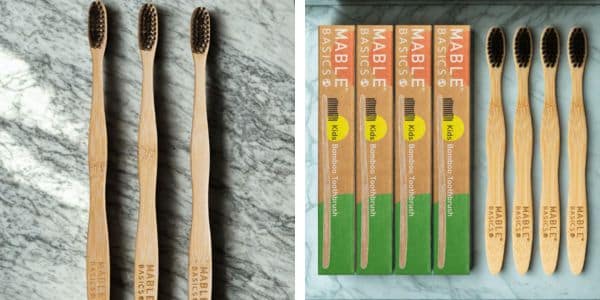
Why It's Best Overall: The MABLE Basics Bamboo Toothbrush is the best overall because it combines a 100% compostable, FSC-certified bamboo handle with plant-based bristles for safe and effective cleaning, and offers one of the lowest price points among high-quality, sustainable brushes.
Why It's Best for Kids: MABLE is also best for kids because it offers a range of smaller brushes that are safe, non-toxic, and easy for small hands to hold.
The MABLE Basics Bamboo Toothbrush features a simple design that is both functional and easy to hold, making it suitable for use by children, adults, and older people.
MABLE's plant-based nylon bristles offer superior sustainability compared to the conventional nylon bristles used by Greenzla and Y-Kelin, though all three use bamboo handles.
MABLE has designed its toothbrushes to stand up on their own. This is an excellent feature that helps with storage and keeps the brush dry.
✔ BPA-Free
✔ Takeback Program
✔ Super Soft Bristles
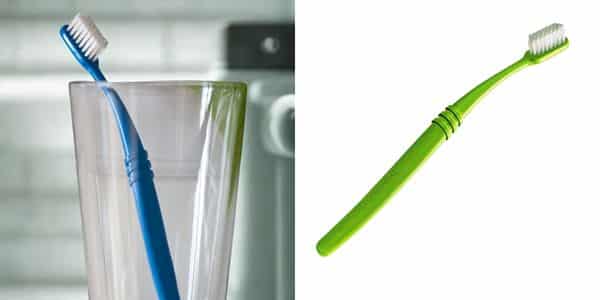
Why It's the Best Recycled Plastic Option: Preserve is the best recycled plastic option because its toothbrushes are made entirely from 100% recycled #5 plastics, including post-consumer yogurt containers. The company also actively promotes sustainability and recycling through its takeback program.
Why It's Good for Sensitive Gums: The Preserve Eco-Friendly Adult Toothbrush is perfect for those with sensitive gums because it has an ultra-soft bristle option. Accoding to Preserve it was designed for gentle cleaning, to minimize irritation and to protect delicate gum tissue.
The Preserve Eco-Friendly Adult Toothbrush has a curved handle that provides better access to molars (back teeth) than MABLE's straight bamboo handle.
The durability of this toothbrush during testing was impressive. After three months of twice-daily use, the bristles maintained their shape better than those of any other plastic toothbrush I tested, but not quite as well as the TPU used by Singular Care.
The brand's claim that it protects gum tissue seems to be accurate based on my experience. I noticed no bleeding, soreness, or irritation even when I occasionally tended to brush harder than I should.
I also love that Preserve has been a Certified B Corporation since October 2011 and has been confirmed by PETA to be cruelty-free. This gives me peace of mind that I'm dealing with an ethical company that cares about people, animals, and the planet.
✔ Reduces Plastic Waste by 82%
✔ Medical-Grade Steel Handle
✔ Lifetime Warranty
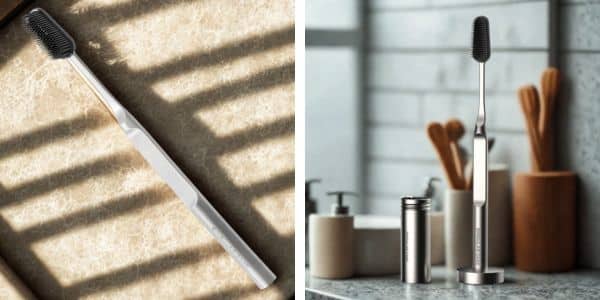
Why It's the Best Metal Toothbrush: The Singular Care is the best metal toothbrush because it cleans effectively, and is built to last. Only the recyclable heads need replacing, which cuts plastic waste by 82% (according to the brand) and makes this toothbrush a smart choice for your teeth and the planet.
The Singular Care toothbrush features a medical-grade stainless steel handle that feels substantial and cool to the touch. The weighted handle provided better control during brushing.
This is definitely the coolest-looking toothbrush I've ever used. If you want to show off your sustainability, then this is the brush to choose. The handle is backed by a lifetime warranty, so you know it's built to last.
Swapping out the TPU heads was quick. I like that you can subscribe to have four replacement heads sent every 12 months. This means you never have to worry about running out, and you save 15%.
The high price tag made me think twice about recommending Singular Care, but as I continued using it, the investment felt justified. It's expensive, but worth it if you're in the market for a quality metal toothbrush.
✔ Low Price
✔ Lifetime Defect Warranty
✔ Lightweight
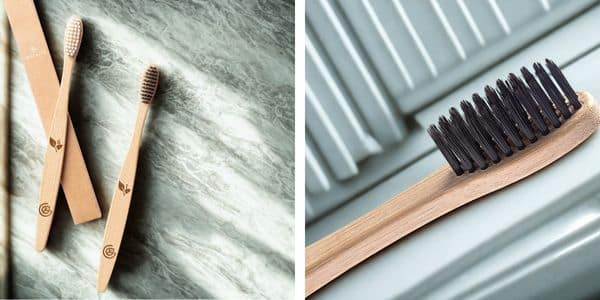
Why It's Best Value: The Greenzla Bamboo Toothbrush Set is the best value for money because it has the lowest unit cost of the toothbrushes I tested, yet it's still made with eco-friendly and durable materials.
Why It's a Smart Pick for Travel: Greenzla is a smart pick for travel because each brush is lightweight and compact, and travel cases are included in the set. This toothbrush's durable bamboo handles resist breaking in luggage, and the bulk multipack means you'll have plenty for extended trips.
After testing all the brushes with the same toothpaste, we found that Greenzla's charcoal-infused bristles have a positive whitening and stain removal effect, compared to Preserve's standard nylon bristles. The bristles remained securely attached during the three-month test and did not fall out prematurely.
Greenzla packages each brush in individual paper sleeves, which keeps brushes clean during storage and travel.
I bought the 12-pack from Amazon and was pleased to see consistent quality across all 12 brushes. This demonstrates reliable manufacturing standards.
✔ Easy to Use
✔ 360° Bristles
✔ BPA-Free
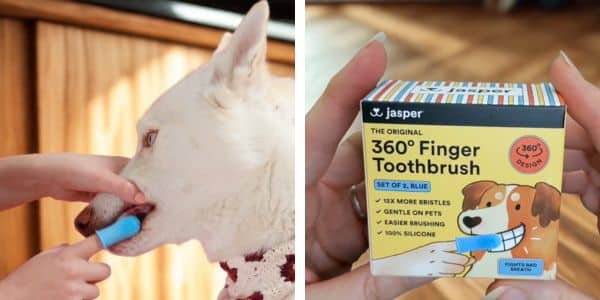
Why It's Good for Dogs & Cats: The Jasper 360° Finger Toothbrush is a smart pick for dogs and cats because its soft, silicone bristles and flexible finger design allow gentle, precise cleaning that adapts to different mouth sizes and behaviors.
The 360-degree bristle design is a standout feature of the Jasper Finger Toothbrush. I tested the Jasper on our Labradoodle (Millie) and a friend's domestic shorthair cat. In both cases, the brush maintained good contact with all teeth, although reaching Millie's rear molars was more challenging.
This silicone brush doesn't slip off easily and provides a comfortable fit on most adult fingers. Its compact size is perfect for small and medium-sized pets, or when travelling.
When using a zero waste toothbrush for dogs, be sure to use an organic dog toothpaste as well.
✔ Free Returns
✔ V-Shaped Bristles
✔ No Snagging
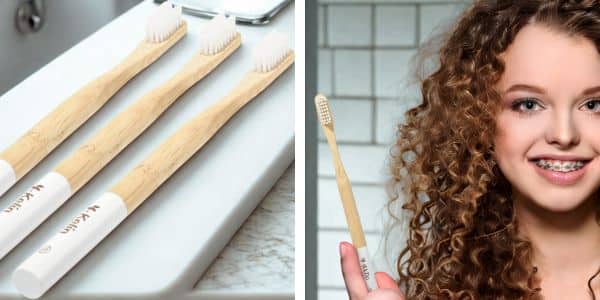
Why It's Good for People with Braces: The Y-Kelin Orthodontic Toothbrush is a standout plastic-free option for people with braces because the V-shaped bristle design effectively cleans around brackets and wires without causing discomfort or damaging orthodontic appliances.
The nylon used by Y-Kelin is not as eco-friendly as that used by MABLE, but this is still a sustainable option thanks to the bamboo handle.
This toothbrush is soft and resilient, and when purchased in a pack of three from Amazon, it offers excellent value for money compared to other orthodontic toothbrushes on the market.
Y-Kelin's specialized bristle design reduces food buildup in braces more effectively than Preserve's tiered bristles, but Preserve offers superior handle ergonomics for enhanced control.
I personally tested each toothbrush in this roundup with the help of my wife and two daughters. Between us, we used every model for at least three months of twice-daily brushing to evaluate how they performed in real homes, not labs.
Our ratings are based on the following key criteria.
All testing followed our independent Review Methodology, which ensures we assess products fairly and consistently. We purchased every toothbrush online via the links provided above. No brand is permitted to pay for inclusion or position in our list.
You should switch to an eco-friendly toothbrush to reduce plastic waste, lower your carbon footprint, and avoid sending non-biodegradable handles into landfill every three months.
Here are the main reasons to make the switch.
There is a range of different environmentally friendly toothbrush options, and the right one depends on how you brush and what you value most.
Eco-friendly manual toothbrushes come either as a single piece or with a replaceable head. Speciality types also exist for particular use cases, such as for kids.
Each of these types follows a different disposal route at the end of its life.
To recycle used toothbrushes, you must break them down into smaller parts that recycling facilities can process more easily. The steps below will help guide you.
Use pliers to pull out bristles or snap off a detachable head.
Councils often operate dedicated drop-offs for mixed materials and hard-to-recycle plastics.
Not every local authority recycles PP. "Only 60-65% of people across the U.S. have access to recycle polypropylene", according to The Recycling Partnership.
If no local options exist, use a mail‑back program such as the one that Preserve offers its customers.
Understanding disposal methods is important, but knowing how to identify truly sustainable products before purchase is equally valuable. Key certifications help guide these decisions.
The most relevant certifications for sustainable toothbrushes are USDA-Certified 100% Biobased, FSC-Certified, Certified B Corporation, and Cruelty-Free.
Here is a summary of each certification, along with the brands it applies to.
Understanding certifications helps identify sustainable products, but knowing the actual materials and their environmental properties enables more informed purchasing decisions.
Sustainable toothbrush handles are commonly made from bamboo, recycled plastic, or stainless steel, and bristles are often made from nylon and Thermoplastic Polyurethane (TPU).
Materials matter, but so does the type of brush. Manual and electric models carry very different environmental footprints.
In most cases, a standard electric toothbrush is not more eco‑friendly than a standard manual toothbrush.
Electric models contain batteries, wiring, and mixed materials that recycling facilities struggle to process and often send to e-waste facilities, whereas most manual toothbrushes contain minimal components.
However, some eco-friendly electric toothbrushes are designed with recyclable heads, longer lifespans, and takeback schemes, making them a sustainable option.
The American Dental Association (ADA) recommends a soft-bristle toothbrush (ADA Library). However, it's best to check with your dentist or oral hygiene specialist for specific advice.
According to Dr. Sienna Palmer, a dentist at Meridien Dental, "The average person should be swapping out for a new toothbrush every three to four months."
The ADA agrees, stating, "Make sure to replace your toothbrush every three to four months, or sooner if the bristles are frayed" (ADA Mouthhealthy).
Virgin materials are newly manufactured from raw resources. Post-consumer materials are recycled from products that consumers have already used and discarded.
Virgin materials require new resource extraction, while post-consumer materials divert waste from landfills.
According to its website, Preserve donates 25% of the proceeds from its POPi range of toothbrushes to non-profits working to clean up beaches and support marine conservation.
MABLE's 'Buy Give Teach' program uses a portion of profits to donate toothbrushes to children and support sustainability education programs.
Eco-friendly toothbrushes are not always more expensive than regular ones long-term.
A good zero waste toothbrush costs 15-25% more upfront but provide comparable long-term value when factoring in durability and potential health/environmental benefits.
Our core values mean we always prioritize sustainability over profit. We carefully research and evaluate every product to ensure they meet our high standards. All products featured in this article are recommended in accordance with our Review Methodology.
TheRoundup.org - As Seen On

