
TheRoundup is reader-supported. We may earn a commission when you make a purchase via links on this site, at no cost to you.
All products are reviewed in accordance with our Review Methodology.

Mattress protectors are vital for protecting your mattress from spills, stains, bodily fluids, bugs, and allergens, keeping it clean and hygienic for years to come.
The problem is that traditional mattress covers and pads usually achieve their waterproof protectiveness using a mix of vinyl and harsh chemicals, which can actually harm your health and the environment.
Eco-friendly mattress protectors are made from organic and non-toxic materials that keep your mattress clean and protected without relying on PVC or formaldehyde.
For a non-toxic bedroom, you need to know which are the top eco-friendly mattress protectors of 2026.
This guide lists high-quality, non-toxic protectors made from organic materials for a healthier night's sleep.
| PlushBeds | Naturepedic | Boll & Branch | Avocado | Brentwood Home | Saatva | Whisper Organics | Quince | |
|---|---|---|---|---|---|---|---|---|
 |  |  |  |  |  |  |  | |
| Best For | Best Overall | Waterproofing | OEKO-TEX / Latex Mattresses | Deep Pocket / Thick Mattresses | Kids | Hot Sleepers | Fair Trade Certified | Budget |
| Key Certs | GOTS | USDA | GOTS MADE SAFE GreenGuard GOLD (+ More) | GOTS OEKO-TEX Standard 100 Asthma & Allergy Friendly | GOTS MADE SAFE OEKO-TEX Standard 100 GreenGuard GOLD (+ More) | GOTS GreenGuard GOLD (+ More) | GOTS | GOTS Fair Trade Certified | OEKO-TEX STANDARD 100 (Elastic) |
| Materials | Organic cotton & non-toxic PU underlayer | Organic cotton & TPU polyurethane barrier | 100% organic cotton shell and padded fill | 2 Organic cotton layers, 1 thin PU film layer | 2 Organic cotton layers, 1 thin PU film layer | 100% Organic Cotton | 100% Organic Cotton | Organic Cotton Shell. PU Layer, Elastic |
| Warranty | 5 Years | 1 Year Limited | None | 1 Year | 1 Year Limited | 1 Year Limited | 1 Year | 365 Day Free Returns |
| Max Depth | 15" | 16" | 15" | 22" | 16" | 16" | 17" | 16" |
| Waterproof | ✔ | ✔ | 17" | ✔ | ✔ | No | No | ✔ |
| Price (From) | $119 | $103 | $129 | $144 | $159 | $175 | $132 | $60 |
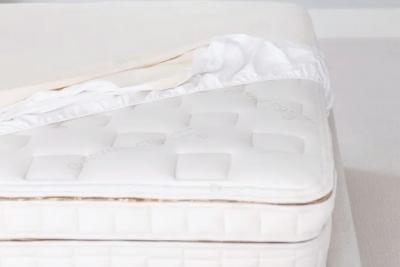
Why It's Our Top Pick: PlushBeds have created a premium quality, fully waterproof, non-toxic mattress protector. It has all the features you need, at an affordable price.
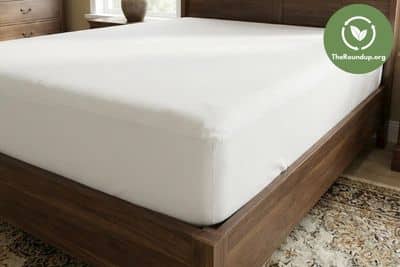
The PlushBeds organic waterproof mattress protector is easy to put on your bed and fits perfectly. When you first lie down, the first thing you notice is that you don't know it's there. You can roll around as much as you like, and it doesn't make a sound.
Customers rave about the waterproofing performance, with most saying that not a drop leaks through. It's worth noting that (like all waterproof mattress pads) this protection is achieved through a very thin layer of polyurethane. There is no other way to achieve waterproofing, but I appreciate that the layer is kept as thin as possible and is non-toxic.
At night, the moisture-wicking and temperature-regulating properties help you keep cool, which is important to me as I am a hot sleeper.
✔ GOTS-Certified Organic
✔ No Toxic Chemicals
✔ Fully Waterproof in Our Tests
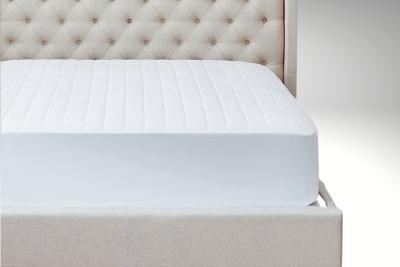
Why We Recommend It: The Naturepedic organic mattress protector pad is on a par with the PlushBeds protector in terms of quality and features, at a similar price point. This product has even more impressive certifications, but a shorter warranty and less customer feedback.
This is a soft and quiet waterproof protector that's on par with the PlushBeds alternative in terms of comfort. They're both quiet, breathable, and stay in place snugly thanks to the elasticated edges.
Naturepedic uses what they call DrySleep™ Technology, which is their fancy name for a TPU (thermoplastic polyurethane) layer. The DrySleep waterproof barrier blocks liquids from passing through while allowing water vapor to escape. TPU is similar to PU but is known as being slightly more durable. It performs perfectly in spill tests, with zero leakage.
The initial fit is slightly oversized, but this is done deliberately as it shrinks on the first wash. We advise you to wash it before you use it for this reason, so you achieve a perfect fit the first time.
✔ Oeko-Tex CERTIFIED Asthma & Allergy Friendly
✔ Luxury Feel
✔ 100% Organic Cotton
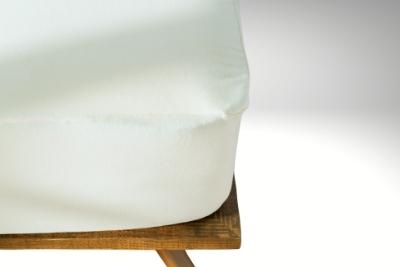
Why We Recommend It: The Boll & Branch mattress protector is OEKO-TEX Standard 100 certified, made from 100% organic cotton, and is completely plastic-free. While this means it's not waterproof (making it more of a pad than a protector) it does mean it's the most sustainable mattress pad on this list.
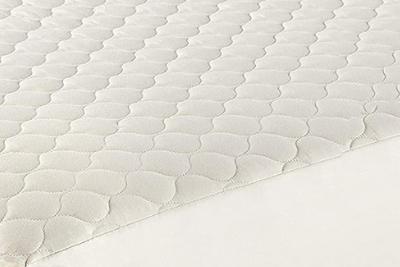
This OEKO-TEX mattress protector is certainly the most stylish on this list, with the quilted finish offering a luxurious, padded feel. If you don't have a mattress topper, then you'll certainly notice the benefit of the extra padding.
It's rated as asthma and allergy-safe, and being organic, it's also chemical-free.
The fit is just as good as the Naturepedic and PlushBeds alternatives.
The Boll & Branch mattress protector is not officially waterproof (they have opted for a cotton comfort layer rather than a polyurethane layer), and under heavy spills, some moisture does seep through after a short time. However, it can still cope with minor spills provided you attend to them quickly.
✔ Extra-Deep Pocket Size Option
✔ Asthma and Allergy-Friendly
✔ Waterproof
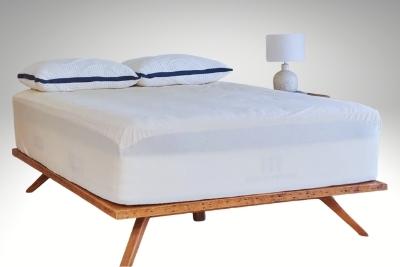
Why We Recommend It: The Avocado organic mattress protector comes in either a standard or deep pocket option, which fits mattresses up to 22" thick. Both versions offer an impressive range of certifications and effective waterproofing.
Avocado is a sustainable brand I keep coming back to because their products are always top quality.
This organic mattress protector is no exception. It is a little more expensive than the other waterproof options on the list, but it compares well in terms of comfort and durability.
Customers report that this protector offers a good fit for all sizes. The waterproofing is perfect on small and medium spills. With a double layer of organic cotton, it's completely noiseless even on restless nights.
Why We Recommend It: The Brentwood Home protector is certified non-toxic, offers good comfort and waterproof protection. The price has increased since the product was launched but it still holds up against other brands on the market.
This protector excels for comfort and waterproofing performance. It feels thicker than some other covers, which can add confidence.
It also pairs with Brentwood Home's Juniper kids mattress, which makes it a good choice for kids. The Juniper is one of our recommended bunk bed mattresses.
It does feel slightly scratchier than the other straight out of the packet, but that goes away after the first wash. It's not an issue if you always wash new bedding before first use anyway.
It passes spill tests with virtually no leakage, so we're confident about its effectiveness in keeping your mattress dry long-term.
Why We Recommend It: The Saatva Organic Mattress Pad has a highly breathable 300 thread count cotton weave that is ideal for hot sleepers. The fabric strikes a perfect balance between softness and airflow. It's very high quality with a luxury feel, for those with a bigger budget.
Natural materials like organic cotton and bamboo are known for their breathability, allowing air to circulate and helping to regulate temperature during sleep. Hot sleepers notice the difference in airflow between this and other products that contain a PU layer.
There's no doubt that the Saatva pad feels incredibly luxurious. It's halfway between a mattress protector and a topper, providing some (but not all) of the benefits of each.
The pad shields your mattress against general wear and tear, and protects from light stains, although it is not fully waterproof (as expected, since it is made from 100% cotton).
The elastic is strong, the pad is easy to fit, and it stays in place very well. You get an extra layer of padding, which could be a game-changer if your mattress is too firm.
I do feel the price point and lack of waterproofing mean this isn't ideal for everyone. But if you sleep hot, are happy with a pad rather than a protector, and you have the budget, then you won't find a better quality product than this one.
Why We Recommend It: Extra pocket depth, quality 300 thread count cotton weave, and very strong customer satisfaction made this product stand out from others available on Amazon.
This is another 100% cotton mattress pad that contains no polyurethane, similar to the Boll & Branch protector.
The trade-off is that it is water-resistant rather than fully waterproof. So while I wouldn't recommend either product for kids' beds, I feel both are a good option for most adults who are a little less prone to major leaks and spills.
The price of the Whisper Organics pad is mid-range, so it offers reasonable value for money. In terms of comfort and softness, I feel it compares well and more than holds its own against the more recognized brands.
The slightly larger pocket size might make all the difference if you have a thicker mattress. But those with thinner mattresses might find the elastic isn't quite strong enough, which can cause it to bunch up a little during the night.
Why We Recommend It: Quince offers a waterproof, durable protector at a budget friendly price. The cotton is organic according to the manufacturer, but not certified. But the product is machine washable and of perfectly good quality for the money.
The Quince mattress protector contains a thin PU waterproof barrier similar to that used by PlushBeds. It does a good job of keeping mattresses dry during water spill tests.
Quince is a brand that offers organic and non-toxic products at budget prices. The trade-off is that they are rarely certified, and that is the case with this product. Only the elastic is OEKO-TEX certified. The brand claims the cotton is organic, but you have to take that on trust. Based on my experience with testing their other products, I'm prepared to do so.
This doesn't feel as soft as some others on this list, and it's not as quiet as the PlushBeds protector, for example. But in terms of bang for your buck, it's on par.
Choose Quince if you want a waterproof mattress protector with no harmful substances, and can't afford the others on the list.
Eco-friendly mattress protectors offer cleaner materials, better breathability, quieter performance, and a lower environmental footprint than conventional synthetic alternatives, while doing the same job of protecting your mattress.
Here are the six benefits compared to the synthetic protectors most people grew up with.
To understand why these benefits matter, it helps to know what's actually inside a conventional mattress protector.
Regular mattress pads and protectors are synthetic and contain potentially toxic materials that can harm the environment and human health. Here's a list of the main materials to avoid, and why.
Many traditional mattress protectors contain PVC to make them waterproof.
According to the NJ State of Human Services, “PVC contains dangerous chemical additives including phthalates, lead, cadmium, and/or organotins.”
PVC off-gasses phthalates into the air, especially in warm conditions such as under body heat while you sleep (Clausen et al., 2012).
And Greenpeace says that "PVC is the most environmentally damaging plastic. The PVC lifecycle -- its production, use, and disposal -- results in the release of toxic, chlorine-based chemicals."
If you’re unsure whether or not a mattress protector contains PVC, simply check for the recycling code. If it's #3, it's PVC.
Steer clear of all synthetic materials if possible. Most waterproofing materials and flame retardants in these products have chemical finishes and are made from oil or other non-renewable resources that are not good for your health or the environment.
Look instead for mattress protectors made from sustainable fabrics.
Formaldehyde is often used in mattress protectors to prevent mildew.
The ATSDR reports that exposure to formaldehyde can cause the following issues:
Many traditional mattress protectors contain Perfluorinated Chemicals (PFCs) and Formaldehyde.
PFCs are used to boost the waterproofness and prevent creasing.
The Assistant Secretary of the Navy reports that exposure to PFCs can cause the following issues:
To avoid these potentially hazardous substances, choose an organic and/or non-toxic mattress protector.
Choosing the right mattress protector comes down to five things: whether you need one at all, what it's made of, what certifications back that up, how well it fits, and how it matches your sleep needs. Here's what to look for on each.
Certified organic cotton is the best shell fabric for a non-toxic mattress protector. GOTS-certified is ideal, but uncertified cotton from a reputable brand is acceptable if your budget is tight. Bamboo and eucalyptus are good sustainable alternatives, provided they haven't been produced with heavy chemical processing.
For waterproofing, look for a thin TPU or pure polyurethane layer. Both are medical-grade and safe, and they're the cleanest water barriers currently available in the US. Avoid anything containing PVC (recycling code #3), which is toxic and environmentally damaging.
The sweet spot is a GOTS-certified organic cotton shell with a thin TPU or PU waterproof layer.
The labels on the packaging tell you what's been independently verified. GOTS and USDA show you that the materials used are organic. OEKO-TEX, MADE SAFE, and GREENGUARD Gold confirm that it is a non-toxic mattress protector.
Material and safety:
Business and ethics:
For more information on each of these labels and others you might encounter, see our full sustainability certifications guide.
Measure your mattress depth before buying. Most protectors fit mattresses up to 15-16 inches, but if yours is deeper (or you use a topper), look for a deep-pocket option like the Avocado (22 inches) or Whisper Organics (17 inches). Strong elastic matters too, especially if your mattress is heavy.
For more on protector types and sizing, see our how to choose a mattress protector guide.
Use these shortcuts to match a product above to your priorities:
For most people, the PlushBeds Organic Cotton Mattress Protector is the best all-around pick.
If you want fully natural with no plastic layer, go for Boll & Branch. If you're working to a budget, go for Quince.
To prolong the life of your mattress pads and protector, I recommend you follow the manufacturer's care instructions.
However, if these aren't available, here are some general washing tips to keep your mattress cover in excellent condition.
A mattress protector isn't essential, but it's worth having for three reasons:
If none of these matter to you, you can probably skip one. For everyone else, the question is which to buy.
Conventional mattress protectors can off-gas volatile organic compounds (VOCs), including formaldehyde, which is added to many traditional protectors to prevent mildew. The EPA identifies formaldehyde as one of the most common indoor VOCs (US EPA).
Organic mattress protectors are free from these treatments and don't off-gas VOCs into your sleep environment.
The term hypoallergenic has no legal definition, so it is important to realize that brands can claim their products have "hypoallergenic properties" without it actually meaning anything.
In general, the term is supposed to indicate that products have been designed to help allergy sufferers by minimizing materials known to cause allergic reactions. In bedding, this might mean using materials such as bamboo or high thread count cotton, tightly woven to help prevent dust mites, mold, and other allergens.
However, you should be aware that when a product is marketed as being hypoallergenic, there is no guarantee it helps with allergies.
All recommendations on our list work on a latex mattress. But the best match is usually a 100% organic cotton protector with no waterproof layer, since natural latex is chosen for its breathability, and a polyurethane barrier partially blocks that airflow.
The Boll & Branch mattress protector is my top pick for latex because it's 100% organic cotton, plastic-free, and GOTS- and OEKO-TEX-certified. If you need waterproofing, the Avocado protector is the best alternative, with a 22-inch pocket depth that handles latex plus a topper.
The best organic mattress protectors last as long as 5-7 years with proper care. Some even get softer through continued use.
Organic mattress protectors are virtually silent, unlike cheap PVC protectors, which produce a crinkly noise.
Organic protectors with a thin TPU or polyurethane barrier sandwiched between two layers of organic cotton, like the PlushBeds and Naturepedic picks above, are noiseless in normal use. 100% cotton pads with no waterproof layer, like Boll & Branch and Saatva, are silent by design.
You should not put a mattress protector in the dryer, as machine drying damages the fibers and uses a lot of electricity. Air drying is always better for longevity and the environment.
The one exception on my list is Boll & Branch, which the manufacturer states can be tumble-dried. For any protector with a polyurethane or TPU layer, always air dry to avoid damaging the waterproof barrier.
TPU (thermoplastic polyurethane) is a medical-grade plastic considered safe for bedding, whereas PVC contains harmful additives, including phthalates, lead, and cadmium. Both are used to waterproof mattress protectors, but they're very different in terms of safety (see the PVC section above for the full chemistry).
All the waterproof protectors I recommend use TPU or pure polyurethane, never PVC.
Pure polyurethane and TPU, as used in mattress protectors from PlushBeds, Naturepedic, and Avocado, are medical-grade plastics considered safe for bedding. Don't confuse them with polyurethane foam, which can off-gas VOCs and is a different material entirely.
Every waterproof protector on this list uses a thin, certified non-toxic polyurethane or TPU layer, and several (like Naturepedic and Avocado) carry MADE SAFE certification that verifies this.
The waterproof nature of some mattress protectors often comes at the expense of some level of breathability.
If breathability is your top priority, for instance, if you are looking for a protector for your baby or toddler, then a breathable waterproof crib mattress pad can offer the best of both worlds.
Not quite. A mattress pad is slightly thicker than a protector but thinner than a mattress topper.
Pads are generally not waterproof like protectors, but are cheaper than toppers and offer some of the benefits of both.
Mattress protectors, pads, and bed bug-killing covers all help keep your mattress dry and reduce wear and tear. But you need to go organic if you want to help protect the environment and keep harmful chemicals out of your bedroom.
In my tests, the PlushBeds and Naturepedic waterproof mattress protectors came out on top.
If you prefer a fully natural mattress cover and don't need full waterproofing, then the Boll & Branch pad is the best option.
All of these products are well worth the investment - in fact, they actually save you money in the long term when you consider that they can extend the average life of your mattress by between 5 and 10 years.
Our core values mean we always prioritize sustainability over profit. We carefully research and evaluate every product to ensure they meet our high standards. All products featured in this article are recommended in accordance with our Review Methodology.
TheRoundup.org - As Seen On

