
TheRoundup is reader-supported. We may earn a commission when you make a purchase via links on this site, at no cost to you.
All products are reviewed in accordance with our Review Methodology.

Organic pillows are the perfect solution if you're concerned about breathing in toxic chemicals while you sleep.
Most regular pillows are made from synthetic materials such as polyurethane foam. It's terrible for the environment and contains toxins and flame retardants that can affect the air quality in your home.
If you're like me, you won't want these harmful chemicals right next to your head for 8 hours a day!
I've spent over 12 months testing and researching the best organic pillows on the market, during which time I've learned which brands and products are trustworthy (and which to avoid).
Below, I list some amazing options made from natural materials like organic latex, organic wool, or down feathers. They're super comfy, offer incredible head and neck support, and (crucially) are certified non-toxic!
✔ GOLS & GOTS Certified
✔ Optimal Support & Comfort
✔ Perfect for Combination & Side Sleepers
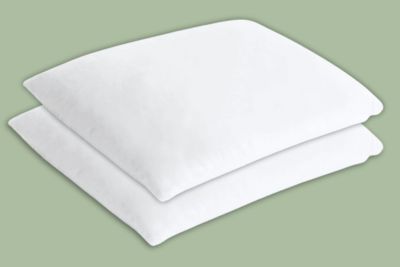
We Say: PlushBeds is the brand we use the most in our bedrooms at home. And now they’ve knocked it out of the park again with this organic shredded latex pillow.
In the past, I've sometimes found solid latex pillows a little too hard for my liking, but this shredded offering feels just right! It’s rated as a medium-firm pillow and offers the perfect level of support and comfort for side sleepers like me.
The adjustable design means it's also the perfect choice for combination sleepers who like to change position during the night. This, combined with the excellent support and spinal alignment, is why I also picked it as my top organic pillow for neck pain relief.
The Standard size has a 4” loft. The Queen and King sizes have a loft of 5”. In my experience, both should suit the majority of sleep styles.
I found that the GOTS-certified organic cotton cover made the pillow breathable, cool, and silky soft to the touch, which means it's a great option for hot sleepers like me.
You'll also benefit from a three-year warranty and free shipping within the United States.
Returns are not accepted due to sanitary reasons. However, if your pillow develops a fault in the first three years, PlushBeds will replace it for free and ask you to dispose of the faulty one responsibly.
Not that I expect you to have an issue. We’ve had these pillows for a long time, and they’re still as comfortable now as the day they arrived.
✔ GOLS, GOTS & Greenguard Certified
✔ Softer Feel
✔ Certified Non-Toxic
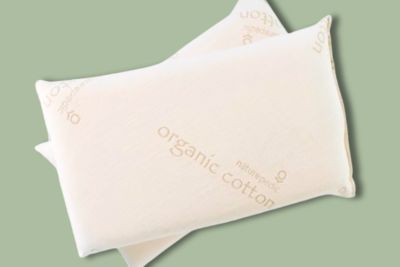
We Say: There was nothing much between this pillow and my overall winner from PlushBeds. It all came down to firmness preference.
This pillow is noticeably softer than the PlushBeds one. I prefer a firmer feel, so this one didn't work quite as well for my needs. But if you prefer a soft pillow, or you normally sleep on your front, then this is a great option for you.
This Naturepedic pillow offers a certified organic latex core, and the cover is made with certified organic cotton. It’s also certified non-toxic by MADE SAFE.
The stretch-knit fabric cover feels so soft you might find yourself slowly stroking it as you drift off to sleep (I did). I also found it helped keep me cool through the night.
I also love that Naturepedic is a member of 1% For The Planet and is also Rain Forest Alliance and GREENGUARD certified.
You only get a one-year warranty with this pillow (compared with three years with PlushBeds), but you do get free returns and a 30-night sleep trial (something that PlushBeds doesn’t offer).
There are no shipping costs to pay if you live within the contiguous United States.
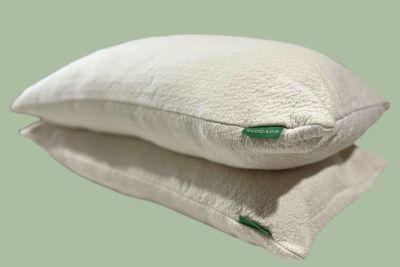
We Say: Avocado organic sleep products have always been amongst my favorites, and this GOLS-certified organic latex pillow is no exception.
The Avocado Green Pillow is, hands down, the best kapok pillow option I tested. The rest felt stiff and uncomfortable. But the Avocado Green Pillow was different. The hybrid mix of latex and kapok gives a softer, fluffier finish that feels exactly like down while still maintaining excellent levels of support.
That's why I've rated it as a great down alternative pillow. But I also found that it sleeps incredibly cool. So if you're a hot sleeper, this is going to be a great option for you!
I also love the customizability of this pillow. You can add or remove filling to get the perfect loft for your sleep style. I find the standard medium-plush version to be ideal for side and stomach sleepers.
The pillow is GREENGUARD Gold certified, vegan, and handmade in Los Angeles.
You get 100 nights to try this pillow in the comfort of your own home, and a one-year warranty covers your purchase.
In terms of shipping, not only is it free of cost…it’s also free of any carbon emissions.
✔ 35% Discount Code
✔ Temperature Regulating & Moisture Wicking
✔ Luxurious Softness
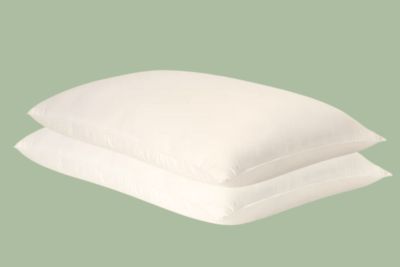
The 100% long-strand mulberry silk filling of this pillow gave a luxurious softness and natural breathability that none of the other silk pillows I tested could match.
From the first night of the test, the Cozy Earth Silk Pillow improved my sleep quality. Its soft, plush feel cradled my head gently while still offering a high level of support.
Unlike other pillows I tested that flattened over time, this one maintained its loft and shape. It just needed a quick daily fluffing to keep it in tip-top condition.
The ethical production practices of Cozy Earth also add to the appeal of this pillow. You can sleep soundly knowing that your cloud-soft pillow doesn't come at the expense of the planet or human rights.
✔ GOLS Certified Organic Latex
✔ Soft and Supportive
✔ Solid or Shredded Fill
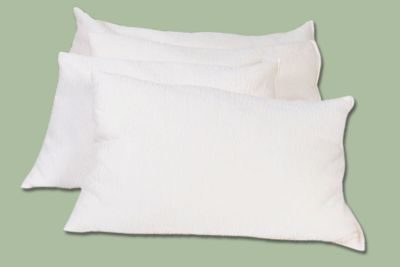
We Say: Latex for Less offers you the choice of fillings for the same affordable price.
You can choose from two options: a solid latex core, which offers responsive support in any sleep position, or a shredded latex core which is softer, fluffier, and great for back sleepers. I found it allowed my head to sink in but still provided enough support to create the perfect shape.
Both versions come wrapped in an organic cotton shell for comfort and breathability.
The pillow has a 100% organic latex core (GOLS Certified) and is backed up by a generous 5-year warranty.
With genuine 5-star customer ratings, and my own personal seal of approval (I can vouch for the fact that it's extremely comfortable), you're sure to get a good night's sleep in any sleeping position.
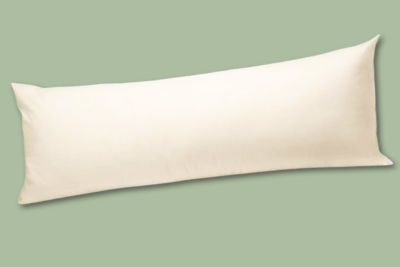
We Say: My wife suffered terribly from backache when pregnant with both of our daughters. A body pillow helped manage the pain at night and eventually stopped it altogether.
We tested a handful of body pillows and eventually decided that The Futon Shop organic cotton pillows performed better than the rest.
Sleeping with a body pillow took some getting used to for me. But once I got the technique right (with a bit of help from Mrs. Miller), I started to see the appeal.
The $20 shipping fee is a little on the steep side. However, if you live close to a store, you can order for free in-store pick-up.
✔ Exceptional Comfort
✔ Thick but Breathable
✔ Wool Quilted for Extra Softness
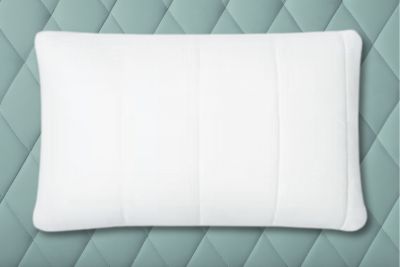
We Say: The Saatva Quilted Pillow is new on the market. It stands out as a very high-quality product, but with a price tag to match.
Sleeping on an organic pillow is always an upgrade due to the high-quality materials, but this really takes it to the next level. It boasts a soft, shredded latex fill, and the pillow slip is removable and machine washable for ease of use.
What sets it apart from similar products is that the GOTS organic cotton cover is also quilted with a layer of New Zealand wool. It's hypoallergenic (according to Saatva). We found it feels so incredibly soft, you just want to doze off as soon as your head touches it.
The 7" loft makes the Saatva Quilted Pillow thicker than most of its rivals, which you'll particularly appreciate if you're a side sleeper who finds standard pillows too thin.
At a little over $250 for a Queen size, these natural latex pillows do come with a premium price tag (although they also offer a standard Saatva Latex Pillow which is around $100 cheaper). But if your budget allows, this is the ultimate in luxury sleep.
Wondering whether PlushBeds, Naturepedic, or Avocado pillows are the best choice for you?
To help you make your selection, here are the key attributes of my 7 top chemical-free pillows compared side by side.
| Pillow | PlushBeds Shredded Latex | Naturepedic Solid Latex | Avocado Green Pillow | Cozy Earth Silk | Latex for Less | Futon Shop Body Pillow | Saatva Quilted |
|---|---|---|---|---|---|---|---|
| | | | | | | |
| Best For | Best Overall & for Neck Pain | Stomach Sleepers | Hot Sleepers / Down Alternative | Silky feel | Back and Combination Sleepers | Backache during pregnancy | Luxury |
| Certs | GOLS, GOTS, GREENGUARD Gold | GOLS, GOTS, Vegan, MADE SAFE, GREENGUARD | GOLS, GOTS, OEKO-TEX STANDARD 100, MADE SAFE, GREENGUARD Gold | None | GOLS | USDA Organic | GOTS |
| Fill | Organic shredded natural latex | Organic solid natural latex | Organic latex, Organic kapok | Mulberry silk | Organic shredded latex or solid latex | Organic cotton batting | Shredded natural latex |
| Cover | Organic cotton | Organic cotton | Organic cotton | Bamboo viscose | Cotton | Organic cotton | Organic cotton & organic New Zealand wool |
| Firmness | Medium-Firm | Soft | Medium-Plush | Soft | Soft & Fluffy | Medium | Soft |
| Sizes | Standard, Queen, King | Standard, Queen | Standard, Queen, King | Standard, King | Standard, Queen, King | 9” x 42”, 14” x 34”, 17” x 53” | Queen, King |
| Warranty | 3 years | 1 year | 1 year | 10 years | 5 years | None | 1 Year limited |
| Price (From) | $119 | $109 | $107 | $198 | $109 | $60 | $265 |
My family and I personally tested more than a dozen organic pillows over 12 months, sleeping on each one for at least 30 nights. All pillows were tested in a temperature-controlled bedroom (68°F) using either bamboo or organic cotton bedding to ensure consistency.
We used the following evaluation criteria to arrive at our final rating.
Comfort & Support (30%) - spinal alignment, firmness accuracy, and pressure relief measured after 14 and 30 nights
Toxicity & Certifications (30%) - verification of GOTS/GOLS/MADE SAFE/GREENGUARD/USDA credentials and absence of chemical odor
Breathability (15%) - surface temperature measured using a digital thermometer before and after 8-hour use
Durability (15%) - loft retention and resilience after 30 days
Value (10%) - overall comfort-to-price ratio
All items were purchased at retail. No manufacturer paid or sponsored placement in this review.

Now that you've seen our top picks, you might be wondering what the difference is between organic and regular pillows, and whether switching to organic is worth the investment.
First, we need to explain what actually qualifies a pillow as 'organic' and why these certifications matter.
An organic pillow must be made from materials that have been grown and processed according to specific standards, without the use of synthetic pesticides or fertilizers.
Similarly, an organic wool pillow must be made from wool taken from sheep that have been raised on organic farms that do not use chemicals to control parasites.
Bodies such as the Global Organic Textile Standard (GOTS) or the Global Organic Latex Standard (GOLS) provide guidelines for how materials should be grown, harvested, and processed to be considered organic.
TIP: Beware of greenwashing! Some less ethical pillow manufacturers have been known to market their product as an organic pillow, when in reality it's really an organic cover over a synthetic filling.
Don't fall for these claims! Both the cover AND fill need to be organic. Synthetic fill material will still off-gas chemicals even if they're wrapped in an organic cover, and they are still bad for the environment.
Overall, I feel that the pros far outweigh the cons and I would advise anyone to buy pillows made from 100% organic material if your budget allows.
As I mentioned in the intro, most regular pillows contain synthetic materials such as polyurethane foam.
This is a petroleum-derived material that is sprayed with chemical flame retardants, which can cause "adverse health effects", according to the NIEHS.
Research shows that we inhale gaseous emissions from pillows and mattresses while we're asleep (Laverge et al., 2013).
Some synthetic foams and fills also contain other substances that you need to be aware of, including the following.
Volatile Organic Compounds (VOCs) are present in the synthetic materials used to make most bedding products, including pillows.
There is no specific study proving that synthetic pillows make you sick. However, it is known that VOCs in synthetic materials off-gas harmful toxins that can cause headaches, breathing problems, endocrine disruption, and even cancer (EPA; American Lung Association).
Formaldehyde is one of the concerning toxic chemicals found in conventional pillows (California Air Resources Board).
This chemical is used to treat the fill material and cover material, and can be released into the air over time (EPA; CPSC).
Conventional pillows are made from synthetic fibers. Synthetics like polyester and nylon are more likely to irritate the skin and cause textile dermatitis (WebMD).
Synthetic fibers are also more environmentally damaging than natural fibers and sustainable fabrics (Gonzalez et al., 2023).
Many conventional pillows are treated with fire retardants. These chemicals can be released into the air and reduce air quality.
Many conventional pillows use polyurethane foam treated with flame retardants to meet safety standards. These chemicals can gradually migrate into dust and pollute indoor air.
Dr. Heather Stapleton of Duke University is a leading expert on flame retardants who has studied PBDE levels in indoor dust, including bedrooms. She revealed that "Every home we have tested contains PBDEs, and the levels in indoor dust can vary by a factor of a million."
Memory foam pillows made with CertiPUR-US certified foam have been tested for PBDEs, TDCPP, TCEP, heavy metals, formaldehyde, or phthalates (CertiPUR-US).
There is no fire retardant regulation in uncertified foam.
If you were thinking of shopping for organic pillows in stores such as Target or Walmart - beware!
Many manufacturers label cushions and pillows as organic, but in reality, they only use an organic encasement over a synthetic fill.
Do not fall for this greenwashing. Only 100 percent organic pillows are environmentally friendly and safe for you and your family.
Here are the criteria I used to decide on the best organic pillows to recommend as my top picks.
The fill material is a crucial factor when choosing organic pillows. The main types you'll come across are:
Your pillow cover is the part that is going to come into direct contact with your skin. Therefore, it is vital to choose sustainable textiles that have been produced without the use of chemical pesticides or fertilizers.
Most people prefer breathable materials that will wick away moisture, such as the following:
When choosing organic pillows, look for third-party certifications from respected and well-known organizations. This will give you valuable assurance that you’re buying a genuine product.
Some key certifications to look out for include:
The healthiest pillow is one that keeps your head and neck in a neutral position.
Your sleep position determines the type of pillow that provides you with the best support.
Sources: Cleveland Clinic | Mayo Clinic
Organic and sustainable products are sometimes more expensive.
This is because it costs more to produce the raw materials and pay everyone a fair wage in the supply chain.
However, the pillows on the list above are affordable and offer excellent value for money. They'll last longer than cheap synthetic pillows, and you really can't put a price on keeping chemicals out of your home.
Yes, organic pillows are worth it. They're better for the environment and help avoid exposure to chemicals found in non-organic pillows.
They might also improve your sleep quality, thanks to natural breathability and comfort. They do cost more, but are often more durable, making them a good investment in the long run.
The least toxic pillow filling is organic latex, followed closely by organic cotton and wool. These materials are free from synthetic chemicals and pesticides.
Organic latex, in particular, is highly regarded for its purity and lack of toxic off-gassing, making it an excellent choice for a non-toxic sleep environment.
Yes, ideally pillows should be organic. This is particularly important if you prioritize breathability, environmental sustainability, and natural materials in your bedding.
To know if your pillow is actually organic, check the product label or manufacturer's website for certifications such as GOTS, GOLS, or USDA Organic. These certifications ensure that the materials used are grown without the use of pesticides, and that the production process meets strict environmental and social criteria.
Side sleepers need a thicker pillow with a higher loft, to properly fill the gap under their head and keep the neck and spine in alignment.
The PlushBeds Organic Shredded Latex Pillow is a great choice for side sleepers and came out top in my tests.
Yes. To help prolong the life of your pillow, I recommend using a pillowcase and/or an organic pillow protector.
To clean and care for organic pillows, first remove the pillow case and spot clean spills immediately to prevent them from soaking into the filling.
If the pillow has a removable machine washable cover, I’d recommend washing it at a low temperature. Do not tumble dry unless the label specifically says you can. Most are line dry only.
Always check the care label to ensure you don’t do anything that will damage your bedding.
No - pillows that are free from harmful chemicals and toxins shouldn’t have any odors.
However, some organic latex might have a slight smell straight out of the wrapper. Simply leave it in a well-ventilated room for a few hours, and the smell should disappear.
Organic pillows can last between several years to a decade, depending on the material and how well they are cared for. For example, organic latex pillows are known for their durability and can last up to 8 years or more.
Organic cotton and wool pillows might have a slightly shorter lifespan but can still last for many years with proper care. To maximize longevity, follow the manufacturer's care instructions, such as using pillow protectors and washing the pillows as recommended.
We spend around 33 years of our lives in bed, so it’s crucial to ensure that our sleeping environment is as comfortable, relaxing, and healthy as possible.
Sadly, many people sleep on and under synthetic fibers, which potentially off-gas VOCs all night while they sleep.
Changing your pillow is an important first step, but don't forget to add organic sheets and bedding too!
This article revealed my picks for the top organic pillows of 2026, and I'm confident that at least one of them will be perfect for your needs and budget. Until next time, sleep well...
Our core values mean we always prioritize sustainability over profit. We carefully research and evaluate every product to ensure they meet our high standards. All products featured in this article are recommended in accordance with our Review Methodology.
TheRoundup.org - As Seen On

