
TheRoundup is reader-supported. We may earn a commission when you make a purchase via links on this site, at no cost to you.
All products are reviewed in accordance with our Review Methodology.

Getting the best organic toddler pillow is a key decision when your child is ready to take the big step from their crib to their first proper bed.
It matters because a non-toxic pillow can help reduce exposure to chemicals and potential allergens that are sometimes found in synthetic pillows.
Organic materials, such as GOTS-certified organic cotton and GOLS-certified organic latex, are essential for creating safe and breathable toddler pillows that prioritize children's safety, health, and well-being.
As a father of two wonderful girls, I've been through the process myself and know exactly what to look for.
This guide is for eco- and health-conscious parents looking for a certified organic pillow that's 100% sustainable, non-toxic, and great value for money.
✔ Lots of Certifications
✔ Naturally Cool and Wrinkle-Resistant
✔ Quality Organic Materials
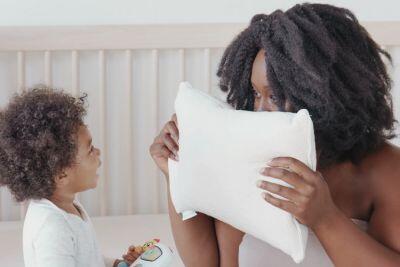
The Avocado Organic Toddler Pillow is made from premium organic cotton, latex, and kapok. It beats any synthetic materials in terms of breathability. In our testing, this appeared to help prevent overheating and help with restful sleep.
I love how this pillow is cool to the touch. It naturally resists wrinkles with no added chemicals, and effortlessly wicks away moisture.
Avocado's kapok is sourced from the tropical tree Ceiba pentandra. It's a lighter, softer, vegan, non-toxic alternative to down. The fill offers gentle support and just the right amount of loft for toddlers' neck alignment.
The kapok is paired with ribbons of GOLS-certified organic latex. They're repurposed from the same latex in Avocados organic crib mattresses. A lovely zero-waste touch!
In 2019, Avocado became the first mattress company to achieve Climate Neutral Certification. It achieved this by effectively offsetting its carbon footprint. Then it even went the extra mile by becoming carbon-negative!
✔ Light, Soft Feel
✔ Naturally Moisture-Wicking
✔ Made with 100% Renewable Energy
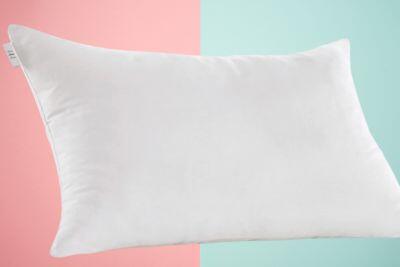
The Brentwood Home organic toddler pillow is the updated version of the popular Lilypad kids' natural pillow, which is no longer sold. The good news is that this product is just as good.
Brentwood Home is a sister company of Avocado. In fact, this pillow is made in the same factory as the Avocado Organic Toddler Pillow (using the same kapok).
This all-natural sleeping pillow is specifically designed to suit your child's delicate neck and shoulders. It has a lighter, softer feel and an organic cotton cover. This provides an excellent vegan-friendly, kid-friendly alternative to down feathers.
The Brentwood Home pillow is made from certified organic fibers, with a GOTS-certified organic cotton cover and GOTS-certified organic kapok fill. This pillow boasts a medium-firm feel and is not adjustable (for safety reasons).
But this pillow is not just for toddlers. My wife actually stole this from my office after I finished testing it! She now uses it as her travel pillow for vacations and long car journeys.
✔ Choice of Three Fills
✔ GOTS-Certified Organic Cotton Cover
✔ Interest-Free Payments Available
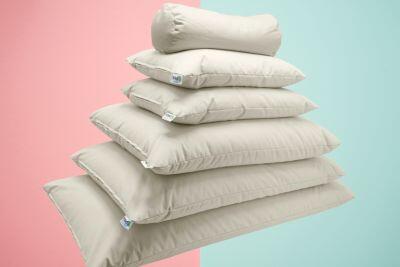
Bean Products' pillow features a tightly woven organic cotton enclosure designed to help protect against dust mites, bedbugs, and other irritants.
It's made with 100% organic cotton and meticulously crafted in the USA. It has a fully zipped enclosure for complete protection, and you can choose from three filling types:
Founded in 1987, Bean Products is (headquartered in Chicago, IL). The brand has been making eco-friendly home goods for over 25 years. This pillow is certainly one of their best products to date.
✔ Save 20% (Code: THEROUNDUP)
✔ GOTS-Certified Organic Cotton Cover
✔ Handmade in the USA

White Lotus Home's wool toddler pillow impressed me when I tested it with my nephew Alfie during his three-week stay over the Summer holidays.
The wool fill of the White Lotus Home Toddler Pillow maintained its loft without developing the flat spots I've experienced with synthetic pillows. The organic cotton sateen case feels smooth and soft against the skin, and the medium firmness provides proper neck support without being too high for Alfie's small frame.
White Lotus Home uses wool from ethically raised sheep to make this toddler pillow. The wool is naturally flame-retardant, according to White Lotus Home, which means no chemical treatments are added to this pillow.
Use discount code THEROUNDUP to save 20% off this pillow at White Lotus Home.
✔ Save 20% (Code: ROUNDUP20)
✔ GOTS-Certified Organic Cotton Cover
✔ Free Returns
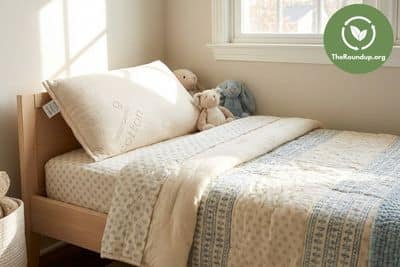
The Naturepedic toddler pillow features an organic cotton cover and a PLA (Polylactic Acid) batting fill. Although PLA is synthetic, this fill is made from non-GMO sugarcane, and the entire pillow is MADE SAFE and GREENGUARD Gold certified for low chemical emissions.
The downside is that it's not machine washable, so I recommend pairing it with the Naturepedic toddler-size pillow protector, which is placed under the pillow case to prevent stains and spills.
Organic pillows protect toddlers from exposure to VOCs (Volatile Organic Compounds) and chemical flame retardants.
Conventional pillows are often filled with synthetic fillers such as polyester. Being petroleum-based, synthetic materials can off-gas VOCs, which children breathe in while they sleep.
Organic pillows often hold certifications like GOTS (Global Organic Textile Standard) or OEKO-TEX Standard 100, which verify their safety and organic status.
Natural materials like wool and latex are naturally resistant to dust mites, mold, and mildew, reducing allergy triggers.
Investing in an organic pillow for your toddler may seem like a minor decision. But it can significantly affect their overall comfort and safety.
By opting for an organic pillow, you can provide them with a natural sleep environment that contains materials that have been tested for harmful chemicals.
To make sure you choose a healthy toddler pillow, look for natural, organic, and sustainable materials. These might include:
When shopping for an organic toddler pillow, keep an eye out for respected and reputable eco-certifications. They will help you avoid greenwashing and give you peace of mind that your new pillow is genuinely organic, sustainable, and free from harmful substances.
Prioritize products with the following certification labels.
A toddler pillow must be constructed with quality materials and techniques to last your little one as long as possible. Look out for:
To better cater to the smaller heads of toddlers, toddler pillows are intentionally designed to be smaller than adult pillows.
This smaller size ensures a more optimal fit. It also serves as a safety measure to reduce the risk of suffocation associated with overwhelming a sleeping youngster with excessive padding.
With potty training, messy feeds, and the general chaos of toddlerhood, accidents and frequent washing are to be expected.
The last thing you need is a pillow that requires constant spot-cleaning or hand washing.
Opt for machine-washable covers to cross one more task off your to-do list.
When it comes to pillows, striking the right balance is critical. You don't want a pillow as hard as a board, causing discomfort. However, choosing one that provides ample head and neck support is crucial.
What you need is a pillow that quickly regains its shape once compressed. If it fails to do so, it's a sign that it's too soft to support your toddler's head.
Look for pillows with a medium firm support, which promotes proper spinal alignment in kids whose necks are still not yet fully developed.
Pillow fillings have evolved significantly in recent years. Gone are the excessively stuffed polyester bricks of the past! You now have a variety of natural fillings to choose from.
Look for a filling level that avoids straining your toddler's neck. It should provide optimal support for the natural curvature of their spine.
Be careful with pillows containing small pieces of filling, because these could represent a choking hazard. A fully sealed pillow (with no access to the fill) is often the best option when buying for a toddler.
Here's a quick guide to helping toddlers transition from a flat surface to their first pillow.
It's generally recommended that toddlers use pillows once they begin sleeping in a bigger bed. At this stage, their neck and head muscles should be strong enough to support the pillow's weight.
Pediatricians generally recommend introducing a pillow to toddlers only after they are between 18 and 24 months old.
The American Academy of Pediatrics advises against allowing children under the age of two to use a pillow.
If in doubt, consult your pediatrician first for individual advice.
Once you've found the perfect organic toddler pillow, it's time to introduce it into your child's sleeping environment.
Start by using the pillow when your toddler is taking a nap.
This way, they can get used to the feeling of the pillow without being overwhelmed.
After your toddler has become comfortable with the pillow during nap time, you can start incorporating it into their nighttime sleep routine.
It's just like learning to ride a bike. You build up the confidence with training wheels (or, in this case, nap time) before moving on to the real deal.
Remember, every child is unique. Some may take to a pillow like a duck to water, while others might need more time. Be patient and persistent, and remember to prioritize safety above all.
Like most toddler pillows, even those made from safe materials can have downsides.
Hold onto your wallets, folks. Organic toddler pillows often have a higher price tag than their non-organic counterparts.
This is due to the stringent standards and processes involved in creating a truly organic product.
It's like choosing between a fast-food burger and a gourmet organic salad. The latter is undoubtedly healthier but also more expensive.
Organic pillows are great at many things, but maintaining their fluffiness isn't always one of them.
Take, for instance, pillows filled with organic cotton or wool. Over time, they may develop clumps and should be regularly aired and fluffed to maintain their optimal condition.
Love a warm bed? Well, your toddler might not share the sentiment.
Certain organic materials, like down, retain body heat. This can make the pillow feel warm, although it is far less of an issue than with synthetic materials like polyurethane foam.
This might be great for a chilly night, but it can become uncomfortable during warmer months.
Are you trying to create the perfect non-toxic sleep sanctuary for your toddler? You might want to consider the following products to complement your organic toddler pillow.
The average toddler pillow is 13" x 18" (33 x 45.7 cm). Some brands, such as Avocado, make them a little wider at 12" x 20" (30.48 x 50.8 cm).
For comparison, a standard adult pillow measures 20" by 26" (50.8 x 66 cm).
A perfect toddler pillow should be between 2" and 3" thick (5 to 7.6 cm).
I loved my bunk bed as a kid, and I've recently tested the best non-toxic options. Check out my bunk bed recommendations to find out more.
Sudden infant death syndrome (SIDS) is the unexpected, sudden death of an infant under one year of age. It's also sometimes called "crib death" or "cot death."
Babies and infants should not use pillows because they present a suffocation risk.
To be safe, I recommend using a toddler pillow for as long as possible. Only move your child to a standard-sized adult pillow once their toddler pillow is visibly too small and no longer offers adequate support. The Brentwood Home Natural Pillow is an excellent option if you want a size between an adult and a toddler pillow.
It's important to always follow the manufacturer's instructions for washing and care of an organic pillow. Generally, you should machine-wash the outer cover in cold water and spot clean the inner pillow. You could also put the pillow in direct sunlight to help deodorize and kill germs.
I tested the Little Sleepy Head Toddler Pillow and it is a decent product, but since it's not organic it didn't make the list.
Due to the processes involved in making memory foam, it can't be considered organic.
Using a pillowcase can help prolong the life of your best toddler pillow by protecting it from dirt, dust, and bacteria.
Creating an organic, non-toxic sleep sanctuary for your toddler is the perfect way to ensure a restful and comfortable sleep.
Organic materials provide comfort and support without risking exposure to toxic chemicals.
Educating yourself on the best non-toxic products for your child is essential. That way you keep them safe while they get the sleep they need to grow and thrive.
Our core values mean we always prioritize sustainability over profit. We carefully research and evaluate every product to ensure they meet our high standards. All products featured in this article are recommended in accordance with our Review Methodology.
TheRoundup.org - As Seen On

