
TheRoundup is reader-supported. We may earn a commission when you make a purchase via links on this site, at no cost to you.
All products are reviewed in accordance with our Review Methodology.

Are you concerned about chemicals in your wine? You're not alone.
A 2019 consumer survey conducted by The Wine Nerd found that 82% of wine drinkers would like to know if additives or chemicals were used in the making of their wine.
But can vineyards that use organic practices benefit your health as well as the environment? I decided to find out.
Certified organic wine is made from grapes grown without synthetic pesticides or fertilizers. It also means the drink was produced and processed under a USDA-certified organic system with no added sulfites.
My wife and I both love a glass or two (probably more often than we should). We also both hate chemical pesticides and fertilizers. So we jumped at the opportunity to test the best organic wine brands in the US.
From light, grassy whites to big, bold reds, we found some genuinely delicious organically farmed wines you can buy online at affordable prices.

✔ Supports Regenerative Agriculture
✔ Reduces Chemical Exposure
✔ Fewer Headaches
Why It's Best Overall: Kind of Wild Wines sells certified organic, zero-added-sugar wines from six countries through direct partnerships with small family growers. It makes premium, sustainable wine accessible to consumers who want to reduce chemical exposure while supporting organic and biodynamic agriculture.
Personal Experience: Kind of Wild completely transformed my weekend wine routine after I started to focus on certified organic options that wouldn't give me headaches.
I selected Kind of Wild after researching their partnership with small family producers. I wanted to test whether their organic approach would deliver on taste without the chemicals. It did!
The Austrian Grüner Veltliner became my favorite for evening tastings, and the Malbec pairs perfectly with a steak dinner.
Kind of Wild states that their wines contain "roughly half the amount of sulfur most conventional wines have". As I explain in the health benefits section below, this is likely to be beneficial for asthma sufferers and people who experience bad headaches (like me).
I noticed a huge difference in how I felt the next morning compared to conventional wines. I usually suffer from bad hangovers, but I did not experience my usual headaches when drinking Kind of Wild wines.
Needless to say, this was a game-changer for me. Now I can enjoy an extra glass or two without worrying about the consequences!

✔ Introducing Drinkers to Winemakers
✔ Supporting Small-Scale Wineries
✔ Instant Gift Cards
Why It's Best for Beginners: Organic Wine Exchange offers a curated selection of easy-to-understand organic and biodynamic wines. It also has beginner-friendly educational content and guided tasting clubs to simplify the discovery process and build your wine confidence with every sip.
Why It's a Recommended for Gifting: Organic Wine Exchange sells many different brands, which means a wider range of gift ideas than the single-brand recommendations (Frey, Kind of Wild, Avaline, and Bonterra). Organic Wine Exchange also offers themed samplers, customizable wine clubs, and digital gift cards. All of which make excellent gifts for the wine lover in your life.
Personal Experience: Organic Wine Exchange's educational approach impressed me more than I expected during testing.
I particularly enjoyed the blog content and virtual tasting events that connect me with actual vintners. There's so much to learn and always some new varieties to discover.
The 100% satisfaction guarantee proved especially valuable when I received one bottle that didn't match my taste. Organic Wine Exchange credited my account immediately without hassle.
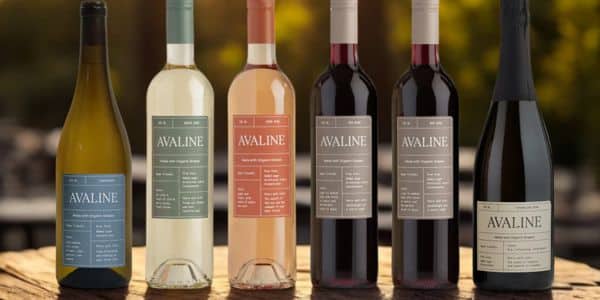
✔ Transparent List of Ingredients
✔ Easy Opening (Twist-Off Caps)
✔ Removing Intimidating Wine Jargon
Why It's Recommended for People Looking to Lose Weight: All Avaline still wines have 0g of residual sugar per 5oz serving.
This beats the next best low sugar brand, Kind of Wild Wines, which has 0.07g-0.19g per 5oz serving (depending on grape variety). However, Kind of Wild's sparkling (Brut Nature) has just 0.03g sugar per 5oz serving, ranking it among the lowest sugar sparkling options on the market.
Personal Experience: Avaline became a Miller household favorite during a three-month testing period when my wife and I explored organic wine alternatives.
The brand's commitment to ECOCERT-certified grapes and transparent labeling makes it easy to trust Avaline's production methods. Avaline's fermentation process produces still wines with zero residual sugar, which is great because I'm trying to limit my calorie intake at dinner.
The Avaline website states that they keep sulfite content to under 100ppm, which is less than 1/3 of the legal limit (350ppm). As with Kind of Wild, this means their wines are likely to be particularly suitable for headache and asthma sufferers.
Avaline's Spanish white surprised us with its versatility during Florida's humid summer evenings. Its bright citrus notes pair beautifully with fresh Gulf seafood from our weekend market trips.
The Cabernet Sauvignon became our preferred choice for cooler winter nights. It offers balanced tannins and dark fruit flavors without the harsh finish we'd encountered in other organic reds.

✔ Farming that Improves Soil Health
✔ Vibrant Fruit Flavors
✔ Eliminating Synthetic Chemicals
Why It's My Favorite Californian Wine Brand: Bonterra Organic Estates crafts premium California wines from 100% CCOF-certified organic and regenerative vineyards.
Kind of Wild also produces excellent certified California wine. However, Bonterra is my pick in this category because industry experts consistently vote it the #1 organic winery in the US. It also holds more certifications than the other brands I've recommended.
Personal Experience: Bonterra Organic Estates helped improve my understanding of organic winemaking through my research on regenerative agriculture practices during the testing process.
I visited their Mendocino County vineyards to see their sheep grazing between vine rows and witnessed firsthand how their cover cropping prevents soil erosion.
The Cabernet Sauvignon I sampled tastes remarkably different from conventional wines I'd tried. It is cleaner and more focused with no harsh aftertaste.
Their canned bubbles solved a practical problem I hadn't anticipated when planning a camping trip. Florida parks prohibit glass bottles on many trails, but these aluminum cans delivered genuine sparkling wine quality while meeting park regulations.

✔ Supporting Habitats & Biodiversity
✔ Transparency of Glyphosate Testing
✔ High Quality Grapes
Why It's a Top Choice for Value & Demeter Biodynamic: Frey Vineyards offers premium organic wine at a price that rivals some standard mass-market options. Their entry-level bottle retails for $13 (and is often available on Amazon for $10), which makes Frey the cheapest option I tested.
Frey Vineyards does not have as many certifications as Bonterra, but it's the only brand on the list that has the Demeter Biodynamic certification. This prestigious certification guarantees strict biodynamic farming standards, including cosmic timing, specialized preparations, and treating vineyards as self-sustaining ecosystems.
Personal Experience: Frey Vineyards impressed me during testing with delicious wines that tasted remarkably clean and vibrant.
The Frey Vinyards Cabernet Sauvignon pairs perfectly with grilled portobello mushrooms, as the wine's earthy depth complements the dish perfectly. The Sauvignon Blanc pairs beautifully with fresh goat cheese salads, delivering the crisp acidity I like when eating a lighter meal.
Frey ferments all wines with native yeasts, which creates authentic tastes that vary slightly between vintages. The wines contain no added sulfites, synthetic preservatives, or animal byproducts, which meet my family's dietary preferences.
My wife particularly enjoyed Frey's educational materials about biodynamic farming practices, and we're planning a visit to their Mendocino tasting room this fall.
My wife and I tasted at least 4 different bottles from each of the above organic labels over several sessions with meals and social settings to capture a realistic impression of their flavor, balance, and drinkability.
During social occasions, we also sought the opinions of our guests to see how the wines appeal to different palates. We also compared wines within similar categories to identify differences in taste, ingredient purity, and value.
Our recommendations are based on the following selection criteria.
We rejected more than 10 other wine brands because they failed to meet most or all of our criteria. All wines tested were bought online using the links provided above. All recommendations are based on genuine experience. No brand is permitted to pay for inclusion or position on our list.

Now we've covered the top brands, perhaps you'd like to try some for yourself? To select the perfect first bottle, just follow this simple checklist.
This 10-point checklist helps you choose the best organic red, white, rosé, or sparkling wine every time.
If you're still not sure of the benefits of organic wine, here's proof of why it's better for both you and the planet.
Organic wines are made from grapes that are grown without synthetic chemicals, pesticides, and fertilizers. This has a range of benefits for the environment, your health, and even your taste buds!
Organic producers are better for the environment in the following ways.
The main health benefits of switching to organic wine are reduced exposure to synthetic chemicals and additives, compared to conventional wine. The following specific benefits have been demonstrated by recent scientific studies, as indicated below.
In my experience, particularly with Kind of Wild, the purity of organic ingredients also leads to less intense hangovers. Which is a blessing as I get older!
Organic wines often have a more intense flavor and aroma profile than mass-produced wines.
But can you actually taste the synthetic pesticides in conventional wine? Some connoisseurs believe you can.
Blind-tasting experiments report that professionals prefer organic wines and detect off-flavours linked to pesticides in some conventional wines (Séralini GE, Douzelet, 2017). But these results have been questioned and are not universally replicated.
Whether or not it's down to pesticides or just higher quality grapes, there is further evidence to suggest that organic wines do taste better.
Expert score analyses show that organic and biodynamic wines frequently receive higher ratings on average (Delmas et al., 2016). Of course, taste is a matter of personal preference, and these are observational findings that don’t prove causation.
Organic wines often use traditional vinification methods, such as open fermentation processes or aging in oak barrels, which can further enhance the taste and complexity of the wines.
In my experience, they also tend to be made from higher-quality grapes. This is due to the stringent regulations that organic vineyards must adhere to in order to gain the required organic certifications.
Organic wine certifications give you peace of mind that your wine is genuinely organic. Here is a list of the labels you will see on wine in the US, and a description of what each one means.
For further sustainability signals, look for green certifications showcasing the wine makers' ethical and sustainability credentials, such as 1% for the Planet and Certified B Corporation.
Of the labels above, the strictest is Demeter, which is the standard for biodynamic wine. Here's more detail about what biodynamic wine is and what these standards involve.
Biodynamic wine is wine made from grapes grown using biodynamic farming, a holistic form of organic agriculture that treats the vineyard as a self-contained, living organism.
Biodynamic growers follow standard organic rules (no synthetic pesticides or fertilizers) plus additional biodynamic practices.
These include special herbal/compost "preparations," on-farm composting and animal integration, and timing certain field and cellar activities according to a biodynamic planting/astronomical calendar.
Demeter certification is the main international trademark for biodynamic farming. If a wine carries the Demeter® logo, it means an accredited inspector has verified that the vineyard and production meet Demeter’s biodynamic standards.
Some producers follow biodynamic methods without taking the Demeter certification. Demeter simply provides an independent seal of compliance.
The following table compares the key similarities and differences between organic and biodynamic wine.
| Topic | Biodynamic wine | Organic wine |
|---|---|---|
| Core philosophy | Holistic, farm-as-organism approach with spiritual/anthroposophical roots (originating from Rudolf Steiner). | Focus on excluding synthetic chemicals and promoting natural soil fertility and ecology. |
| Baseline practices | Always uses organic farming as a baseline (no synthetic pesticides/fertilizers). | Uses organic rules (no synthetic pesticides/fertilizers). Definitions set by national organic standards. |
| Special practices | Uses numbered biodynamic preparations (e.g., horn manure “500”, silica “501”) and follows a biodynamic calendar for some operations. | No biodynamic preparations or calendar requirements. Wide range of permitted organic practices. |
| Certification/label | Usually certified by Demeter® for biodynamic compliance. Some producers practice biodynamically without certifying. | Certified by national/regional organic bodies (USDA Organic in the U.S., EU Organic, Soil Association, etc.). |
| Winemaking (cellar practices) | Many biodynamic producers favor minimal-intervention winemaking (native yeasts, low additions), but practices vary by producer. | Organic wine rules govern inputs in the cellar. “Organic” does not automatically mean low-intervention. |
| Sulfites | Low-intervention wines may have lower added sulfites, but sulfite levels vary and are not inherently fixed by biodynamic practice. | Depends on jurisdiction: e.g., USDA Organic (US) prohibits added sulfites in “Organic” wines. “Made with organic grapes” may include added sulfites. |
| Environmental emphasis | Strong emphasis on closed-loop systems, biodiversity, and soil regeneration. Explicitly ecological and often focused on farm resilience. | Emphasis on reducing synthetic chemical use and protecting soil and biodiversity. Environmental outcomes depend on practices used. |
| Scientific basis/criticisms | Some practices (composting, biodiversity) have agroecological support. Other elements (astrological calendar, ritual preparations) are criticized as lacking conventional scientific evidence. | Broad scientific support for many organic practices (reduced residues, biodiversity benefits). Outcomes vary by implementation and context. |
| Taste/quality claims | Producers/consumers sometimes report distinctiveness and “terroir expression”. Sensory science is mixed and not universally proven. | Some organic wines are highly rated. Organic status alone does not guarantee particular sensory traits. |
| Typical buyer perception | Seen as premium, sustainable, and artisanal. Appeals to consumers wanting strong environmental credentials + “natural” winemaking. | Seen as a safer/environmentally preferable alternative to conventional wine. Appeals to consumers avoiding synthetic agrochemicals. |
| Cost/availability | Often priced at a premium (smaller producers, certification costs), availability varies by region. | Range from mass-market to premium. Availability is increasing as organic acreage grows. |
| Good short label cue | Look for Demeter® (or the word “biodynamic”). | Look for the USDA Organic label or wording like “Organic / 100% Organic.” |
Kind of Wild, the Organic Wine Exchange, and Frey Vineyards have the biggest range and best quality selection of organic red wines out of all the brands I tested.
Kind of Wild and the Organic Wine Exchange are the best organic white wine brands I tested. Frey Vineyards doesn't have the same choice of white wines as it does red.
Organic wine is healthier because it doesn't contain synthetic pesticides, herbicides, and additives. This delivers the potential health benefits listed above. However, it still contains alcohol, so you should still drink responsibly.
No, organic wines are free from synthetic chemicals, but they may still contain naturally occurring substances like sulfites or organic-approved treatments used in small amounts.
Yes, some people find organic wines to be more expressive of terroir and less manipulated. However, taste varies widely by grape, region, and winemaking style, not just whether it’s organic.
Not always. In the U.S., wines labeled "USDA Organic" must not contain added sulfites. However, wines labeled "Made with Organic Grapes" may have added sulfites, so it’s important to read the label closely.
Each term refers to a different approach to farming or winemaking.
Not always. While organic grapes are used, winemakers may still use animal-based fining agents. Look for wines labeled vegan or check with the producer to be sure.
Some people report fewer reactions to organic wines. This is also my personal experience, particularly with Kind of Wild wines. But this hasn’t been conclusively proven in clinical trials.
Reactions to wine can vary based on many factors, including alcohol, tannins, sulfites, and individual sensitivity.
Many organic wines are priced similarly to conventional wines, but some premium organic options can be more expensive due to the farming practices involved.
Yes, many major grocery chains like Whole Foods, Trader Joe’s, and natural food co-ops carry organic wines, though selection is often limited.
Look for certifications like USDA Organic, CCOF, or Oregon Tilth on the label. Terms like "Made with Organic Grapes" mean something different than "Organic Wine," so check for official seals.
Bonus tip: If you're unsure whether a wine is organic, check the producer’s website or consult a database like the NOP Organic Integrity Database.
No matter what style of wine you enjoy (whether it's a rich and robust red or a crisp and refreshing white), you're sure to find something you love when exploring the brands mentioned in this article.
With a plethora of domestic and imported wines available, each with unique characteristics and flavor profiles, it can be an exciting adventure to discover the perfect wine that suits your palate and preferences.
So, let your taste buds embark on a journey through the fascinating world of winemaking as you explore an ever-growing selection of exquisite wines from around the globe.
Cheers to discovering your next favorite bottle!
Our core values mean we always prioritize sustainability over profit. We carefully research and evaluate every product to ensure they meet our high standards. All products featured in this article are recommended in accordance with our Review Methodology.
TheRoundup.org - As Seen On

