
TheRoundup is reader-supported. We may earn a commission when you make a purchase via links on this site, at no cost to you.
All products are reviewed in accordance with our Review Methodology.

A tatami mat is a traditional Japanese floor mat consisting of a firm rectangular core wrapped in a woven rush grass surface, traditionally measuring around 2¼ inches (5.7 cm) thick.
Organic tatami mats are made from natural, biodegradable materials like Igusa rush grass, rice straw, and split bamboo. These sturdy, sustainable, and stylish alternatives to traditional carpets and rugs are becoming increasingly popular among eco-conscious consumers, offering natural fibers, tranquil colors, and an authentic Japanese feel.
But some synthetic mats contain compressed wood fiber board or polystyrene foam cores. They also contain chemicals and flame retardants you don't want in your home.
This guide is for eco-conscious homeowners, yoga practitioners, and anyone interested in traditional Japanese home decor without the chemicals.
Below, I list the best organic tatami mats that offer a sustainable, non-toxic alternative to conventional flooring, which can benefit both your health and the environment.
✔ Coconut Coir Core
✔ Pliable Surface for Yoga
✔ 2¼ Inch (5.7 cm) Traditional Thickness
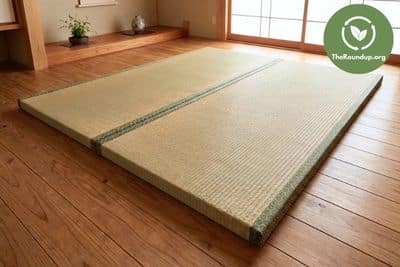
They Say: The tatami core is a combination of coconut hair and a cotton based natural filling makes this CocoMat Tatami extremely lighter (10 kg) and consequently easier to handle. There is no aroma or smell when they come out of the packaging. This combination establishes a pliable surface perfect for Yoga and soft exercise.
We Say: The Luxury Tatami Coco Mat is a coconut-cored tatami that works equally well as a traditional floor covering, a futon base, and a yoga surface. After testing it alongside our pure rush-grass mats, it's the most versatile tatami I've used.
The core combines latex-bonded coconut hair (1.8 cm / 0.7 inches) with a 1 cm (0.4 inch) layer of cotton and linen, finished with Igusa rush grass and a traditional black fabric edge on the long sides, for a total thickness of 2¼ inches (5.7 cm) that matches the classic Japanese specification. At roughly 10 kg (22 lbs) per piece, it's also lighter than equivalent rice-straw mats, which makes repositioning much easier.
There is no aroma when the mat comes out of the packaging, so you can use it straight away rather than airing it for days. The coconut fiber underside also allows moisture to evaporate naturally, so it can sit directly on a hard floor without the damp buildup that often causes mold.
The coconut and linen layer makes the mat noticeably softer underfoot than rush-grass-only options, which is why The Futon Shop markets it specifically for yoga and soft exercise. Mrs. M now uses ours as a permanent yoga mat in her home practice room and says it's just as good as some of the eco-friendly yoga mats we have elsewhere.
It comes in five sizes from Twin (39" x 75" / 99 x 191 cm) to Cal King (72" x 84" / 183 x 213 cm), with larger sizes shipped as two pieces that sit flush together. That's the broadest range in this guide and the main reason it works equally well as a yoga surface, a futon foundation, or a low-profile sleeping platform.
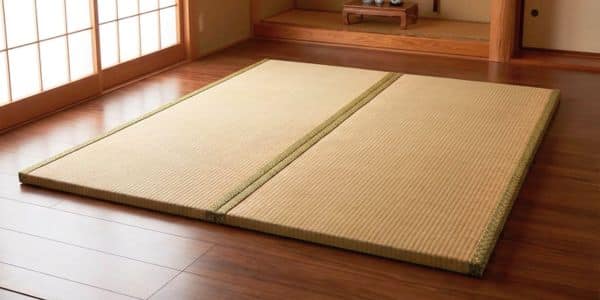
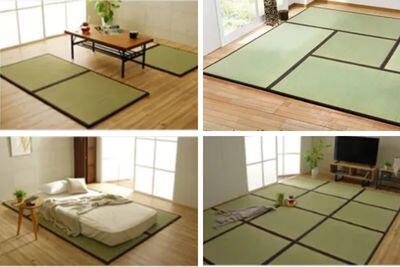
They Say: Create a space with a Japanese mood by simply placing these unit tatami mats on the floor. The mat surface material is made from Japanese (Kyushu)-grown rush grass. Each strand of rush grass is thick, with a thick surface skin and fine fibers, resulting in outstanding elasticity and durability.
We Say: FutonTokyo’s mats are a fantastic way to bring natural comfort and beauty into your home.
They’re constructed with Japanese-grown rush grass and Aomori cypress cotton padding, providing excellent elasticity and durability.
They’re lightweight and come with connector joints, allowing you to purchase multiple mats and customize the size and shape of your layout to fit any space.
The color of the edges of my mat looks different from that of the center, but this is not a sign of a product defect; it’s simply an effect of the natural materials used.
These tatami floor mats are a fantastic choice for anyone looking to add a touch of Japanese style to their home.
The free U.S. (carbon offset) shipping took under three weeks to reach my door. The mat was securely packaged and arrived 100% undamaged.
Finally, if you’re visiting Japan, FutonTokyo has a physical shop in Tokyo that you should visit!
✔ Double-Strength Woven Rush Grass
✔ Moisture Barrier Backing
✔ Kiln-Dried Hard Pine Frame
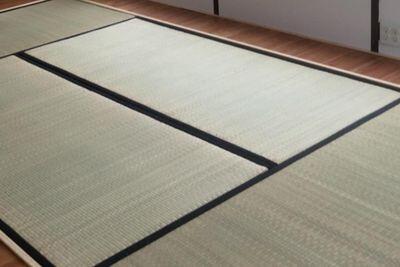
They Say: Oriental Furniture opened its doors in 1985 as a retail store in Natick, Massachusetts. Since then, we have been providing our customers with unique and handcrafted furniture, decor, and gifts from overseas. It has been our privilege to know and work with many of the same craftsmen and their families for more than 30 years.
We Say: Measuring 2” thick, this Oriental Furniture tatami mat is significantly thicker than average.
The thickness makes this platform mat a perfect choice for supporting furniture.
It’s also an excellent choice if you like the idea of sleeping on a traditional Japanese futon mattress on tatami mats but want that little bit of extra height off the ground.
Its double-strength woven rush grass and moisture barrier backing make it incredibly strong and durable.
This mat has a kiln-dried hard pine frame, which ensures that it has a perfect spring vs. firmness balance that makes it durable and comfortable to use.
In addition to the strong frame, it has a baked dried rice straw fill, which gives off a sweet and distinctive smell.
If 6’ x 3’ (72” x 36") is not right for you, don’t worry. This excellent platform tatami mat is available in five other sizes:
It’s beautifully designed in a classic Japanese style that instantly elevates any décor or room setting, making it the perfect choice if you’re looking for an attractive decorative platform that also provides a unique and beautiful flooring solution.
✔ 100% Japanese Rush Grass
✔ Thin and Compact
✔ Individually Crafted
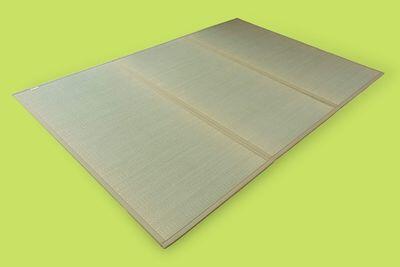
They Say: We use the highest-quality rushes and Japanese traditional methods passed down many years to delicately craft each tatami mat individually.
We Say: The FULI Japanese Tatami Mattress is ideal for giving your bedroom a unique and calming look.
FULI calls it a mattress, but it’s essentially the same as all the other folding tatami mats I tested…just better!
Its 100% Japanese rush grass material ensures that you will get the best quality and maximum comfort when using this mat.
As the rushes are individually crafted, you can be sure of their long-lasting durability too.
With the FULI Japanese Tatami Mattress, you don’t have to worry about sacrificing comfort for style because it offers both!
The right organic tatami mat for your needs comes down to six things: the core materials, the authenticity of the construction, the thickness, the size, the backing, and the weight.
Here's how to evaluate those criteria and find your perfect mat.
The traditional tatami core combines woven Igusa rush grass on the surface with a dense filling of rice straw, coconut coir, or both. These are the materials you want to see listed on any mat you're considering.
What you don't want is a synthetic core. Some cheaper mats sold as "tatami" use compressed wood fiber board or polystyrene foam underneath the rush grass surface, which defeats the point of buying organic and often brings flame retardants and other chemicals you don't want in your home.
If the product page is vague about what's inside the mat, treat that as a red flag and move on.
Authentic tatami uses Japanese-grown Igusa rush grass and traditional weaving methods, which give the surface its strength, elasticity, and distinctive scent.
This doesn't mean the mat itself has to be made in Japan to be worth buying.
Two of my top picks (FutonTokyo's Tenryu mats and FULI's Japanese Tatami Mattresses) are handmade in Japan. The Futon Shop Luxury Tatami Coco Mat is made in Asia rather than Japan, but still uses authentic Igusa surface material and a traditional 2¼ inch (5.7 cm) build.
What matters most is the materials and the method, not the country on the shipping label.
Full traditional mats at around 2¼ inches (5.7 cm) are firm enough to sleep on directly with a futon and stable enough to use as a low platform under furniture.
Thinner mats are easier to fold, roll up, and stow under a bed, but they won't give you the same support if you plan to sleep on them every night.
If you're buying for yoga or meditation, the full thickness still works, but a thinner folding mat is fine if you only need it occasionally.
Tatami sizing is one of the trickier parts of buying for the first time. Traditional Japanese mats follow regional dimensions, with Tokyo, Nagoya, and Kyoto each having its own standard sizes (more on those in the FAQ below). Many US-sold mats are cut to standard mattress sizes like Twin, Queen, and King instead.
If the mat is going under a futon mattress, match it to your bed size. If it's going on the floor as a flexible floor covering, unit mats with connector joints like FutonTokyo's Tenryu let you build out whatever shape your room needs.
Larger sizes often ship as two or more panels that sit flush together, which also makes them easier to carry up stairs and through doorways
A coconut fiber underside or otherwise breathable backing is what keeps the mat dry when it sits directly on a hard floor. Without it, moisture gets trapped underneath, and that's where mold problems start.
This matters more than people realize, especially in humid climates like ours here in central Florida. The Futon Shop Coco Mat's coconut fiber base was a major reason I picked it as the overall winner, and the Red Lantern mat has a sealed moisture barrier on the underside that achieves the same result.
Weight and panel count affect how easy the mat is to live with day to day. A 10 kg (22 lb) single panel is light enough for one person to reposition, while a king-size mat split into four panels is straightforward to move room to room or pack away for storage.
With those decisions sorted, let's look at the broader benefits of bringing a tatami mat into your home.
Organic tatami mats are better for the environment and can offer other benefits, including the following.
It’s not all positive, though. There are some minor potential downsides to be aware of:
If you decide the positives outweigh the negatives, there are many ways to use tatami in your home.
Organic tatami mats are most commonly used in the following ways:
Organic tatami mats can help reduce mold risk because the natural rush grass and rice straw or coconut fiber core absorb and release moisture, allowing humidity to evaporate rather than build up.
However, they're not mold-proof. Mats placed directly on cold or damp floors, or in poorly ventilated rooms, can still develop mold underneath.
Choosing a mat with a coconut fiber backing, airing it periodically, and maintaining good room ventilation will keep yours in the best condition.
Tatami mats are known for their distinct and unique smell. This is because the rush grass, rice straw, and split bamboo used to make them give off a natural scent that some find comforting, while others may find it unpleasant.
You can minimize the smell with regular maintenance, such as airing out the mat or using essential oils and incense. You just need to know how to care for your mat properly.
A tatami mat can last decades with proper care. Some top tips to extend the lifespan include:
Tatami mats first appeared in the ancient palaces of Japan and were used as a status symbol by the elite.
A tatami mat is made from a combination of Igusa rush grass, rice straw, and split bamboo held together with natural fibers and has been an essential part of Japanese culture since at least the Heian period (794-1185).
Tatami mats are still used today, especially by practitioners of Zen Buddhism, who use them as a meditation platform.
Organic tatami mats differ from other floor mats and bed rugs in their construction, firmness, and intended use.
Traditionally, Japanese tatami mats are usually twice as long as they are wide, with the most common sizing being 910mm x 1,820mm (35.8" x 71.7").
However, this varies slightly in different parts of Japan.
Most genuine tatami mats are made in Japan by artisan craftspeople. Organic certifications are often too expensive for small-scale producers.
Also, many of the certifications we’re familiar with in the U.S. are uncommon in Japan. The recommended mats might not be officially marketed as organic, but they’re jam-packed with non-toxic and sustainable natural materials.
Yes, tatami flooring is effortless to install and can be put in place within minutes.
Tatami mats are suitable for sleeping directly on the floor. Full-thickness mats like the Futon Shop Luxury Tatami Coco Mat are designed for this purpose.
Some people find traditional tatami mats comfortable enough to sleep on (and even find that the natural scent can help them sleep more deeply).
Others prefer an all-natural futon mattress on top of their tatami (which is an alternative to the traditional way of placing a futon mattress on a futon frame).
Tatami mats are perfect for creating a cozy and inviting atmosphere in your home.
They can be used in any room, but Japanese-style tea rooms (chashitsu) are also particularly suited to mats.
It’s a tatami mat with an internal layer of coconut coir for extra stability and durability. The Futon Shop Luxury Tatami Coco Mat is the best example I found.
The recommendations in this article come in a range of sizes. If you don’t find something to meet your needs, let me know, and I’ll help you source the exact size you’re looking for.
When people talk about tatami beds, they’re usually simply referring to a futon mattress on a tatami mat.
Traditional tatami mats are a great way to bring a Japanese aesthetic into your home and, if looked after correctly, can last for years. By following the tips in this article, you should be able to keep your mat looking as good as new!
Using original Japanese materials and, wherever possible, traditional production methods, you can ensure your tatami mat will stand the test of time. Make sure to buy from a reliable source so you don’t fall victim to greenwashing tactics or inferior products that won’t last.
Our core values mean we always prioritize sustainability over profit. We carefully research and evaluate every product to ensure they meet our high standards. All products featured in this article are recommended in accordance with our Review Methodology.
TheRoundup.org - As Seen On

