
TheRoundup is reader-supported. We may earn a commission when you make a purchase via links on this site, at no cost to you.
All products are reviewed in accordance with our Review Methodology.

Do you like to look good outdoors, but worry about the environmental impact of your fashion choices?
I'm fortunate enough to live in a sunny climate, so I spend a lot of time doing outdoor activities. That means I needed to research and test the best sustainable sunglasses that offer great UV protection, don't break, and don't add to plastic pollution.
Conventional sunglasses made from plastic aren't biodegradable and often end up in landfills. But eco-friendly alternatives like wooden sunglasses, recycled materials, or even bamboo look just as cool while being kinder to the environment.
In this article, I'll guide you through how to choose sunglasses that positively impact the world around us. I'll also review some top brands that offer safe, stylish, and long-lasting shades for men, women, and kids...
✔ Premium Biodegradable Acetate
✔ Made to Last
✔ Small Batch Production to Minimize Waste
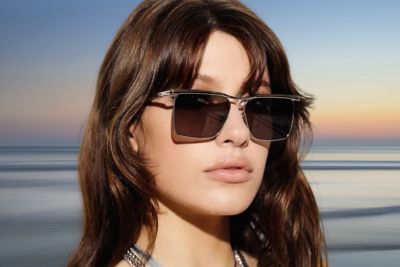
My daughters love Saint Owen glasses and were VERY insistent that I order a couple of pairs for testing.
So, as the doting Dad that I am, I agreed...and was very impressed!
Elegant with an edge. Bold yet refined. Skilled artisans at small-scale factories in Italy and Japan lovingly handcraft each pair of Saint Owen sunglasses.
Saint Owen sources the finest materials to guarantee ultimate comfort and durability.
Every frame is made using the finest Italian acetate, tumbled and hand-polished to achieve a flawless finish. CR-39 and Nylon lenses provide optimal clarity while offering full-spectrum UVA/UVB protection. An anti-reflective coating reduces glare, ensuring visual ease.
I adore the small-batch, slow-fashion approach embraced by Saint Owen. It minimizes waste and ensures remarkable durability, making each pair of its sunnies a potential lifelong companion.

SmartBuyGlasses has an extensive Eco sunglasses range with plenty of options for women, men, and kids.
It features many well-known designer brands, including Ray Ban, Gucci, Saint Laurent, and Smith.
Everything in the Eco range is made from sustainable materials. We were spoiled for choice.
They're popular too. SmartBuyGlasses tells us they saw a 300% increase in eco-friendly eyewear sales last year.
We decided to test the Serengeti Bormio which we loved. They look incredibly stylish and feel strong but lightweight. The wraparound frame is made from recycled eco-nylon (Econyl), with polycarbonate polarized lenses.
Delivery was fast (2-3 days) and came in recyclable cardboard packaging.
If you want a pair of designer sunglasses without having to sacrifice eco-friendliness, then SmartBuyGlasses is the place to go.
✔ Oprah's Favorite Things
✔ Certified Recycled Polycarbonate
✔ Most Affordable (Under $30)

These bargain shades are meticulously crafted in sunny California, featuring designs that are sure to catch your eye.
They're in the budget price range, but they do look more expensive than they are.
Peepers polarized sunglasses provide style and protect your eyes from harmful UVA/UVB rays with UV400 technology. Say goodbye to glare and hello to crystal-clear vision, even on the sunniest of days!
There is an 'Eco-Friendly' filter on the Peepers website that will show you all the options made from recycled materials (such as certified recycled polycarbonate).
✔ Recycled Aluminum & Sustainably Sourced Wood
✔ Water and Sweat-Resistant
✔ BPA-Free

Proof Eyewear (founded by three brothers in Boise, Idaho) manufactures some of the most sustainable and eco-friendly sunglasses on the market.
Its eyewear is carefully handcrafted from sustainable wood, cotton-based acetate, and recycled aluminum. And with 100% UVA/UVB protection, the lenses protect your eyes from harmful rays.
The small aluminum collection (made from recycled products and discarded scraps) stands out to me. These frames are lightweight, malleable, and infinitely recyclable.
It's also nice that all Proof Eyewear sunglasses come with a compostable case made from sustainably sourced wood.
✔ Recycled Plastic Resin
✔ Lifetime Warranty
✔ Polarised Lenses as Standard (Perfect for Water and Snow)

Sunski's signature SuperLight recycled plastic frames are a fantastic example of how to turn trash from our landfills into a trendy accessory.
The durability of these sunglasses is remarkable. I'm often quite clumsy, but these frames have stood the test of time. However, it's also good to know that if I do push my Sunski sunnies past breaking point, I'm covered by a lifetime warranty.
I love that all Sunski sunglasses come with high-quality polarized lenses. This is great for any activity done on a reflective surface, such as snow or water.
Combine the polarized lenses with the exceptional durability, and you have the perfect sustainable sunglasses for adventure sports.
The packaging of these sunglasses deserves a shoutout, too. They arrive in a folded paperboard box with no glue or plastic.
Sunski further demonstrates its commitment to the environment by being a proud member of 1% for the Planet and Carbon Neutral certified.
With everything from aviators to wayfarers, and with styles and sizes for men, women, and kids, this sustainable brand is likely to appeal to any taste.
We spent over six glorious summer months researching and personally testing sustainable sunglasses before finalizing our list of recommendations.
My family and I wore each pair of sunglasses in real-world conditions, during outdoor activities, beach trips, driving, and everyday errands. When we needed a second opinion, we asked Steph, Michael, and Arabella from TheRoundup team to offer diverse perspectives on fit and comfort. We then decided whether to recommend or reject each brand based on the following criteria.
We rejected brands that didn't meet our standards. Some used greenwashing language without real eco-friendly practices. Others failed to provide adequate UV protection or fell apart too quickly. A few brands simply didn't deliver on their sustainability claims when we dug deeper into their supply chains.
We've also removed some brands, such as Pela, from the list because they no longer sell sunglasses.
No brand is permitted to pay for inclusion in this list. Our recommendations are based purely on our testing experience and genuine belief in these products.
Use the following checklist to find stylish, sustainable sunglasses that are right for you.
The table below compares the main frame materials used in sustainable sunglasses so you can quickly identify the option that best fits your style, durability needs, and sustainability priorities.
| Attribute | Bamboo | Recycled Plastic | Bio-Acetate / Bioplastics | Wood | Recycled Aluminum |
|---|---|---|---|---|---|
| Sustainability | Renewable and biodegradable when untreated | Diverts waste from landfill and oceans | Plant-based feedstocks with lower fossil input | Renewable and sometimes reclaimed | High recycled content and fully recyclable |
| Durability | Moderate: can dent or crack | Good: similar to standard plastic | Very good: stable, long-lasting | Moderate: can chip or warp | High: strong and impact-resistant |
| Weight | Very light | Light to medium | Light | Light to medium | Very light |
| Water and Sweat Resistance | Can swell or warp with prolonged moisture | Good resistance | Good resistance | Low to moderate | Excellent resistance |
| Maintenance | Occasional oiling, avoid soaking | Simple wipe clean | Simple wipe clean | Gentle cleaning and conditioning oil | Minimal, simple wipe clean |
| Aesthetic Style | Natural, textured, earthy | Wide color and shape variety | Premium, smooth, designer look | Handcrafted, visible grain | Sleek, modern, minimalist |
| Care tips | Keep dry, avoid soaking, wipe clean. Apply light oil | Clean with mild soap and water, avoid abrasives | Use warm water and mild soap. Avoid high heat | Keep dry, condition with natural oil. Avoid long sun exposure when stored | Rinse after sweat or saltwater, dry with a soft cloth |
| Typical Price Level | Mid | Budget to mid | Mid to premium | Mid to premium | Mid to premium |
| Best For | Natural look and lightweight feel | Everyday use and strong value | Style-focused buyers seeking lower fossil input | Unique, artisan-oriented frames | Long-lasting frames for active lifestyles |
The FDA and the Centers for Disease Control and Prevention (CDC) recommend purchasing sunglasses that block 100% of both UVA and UVB radiation (FDA; CDC).
The American Academy of Ophthalmology recommends:
Look for a sticker or tag that promises 100% UV protection from all types of UV light. Some labels say “UV absorption up to 400nm,” which is also acceptable. (AAO)
Both the AAO and CDC state that wraparound sunglasses or large lenses offer the most protection.
Sunglasses are essential to protect your eyes from damage. We all apply sunscreen to protect our skin from ultraviolet (UV) rays, but remember our eyes need protection too.
Eco-friendly business practices go beyond the product.
Look for brands that use renewable energy, prioritize fair trade and labor practices, and give back to environmental causes.
Independent eco-certifications from trusted third parties help you avoid greenwashing and give you peace of mind that you're getting a genuinely ethical and sustainable product.
Some of the most relevant and trusted certifications when choosing sunglasses include:
Polarized lenses reduce glare and enhance visual clarity, giving you a safer and more enjoyable outdoor experience.
The polarizing filter blocks horizontal light waves that cause glare from reflective surfaces like water, snow, and roads.
Opting for sunglasses with lightweight frames and lenses enhances comfort and contributes to sustainability.
With reduced material requirements during production, lighter sunglasses help minimize environmental impact and promote eco-consciousness.
Choosing eco-friendly sunglasses that flatter your face shape makes all the difference. During our six-month testing period, we discovered that the same frame can look completely different on various face shapes.
Add angles and definition with rectangular or square frames. Saint Owen's structured designs and SmartBuyGlasses' angular Ray-Ban Wayfarers worked beautifully on our round-faced testers.
Avoid oversized round frames that emphasize facial roundness.
If you have an oval face, you're in luck because nearly any style works! Our oval-faced testers looked great in everything from Sunski's sporty wraparound styles to Saint Owen's bold statement pieces.
Focus on quality and sustainability rather than worrying about fit.
Soften strong jawlines with round or oval frames. Peepers' rounder frame options and Sunski's slightly curved Dipsea style balanced angular features perfectly.
Avoid geometric frames that emphasize your natural angles.
Balance a wider forehead with aviators or frames that are wider at the bottom.
Proof Eyewear's lightweight frames and Saint Owen's delicate designs worked exceptionally well without overwhelming narrower chin areas.
Always try to make sure frames don't extend beyond the widest part of your face.
Wooden frames (Proof Eyewear) require accurate initial sizing as they're less adjustable. Recycled plastic (Sunski) and acetate (Saint Owen) offer more flexibility.
Polarized lenses can be eco-friendly depending on how they are made.
Regular polarized lenses are not inherently environmentally friendly because the polarizing filter is usually made from polyvinyl alcohol combined with chemical dyes. This layer is laminated between plastic or glass. The filter itself is not biodegradable or recyclable.
Some brands now use recycled polycarbonate or biobased lens materials to reduce impact, but polarization does not change the environmental profile on its own.
Polarized lenses still fit into sustainable sunglasses when paired with eco-friendly frame materials, but it's the frame that is the sustainable and recyclable part. The lenses remain the least sustainable part of the product.
Bio-acetate is a plant-based plastic used for sustainable eyewear frames. Manufacturers create it by combining cellulose from cotton or wood pulp with plasticizers that come from plant oils instead of petroleum. The result is a sturdy, flexible material with the same look and feel as traditional acetate.
Bio-acetate is more sustainable than petroleum-based plastics. It uses renewable plant inputs, reduces reliance on fossil fuels, and avoids phthalate plasticizers. It is not fully biodegradable, but some forms are compostable in controlled industrial settings.
For consumer use, the main environmental benefit is lower fossil fuel impact and safer chemistry rather than full biodegradability.
Yes, green lenses (and also dark grey or brown) can help reduce glare while driving, offering better visibility on sunny days.
Cat-eye glasses can be unisex, but the style is often more popular among women. However, why worry about men's, women's, unisex, etc? Just wear what makes you feel good!
Choosing the best eco-friendly sunglasses doesn't mean compromising on style or comfort.
It's about making choices that are good for you and the planet.
So, next time you shop for shades, remember this guide and make a sustainable choice.
Do you already rock eco-friendly sunglasses as part of your sustainable fashion routine? What's your favorite brand? Drop me a line and let me know.
Our core values mean we always prioritize sustainability over profit. We carefully research and evaluate every product to ensure they meet our high standards. All products featured in this article are recommended in accordance with our Review Methodology.
TheRoundup.org - As Seen On

