
TheRoundup is reader-supported. We may earn a commission when you make a purchase via links on this site, at no cost to you.
All products are reviewed in accordance with our Review Methodology.

Are you looking for the best organic kids bedding for your little ones?
Organic bedding for kids is made from natural materials that are safer for children and free from harmful chemicals and synthetic materials.
As responsible parents, we should do everything possible to provide our children with a healthy and safe sleep environment every night.
With growing concerns about toxic chemicals, polyester fibers, and other synthetic materials used in sheets and bedding, choosing an organic option is the smartest choice for protecting your family and the planet.
This guide is for parents and caregivers seeking safe, non-toxic, and eco-friendly bedding options for children. We cover comforters, sheets, duvet covers, protectors, pillows, and blankets, explaining why organic bedding is important for your child's health and the environment.
Here's my selection of the very best (sorry, the bears, bunnies, and dinosaurs are not included)...
✔ Vegan-Friendly
✔ Certified Non-Toxic
✔ High-Quality Organic Materials
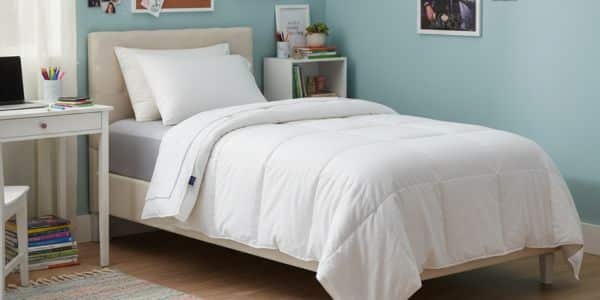
Why It's the Best Duvet Insert/Comforter: Naturepedic is recognized for its stringent non-toxic standards and high-quality organic mattresses and bedding. Their duvet insert/comforter is made from plant-based kapok and GOTS-certified organic cotton.
The result is a fully non-toxic product (confirmed by its MADE SAFE certification). So I'm confident this is safe for my kids to use.
For alternative recommendations, check out my article on Organic Cotton Comforters. I'm a fan of kids sleeping in their own twin-sized bed as soon as it's safe. Any of the recommendations (in Twin size) in that article will also work well for kids.
Personal Experience: We tested Naturepedic's duvet insert because my youngest daughter kept waking up scratching and kicking off her old comforter.
I can't say for sure it was the old comforter causing the issues, but the change was dramatic. Within a week, the nighttime complaints stopped completely. She now sleeps cooler, and her skin irritation has cleared up.
Her previous comforter developed lumps and flat spots that created cold areas, but this one has maintained even insulation. She also told me how much softer the cotton felt, which isn't something kids usually notice or mention.
We use this duvet insert as a comforter and do not use a duvet cover. It doesn't get too dirty (my daughter sleeps in pajamas and does not eat in bed), so it doesn't need frequent maintenance. We spot clean as needed and hang it outside on a sunny day once in a while to naturally deodorize.
However, if you do want to pair this insert with a duvet cover, you should take a look at MakeMake Organics.
✔ Fun Designs
✔ Pre-Washed to Reduce Shrinkage
✔ Keeps Duvet in Place
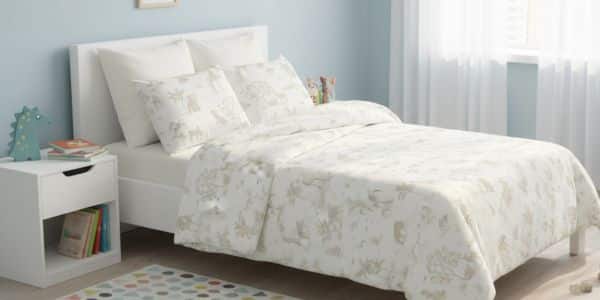
Why It's the Best Duvet Cover for Kids: Makemake Organics offers GOTS-certified organic cotton sateen sheets and quilts with whimsical patterns. Their breathable organic cotton sateen feels incredibly soft, and I love that MakeMake uses non-toxic water-based inks for the prints.
The reversible designs are adorable and practical. We liked the corner ties, which are a useful feature that keeps the duvet in place.
Personal Experience: MakeMake Organics' duvet cover set was perfect for my oldest daughter to test.
We need something that can survive her lifestyle without falling apart or looking dingy after a few months. She jumps on her bed, lets our dog Millie sleep with her, and forgets to take off muddy socks before climbing in. Kids, right?
The sateen held up better than I expected through our four-week test. I washed the set five times after particularly messy incidents, including one morning when Millie walked pond slime across the entire bed.
The duvet cover and pillow cases come out of the washing machine every time looking clean and with no signs of wear.

✔ Year-Round Comfort
✔ Easy Maintenance
✔ Immediate Broken-In Softness
Why It's the Best Sheet Set for Kids: Coyuchi offers luxury, GOTS-certified organic linen and cotton options for children's bedding. The organic cotton percale fabric of these Coyuchi sheets has a crinkled finish that is machine-washable and doesn't require ironing, which makes laundry day much easier.
This is a premium-priced option, but well worth the investment if you have the budget. If you're looking for something at a lower price point, consider MakeMake Organics (my duvet recommendation). They sell excellent organic sheet sets around 40% cheaper than Coyuchi, albeit not quite as good.
Personal Experience: Coyuchi sells organic bedding sets in all child and adult sizes, so I tested them myself.
I liked the feel of these sheets. Coyuchi's percale weave feels crisp and breathable instead of slippery, and the crinkled texture is soft with zero break-in period right out of the packaging.
The lower-than-average 180 thread count initially concerned me, but as soon as I opened the pack, I knew these sheets were high-quality. My years of testing have taught me that percale quality depends on fiber length and weave precision, not thread count.
My youngest daughter's Twin set feels identical to my King set in terms of quality and breathability. It's good to see that Coyuchi does not compromise on quality in the smaller sizes.
Coyuchi sheet sets come in an impressive range of colors, from neutrals like Alpine White and Undyed through chambray weaves and stripes. I chose Steel Blue for our room and Sage for my daughter's, and both colors have stayed vibrant after multiple wash cycles.

✔ Ethical Manufacturing
✔ Prevents Mattress Damage
✔ Reduces Sweating (DrySleep™)
Why It's the Best Mattress Protection for Kids: Naturepedic's kids mattress protector comprises two layers of GOTS organic cotton with a breathable TPU membrane in the middle. The DrySleep™ waterproof layer blocks leaks without trapping heat or making that annoying crinkly noise.
Naturepedic offers a 100-night trial so that you can feel confident about your purchase. This is great because, in my opinion, you can't really judge a mattress protector until your kid has an accident on it.
Personal Experience: My nephew Alfie is now almost five and has graduated to a Twin bed for what he proudly calls "big boy sleeps." So my wife and I bought him the Naturepedic Organic Waterproof Kids Mattress Protector Pad to celebrate the transition.
My sister-in-law tested it for three months and reported that the jersey fabric feels more like a regular sheet than a stiff barrier. Alfie said he didn't notice any texture difference from his old sheets and had no complaints about his new bed feeling weird.
This mattress protector ended up being washed every week after incidents of bedwetting and spilled juice boxes. The organic cotton maintained its softness through 10+ wash cycles without developing any pilling or losing its fitted shape around the mattress.
The lack of color options disappointed Alfie as he's currently obsessed with green and purple. But this is a very minor complaint, as mattress protectors rarely come in different colors.

✔ Custom Fill Levels
✔ Longer Usable Life
✔ Certified Organic Materials
Why It's the Best Pillow for Kids: Avocado's Green Pillow is a great eco-friendly product made from organic materials, and the finished product is GOTS-certified.
The adjustable fill lets you tailor the loft as a child grows and sleep needs change, which reduces future replacement costs. It also meets MADE SAFE, GREENGUARD Gold, UL Formaldehyde-Free, and Vegan standards, making it a safety-certified choice for kids.
If your child needs a pillow smaller than 19" x 25", you should consider the Avocado Organic Toddler Pillow I reviewed in my Best Organic Toddler Pillows article. It's packed full of the same certified organic materials, but measures just 20" x 12" and 1.5 lbs.
Personal Experience: I tested Avocado Green Pillows with both my daughters for over three months after we suspected their old pillows were causing neck pain.
The organic cotton outer stays cool during Florida's humid summer nights, and my girls no longer wake up with sweaty hair. The latex ribbons bounce back to their original shape every morning, and the kapok adds a soft, down-like feel without any animal products.
Avocado Green Pillows are not machine washable, and spot cleaning the cover is more inconvenient compared to machine-washable pillows. We used the pillowcases that come with the MakeMake Organics Duvet Cover Set and didn't have to spot clean at all during testing.

✔ Warmth without Bulk
✔ Layering in Colder Weather
✔ Luxurious Softness
Why It's the Best Blanket/Throw for Kids: Kids' blankets need to survive spills and weekly washing, and this blanket did that with ease during testing. Boll & Branch's organic cotton has OEKO-TEX and GOTS certifications, which means independent labs have tested it for harmful substances.
Boll & Branch blankets are premium-priced because their durability and certification level are expensive to produce. But after thorough testing, I'm confident it's worth the investment and built to last. If you're looking for a more cost-effective blanket, the Makemake Organics Organic Cotton Throw Blanket is smaller (50" x 60") and approximately 60% cheaper.
Personal Experience: The Boll & Branch Waffle Bed Blanket uses 100% long-staple organic cotton woven into an interlocking waffle pattern that creates small air pockets. We found the pockets are really effective at trapping warmth without bulk. They're great for winter layering and yet still breathe well enough to use alone when it's too hot for a duvet or comforter.
The organic cotton felt soft from day one and is getting noticeably softer after each wash. My daughters love wrapping themselves in this blanket when chilling, reading, or watching TV.
The waffle texture can snag on jewelry or pet claws if you're not careful. Our dog caught a thread on her collar buckle during the second week of testing. But it didn't create a hole, and the snag isn't even visible now.
If the selections above aren't quite right for you, here are a few more options that almost made the list.
That concludes our recommendations. Here's how we tested them.
We used each product for a minimum of four weeks in kids' bedrooms (except where otherwise stated) on top of a non-toxic mattress and bed frame.
After recording our observations and researching the brand, we rated the products based on the following criteria.
All recommendations and ratings are the result of our genuine first-hand experience. We purchased all products online using the links provided above. No brand is permitted to pay for inclusion or position in our roundups.
Choosing organic bedding for children means you avoid the synthetic chemicals, heavy metal dyes, and toxic flame retardants found in conventional bedding.
It's also better for the environment and offers the following benefits.
Using organic bedding can help reduce the risk of allergies in children.
Children, especially young ones, are more sensitive and prone to allergies and irritations (Chad, 2001).
Synthetic bedding is associated with asthma, allergic rhinitis, and eczema (Siebers RW, Crane J, 2011).
Organic linen, made without the harmful chemicals and toxins found in conventional materials, can help minimize these reactions.
Organic materials are often softer and more comfortable than their non-organic counterparts.
Natural materials like organic cotton and linen are more breathable and moisture-wicking, helping prevent overheating.
So, an organic sheet set can contribute to a more restful sleep for your child.
Organic bedding is often more durable than conventional bedding due to the absence of harsh chemical treatments that weaken fibers.
It's made from high-quality natural fibers that can withstand regular use and washing.
So, while using organic sheets and bedding might have a higher upfront cost, it could save you money in the long run.
Organic farming practices are generally more sustainable and less harmful to the environment.
They use fewer resources and don't involve synthetic pesticides or fertilizers.
So, when you search for organic bedding for kids, you're also making a more eco-friendly and sustainable choice.
When you choose organic, you're often choosing ethically made products.
Many organic companies prioritize fair trade practices, ensuring workers get fair wages and good working conditions.
It's a choice that respects the environment and the people behind the product.
Check the size of your child's bed and buy appropriately sized bedding.
A snugly fitting sheet is safer and more comfortable for your little one.
Ensure that the bedding is safe and age-appropriate.
Avoid blankets or quilts for children under one year old as they can pose a suffocation risk.
As for older kids, it's important to check that any cords or ribbons are short to avoid entanglement.
It's hard being busy parents, and we often need multiple bedding sets, so value for money is crucial.
But remember, cheaper isn't always better. Investing in high-quality bedding can save you money in the long run as it often outlasts cheaper alternatives.
Look for bedding made from organic materials and sustainable fabrics.
Some of the best include:
Organic farming uses less water and fewer pesticides than conventional methods, and usually supports better labor practices.
Choosing GOTS or OEKO-TEX certified products ensures safety and quality in organic bedding. These are at the top of the list of certifications you should look out for.
These organic certifications help provide assurance that the product you're buying is genuinely organic, safe, and produced in an environmentally and socially responsible manner.
Finally, let's remember the fun factor!
Kids love bedding that reflects their personalities or interests.
Whether solid colors or fun prints, the right design can make the bedtime routine much easier.
When buying kids' bedding, there are also several pitfalls you'll want to sidestep.
Avoid synthetic materials like polyester.
These materials can be treated with a cocktail of chemicals and may not breathe as well as natural fibers, making them less comfortable for your child.
You're also risking the possibility of these chemicals off-gassing during the night and being breathed in by your child.
Bedding labeled 'wrinkle-free', 'stain-resistant', or 'anti-microbial' often indicates heavy chemical treatment.
These treatments often involve harmful chemicals you don't want anywhere near your child's skin.
Kids have sensitive skin, and an uncomfortable texture can lead to restless nights.
Avoid scratchy materials and opt for softer, smoother fabrics.
When buying bamboo bedding for children, it's not all pandas and sunshine.
While bamboo has some stellar qualities, there are a few things you need to watch out for:
PVC (polyvinyl chloride) is a type of plastic commonly used in furniture and bedding. It can contain chemicals linked to health issues. Be sure to avoid any products with PVC when shopping for organic sheets for kids.
PFCs (perfluorinated compounds) are a group of chemicals used to make products stain-resistant or waterproof. They can adversely impact health and should be avoided when shopping for bedding.
Greenwashing is rife on Amazon. Some sellers claim they use organic cotton, but in reality, it's only a very small percentage. So you do need to be careful to double-check that what you're buying is genuine.
Magnolia Organics and Whisper Organics are two of my favorite sellers of organic sheets on Amazon.
Organic cotton products are made from certified organic cotton produced without synthetic pesticides and with restricted use of chemicals like phthalates and formaldehyde. Organic standards also require any dyes used to meet strict safety criteria.
100% cotton products are made purely from cotton, but that cotton might have been produced in a toxic and non-sustainable way.
This depends on what you're looking for. Bamboo is generally softer and often considered hypoallergenic, but it's not as durable as organic cotton and may be treated with harsh chemicals during manufacturing. Organic cotton is more durable and can be more sustainable depending on the production process.
Pottery Barn Kids bedding is ok, but we decided not to recommend it because of the high price. We don't consider that it offers good value for money compared to the brands we do recommend, such as Naturepedic.
When buying natural and organic bedding for children, keep an eye out for certifications to ensure the materials used meet strict quality and safety standards.
When shopping for bamboo sheets, check the manufacturing process, reviews, and warranties before purchasing.
Natural fabrics such as organic cotton, eucalyptus, wool, and bamboo offer better breathability than synthetic alternatives, and non-toxic dyes ensure your little one is not exposed to potentially harmful chemicals.
Finally, don't forget about comfort. Choose smooth textures over scratchy ones!
With these tips in hand, you should have no problem finding non-toxic, eco-friendly bedding that lasts long and looks great too!
Are you happy for your children to sleep on synthetic or conventional cotton bedding? Or will you only ever buy organic cotton kids bedding? Drop me a line and let me know.
Our core values mean we always prioritize sustainability over profit. We carefully research and evaluate every product to ensure they meet our high standards. All products featured in this article are recommended in accordance with our Review Methodology.
TheRoundup.org - As Seen On

