TheRoundup is reader-supported. We may earn a commission when you make a purchase via links on this site, at no cost to you.
All products are reviewed in accordance with our Review Methodology.
The best ways to make a hard mattress softer are to add a soft mattress topper, change the base underneath, or change the position you sleep in.
An overly firm mattress interrupts your sleep and leaves you feeling stiff in the morning, but replacing it with a softer mattress is expensive and often unnecessary.
The fixes below help you soften your mattress without buying a new one.
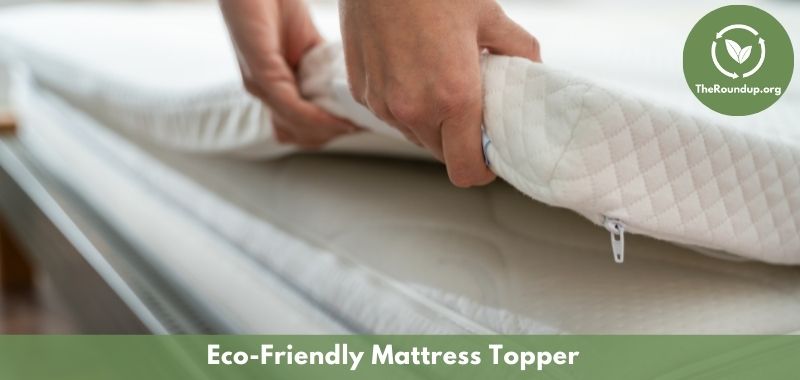
A soft mattress topper makes a hard mattress softer from the first night you sleep on it. A mattress topper works on any mattress type (innerspring, memory foam, latex, or hybrid).
Lay the mattress topper on the bare mattress, then put your mattress protector and fitted sheet over both.
A soft mattress topper makes a hard mattress softer by adding a layer of soft material between your body and the firm mattress surface. Soft material compresses under your shoulders and hips, so they sink into the topper while the firm mattress underneath still supports the rest of your body.
A firm mattress topper has the opposite effect, so make sure you choose one labeled soft or plush.
The best mattress topper for a hard mattress is a 3-inch (7.6 cm) topper labeled soft or plush, made of Talalay latex or memory foam. Talalay latex feels softer than Dunlop latex and springs back as soon as you move.
Memory foam mattress toppers also soften a hard mattress, but they aren't a sustainable choice. Memory foam is made from petroleum, traps body heat, and gives off a chemical smell (known as off-gassing) for the first few days after unboxing.
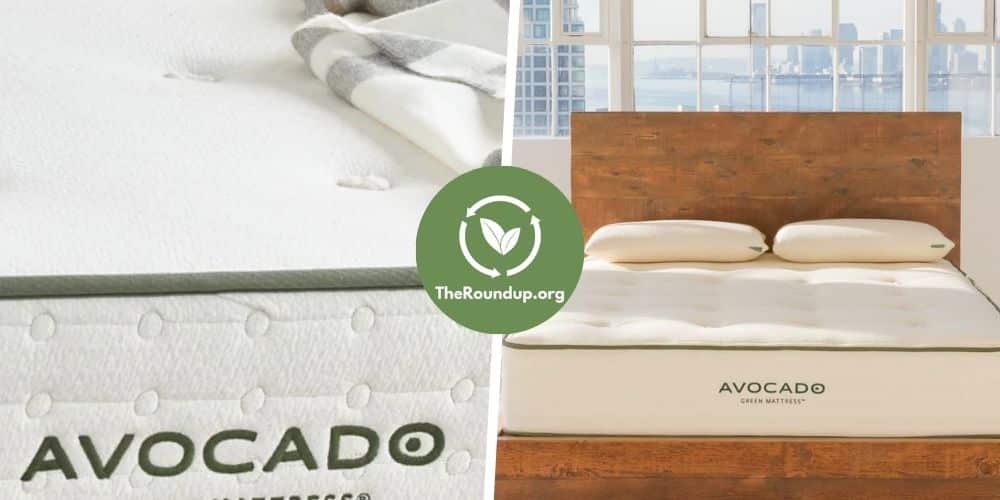
My pick is the Plush version of the Avocado Eco Organic Mattress Topper in 3 inches (7.6 cm). Avocado rates the Plush version's Talalay latex at 14 to 19 ILD (a firmness scale on which lower numbers are softer), which puts it at the soft end of the latex range.
Other soft and plush options are listed in our guide to organic mattress toppers.
A queen-size certified organic topper starts at around $250, which is a fraction of the cost of a new mattress but more than a mattress pad or a layer of blankets.
A quilted mattress pad or a layer of spare blankets makes a hard mattress slightly softer at little or no cost. Lay a comforter or a couple of thick blankets flat across the mattress and hold them in place with the fitted sheet.
A mattress pad goes on the same way as a fitted sheet, with its elastic skirt pulled over the corners of the mattress.
A mattress pad is much thinner than a mattress topper, and provides less padding and no support.
Mattress pads are cheaper than toppers and can be a useful low-cost option for people who want just a little extra cushioning.
A brand-new mattress gets softer as you break it in, so sleep on it for a few weeks before taking any other action. Repeated compression from your body weight softens the foam or latex in the mattress's comfort layers.
To speed up the break-in, crawl across the mattress on your hands and knees, or roll from side to side across it, for a few minutes each day.
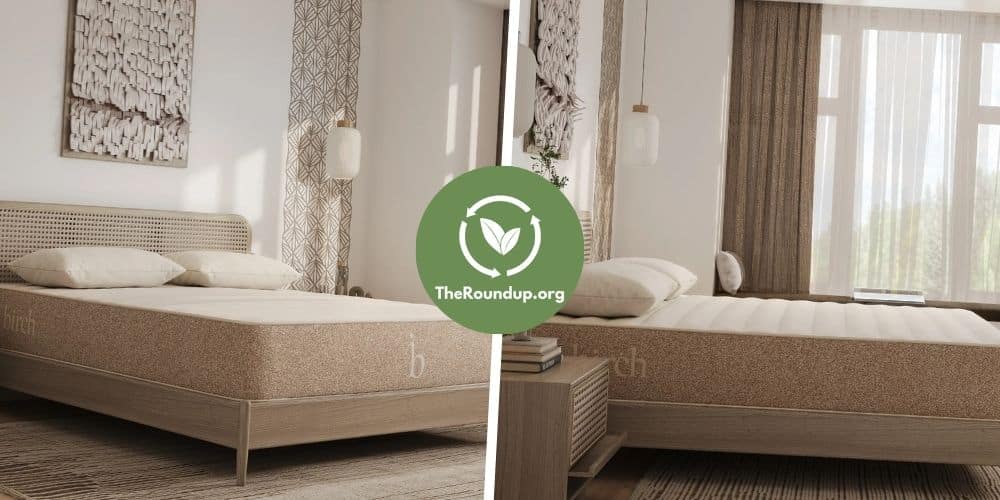
A new mattress takes about 30 nights to break in, according to popular brands like Birch and Avocado.
Sleep quality on a new bed keeps improving across that first month, by 24.2% from the first week to the fourth (Jacobson et al., 2009).
If the mattress still feels too hard after 30 nights, you are unlikely to get any more benefit from sleeping on it for longer, but other fixes, such as an increase in room temperature, may help.
A memory foam mattress feels softer when it is warm, so increasing the bedroom temperature by a few degrees before bedtime makes a hard memory foam mattress more comfortable to lie on.
To warm the sleep surface without heating the whole room, lay an electric blanket or a hot water bottle on the mattress before you get in.
Heat makes a memory foam mattress softer because memory foam is a viscoelastic polyurethane foam that stiffens as it cools and softens as it warms (Malewska et al., 2026).
Viscoelastic foam becomes noticeably stiff below about 10 °C (50 °F).
If your bedroom is already warm, try changing the base underneath the mattress.
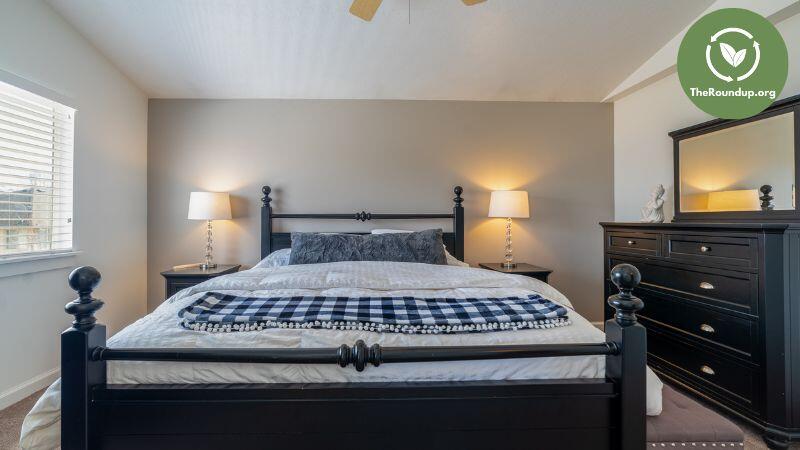
A sprung or slatted base makes a hard mattress feel less rigid than a solid platform bed, because the slats bend when you lie on them.
If you have a plywood board under your mattress, simply removing it softens the bed at no cost. Swapping solid slats for sprung slats (curved strips of wood that bend under load) adds more flexibility underneath the mattress.
If you decide to replace your bed frame, choose a non-toxic option from our guide to eco-friendly bed frames.
Using a sprung base voids the warranty offered by some mattress brands, such as Avocado.
Always check your mattress warranty terms before changing your bed base.
If you have a two-sided mattress, turning it over changes the feel without needing to change the base.
Flipping a two-sided mattress softens the bed if the softer side is facing down.
Some latex and hybrid mattresses are double-sided, meaning they have a different firmness on each side. The label or the maker's product page gives the firmness of each side of a two-sided mattress. Only flip a mattress if it is explicitly labeled as double-sided.
Strip the bedding and take off any toppers and mattress protectors before you turn a mattress over.
No, rotating a mattress makes it feel firmer, because after turning it 180 degrees, you sleep on a part of the mattress that has carried less of your weight.
Rotating a mattress still helps it last longer, because spreading the wear evenly stops a soft spot from deepening where you sleep. Learn why you should rotate a mattress and how often to do it in our guide to flipping or rotating your mattress.
If you have a one-sided mattress that can't be flipped and still feels too hard, consider changing your sleeping position.
Sleeping on your back makes a hard mattress feel softer, because lying on your back spreads your weight across a wide area of the mattress. Lying on your side presses your weight into the mattress at the hip and shoulder, which is a far smaller area.
To train yourself to sleep on your back, start the night in that position and make the following changes to make the position more comfortable.
A sleep trial gives you weeks to work through these changes before the return window closes.
Use a sleep trial to return your mattress if none of the other fixes on this list make the bed comfortable. A sleep trial lets you send a mattress back and choose a softer one.
Sleep trial lengths differ by brand. Avocado gives a one-year sleep trial on its main mattresses, while Birch gives 120 nights. Many mattress brands require you to keep the mattress for 30 days before a return starts, which is the break-in period covered in fix 3.
Once the sleep trial has ended, you lose the right to send the mattress back for a refund. A mattress warranty covers manufacturing faults. Mattress firmness is a design choice, not a fault, so a warranty claim does not apply.
A soft mattress topper is the most impactful fix left once the trial period is over.
Every fix on this page costs less than a new mattress, so be sure the mattress is too hard before you replace it.
Your mattress is too hard when your shoulders and hips press into the surface without sinking into it. The signs below point to a mattress that is too hard for you.
A mattress that is too hard affects your body as well as your sleep.
A mattress that is too hard leaves you with sore hips and a stiff lower back in the morning. A hard mattress also breaks up your sleep, because you turn over through the night to relieve the pressure.
The pressure on a hard mattress squeezes shut the blood vessels under your hips and lower back, so your body turns over to open them again. In a computer model of a body lying on its back, the muscle at the base of the spine was squeezed 67% harder and the tissue at the hip 42% harder on firm foam than on soft foam (Rayward et al., 2023).
Adults with long-term low back pain improve more on a medium-firm mattress than on a firm one (Kovacs et al., 2003).
Anyone who wakes with back pain on a firm mattress has the most to gain from the fixes on this page.
A new mattress feels hard compared to an old one because a mattress softens as it is used. When you buy a new mattress to replace one that has had years of use, the new one inevitably feels firmer at first.
Breaking in a mattress (as described in fix #3 above) causes a new mattress to soften within the first 30 days of use.
Hotels make their beds soft by layering a thick topper and bedding over the mattress.
Use a mattress topper (fix #1 above) and layered bedding (fix #2 above) to replicate the feel of a hotel bed at home.
The fixes below are the most effective ways to soften a mattress without a topper.
Replace your mattress when you have tried all the fixes on this page and still suffer from sleepless nights or wake with back pain and sore hips.
If you wake with a sore back, choose a mattress from our guide to organic mattresses for back pain, which covers the ideal firmness to look for.