TheRoundup is reader-supported. We may earn a commission when you make a purchase via links on this site, at no cost to you.
All products are reviewed in accordance with our Review Methodology.
A mattress lasts for 7-10 years on average, but varies depending on what it's made from, how you use it, and how well you care for it.
Worn mattresses stop holding your body properly and no longer provide the comfort and pressure relief you need for a good night's sleep. Knowing how long yours is likely to last tells you when to start planning for a new one.
We examined scientific studies on how quickly mattress materials like foam and springs wear, and the manufacturers' own warranty terms to work out how long each one really lasts.
This guide helps you decide whether your mattress is past its best and which type to buy for maximum durability.

How long a mattress lasts depends heavily on the material it is made from. Latex mattresses have the longest lifespan (typically 10 to 15 years), and innerspring mattresses have the shortest (5 to 8 years).
The table below shows the average lifespan of each mattress type and explains which component typically fails first.
| Mattress type | Average lifespan | What fails first |
|---|---|---|
| Latex | 10 to 15 years | The latex softens gradually |
| Latex hybrid | 8 to 12 years | The coils lose tension before the latex |
| Memory foam | 7 to 10 years | The foam softens and holds body impressions |
| Memory foam hybrid | 7 to 10 years | The foam comfort layer softens before the coils |
| Innerspring | 5 to 8 years | The coils lose tension and sag |
These averages assume nightly use. A mattress that is slept on only occasionally, such as one in a guest room, can last years longer.
A latex mattress lasts 10 to 15 years on average, which is the longest lifespan of any mattress type. An all-natural latex mattress can last 20 years or more with good care.
Natural rubber springs back harder than any other common mattress foam. In laboratory rebound tests, natural rubber latex foam scored 74% resilience, compared with 29% for polyurethane foam and 9% for memory foam. Researchers link resilience to a foam's dimensional stability and durability (Ramli et al., 2023).
Where a latex mattress falls within that 10 to 15 year range depends on the type of latex blend. Latex softens gradually as oxygen, heat, and light break down the rubber over time (Jin et al., 2024). Non-organic latex contains a mix of natural and synthetic rubber. Latex blends with more than 20% synthetic content hold more permanent deformation (Tang et al., 2024).
That explains why certified organic latex mattresses, which have a minimum 95% organic content, keep their shape the longest.
A memory foam mattress lasts 7 to 10 years on average, based on nightly use. The exact lifespan depends on the density of its foam.
Denser foam survives repeated compression better than open-cell foam. In cyclic fatigue tests, doubling a standard polyurethane foam's density cut its firmness loss from 30.7% to 21.5% (Demirel et al., 2019). Mattress-grade memory foam typically weighs 3 pounds (1.4 kg) to 5 pounds (2.3 kg) per cubic foot. Heavier foam keeps its firmness longer.
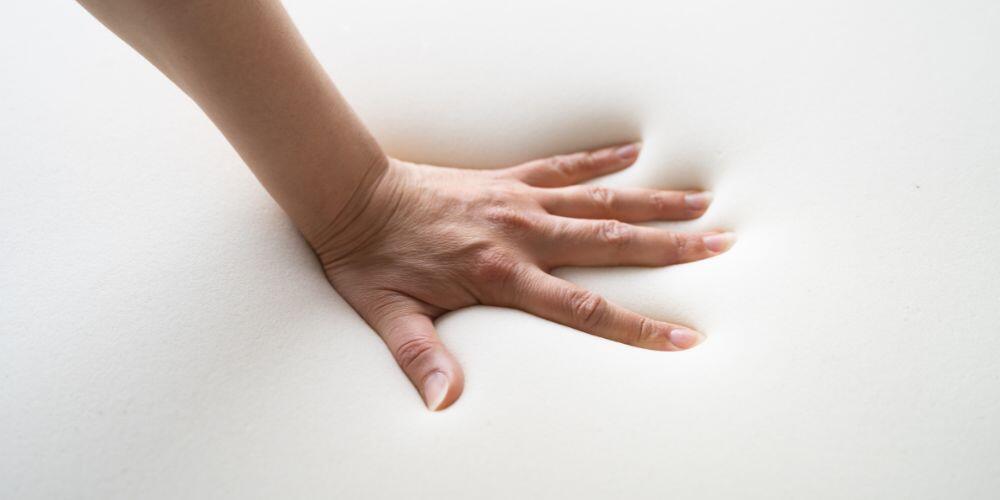
Body impressions form as the foam's cells break down. Repeated loading disrupts the cellular structure and leaves the foam progressively softer (D'Arienzo et al., 2022).
Heat and humidity accelerate foam degradation. In artificial weathering tests, warm humid conditions lowered mattress foams' surface firmness and their resistance to bottoming out (Scarfato et al., 2017).
A hybrid mattress lasts 7 to 12 years, depending on the material used in its comfort layer. A memory foam hybrid averages 7 to 10 years, and a latex hybrid 8 to 12.
A hybrid pairs a comfort layer of memory foam or latex with a support core of steel coils. Latex and memory foam degrade at different rates, as described above.
Steel coil cores hold their support well when each coil is individually wrapped, and a comfort layer spreads the sleeper's weight above them. In durability testing to the European mattress standard EN 1957, a pocket spring core of this construction kept its firmness across the full test and softened only slightly (Vlaović et al., 2024).
When memory foam is used above the coils, the foam softens sooner, via the same cell breakdown process described above.
In a latex hybrid, the latex layer typically outlasts the coils beneath it, so the construction of the coil unit determines when you need to replace your mattress.
An innerspring mattress lasts 5 to 8 years on average, the shortest lifespan of any mattress type.
The lack of longevity in an innerspring is due to the way it's made. The coils in a traditional innerspring mattress are connected into a single grid, covered with a thin layer of padding. Without a thick comfort layer to spread the load, the coils under the sleeper's hips and shoulders carry the heaviest load night after night.
In tests on used innerspring mattresses, springs taken from the weight-bearing center compressed further under load than springs from the head and foot of the same beds (Jacobson et al., 2022). That is why this type of mattress often visibly sags in the middle. The researchers also note that the weakening is not always visible in an unloaded mattress, so an innerspring can lose its support before it looks worn.
When your mattress nears the end of its lifespan, it's time to consider replacing it.
You should replace your mattress every 7 to 10 years on average, but the exact time depends on the type of mattress and how heavily you use it.
Use the lifespan table above to find the range for your type, and replace the mattress sooner if it no longer supports you.
Replacing an old mattress measurably improves sleep. In a 28-day study, sleepers whose own beds averaged 9.5 years old recorded significant improvements in sleep quality, back pain, and stiffness after switching to new mattresses (Jacobson et al., 2008). The researchers concluded that continuous sleep quality may depend on timely mattress replacement.
No, the 8-year rule does not hold for every mattress.
The 8-year rule is the common advice to replace any mattress once it is 8 years old, whatever its type or condition. The figure comes from the mattress industry itself.
The industry's trade association founded the Better Sleep Council in 1978 and launched the Better Sleep Month campaign in 1985 (ISPA). That campaign told shoppers, "If your bed is more than 8-10 years old, you need to think about buying a new one."
No mattress lasts forever, so you need to know the warning signs that indicate when yours needs to be replaced.

Replace your mattress when it stops supporting your body or begins to disturb your sleep. The warning signs below tell you when that point has arrived.
You may see these signs earlier or later than expected. This depends on several factors that can shorten the lifespan of your mattress.
Poor materials, heavy load, a weak support base, and moisture shorten a mattress's lifespan. The four factors below negatively affect mattress longevity.
By avoiding these issues and taking preventive steps, it is possible to make your mattress last longer.
To make your mattress last longer, protect it, support it well, and keep it clean and dry. The steps below help reduce the speed of mattress degradation.
Good care extends how long a mattress really lasts, which is not the same as what its warranty promises.
No, a mattress warranty does not tell you how long it will last.
A warranty covers manufacturing defects. Warranties do not cover the normal wear that causes mattresses to need replacing. A long warranty is not a promise of a long life.
Warranties run from 10 years to a lifetime, but they only offer replacements for faults such as a collapsed coil or a split seam. A mattress that simply wears out within an expected timespan is not covered because it has no fault.
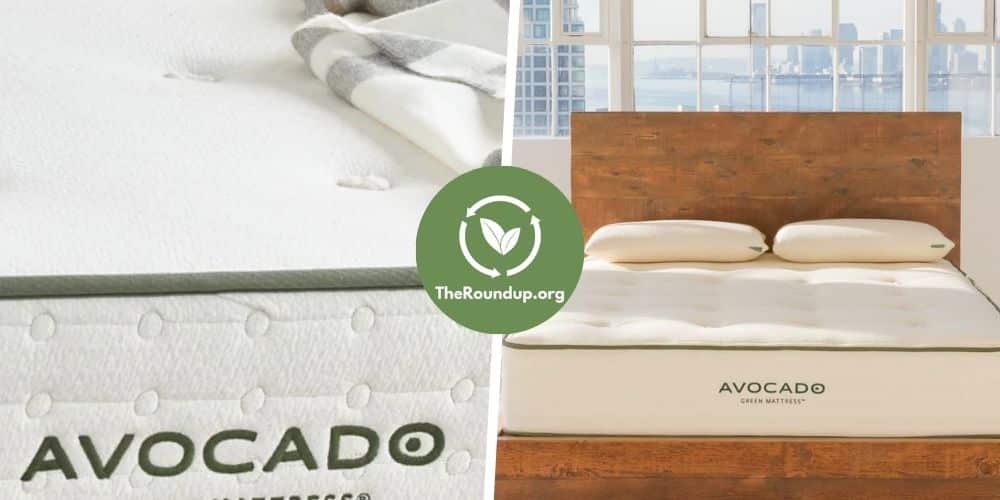
Mattress sagging may be covered by a warranty, depending on the depth. Avocado, for example, only accepts a claim once a body impression reaches 1.5 inches (3.8 cm).
A warranty also pays less as the mattress ages. Under a prorated warranty, you pay a rising share of any claim yourself. Avocado's 25-year warranty is free for the first 10 years, then charges you 50% in year 11, rising to 95% by year 21. A 25-year warranty does not signify 25 years of free replacement.
Warranties do not cover the gradual softening that eventually makes you replace a mattress. Avocado excludes normal softening and comfort preference from its warranty. Terms differ between brands.
We recommend you check the sag depth and the prorated schedule before you treat any warranty as a measure of lifespan.
A mattress can last for 20 years or more, provided it is given proper care and is made from high-quality natural latex.
Foam and innerspring mattresses wear out long before then. Even a latex mattress that keeps its shape for two decades may gather allergens and lose some support along the way.
A 10-year-old mattress is usually ready for replacement, though a well-kept latex one may still have life left.
After 10 years of normal use, foam, hybrid, and innerspring mattresses have passed their typical range, and the support they gave when new has faded.
Check your mattress against the warning signs above. If it sags, disturbs your sleep, or leaves you aching, then keeping your mattress for longer is likely to affect your sleep quality.
A $2,000 mattress lasts as long as its materials allow. The mattress price does not determine its lifespan.
In the $2000+ mattress price range, you can buy dense memory foam or quality latex, which reach the top of their range with good care. A pricey innerspring does not outlast a cheaper latex bed.
Check what a mattress is made from before you count on a long life.
Hotels replace their mattresses about every 3 to 5 years, far sooner than a typical homeowner does.
Guests use hotel beds every night, and a different body sleeps on each one from week to week. The constant, shared use wears a hotel mattress faster than one at home.
Hotels also need to protect their reputation for a comfortable night's sleep. That's why they retire a mattress before it sags or softens enough for a guest to notice.
You should recycle your old mattress wherever possible. The steel springs, foam, and fibre inside can be recovered and reused.
Mattress recycling programmes and retailer take-back schemes make it straightforward. Our guide to recycling your old mattress walks through the options.