TheRoundup is reader-supported. We may earn a commission when you make a purchase via links on this site, at no cost to you.
All products are reviewed in accordance with our Review Methodology.
Organic mattress certifications are independent standards that verify what a brand says about its mattress, from the organic content of the materials to the chemical safety of the finished product.
A mattress is a major purchase. Shoppers choose organic mattresses because they're better for the environment, to avoid chemicals, or both, and they don't want to be greenwashed. Most product pages offer a row of certification logos, but rarely explain what they all mean.
We've spent years testing organic mattresses, and we know from experience what each of these labels means and which ones matter.
This guide is for anyone considering buying a new mattress who's unsure about which certifications to look for and why.
Mattress certifications matter because they provide independent verification of genuine organic materials, chemical safety, and a manufacturer's business ethics.
A mattress requires specific certifications in order to be classed as organic.
An organic mattress should carry an organic certification for every relevant component, plus at least one safety certification. A business certification is an optional third. Together, the three make up the ideal we look for when evaluating an organic mattress.
Every evaluation starts with certifications that show the materials in a mattress are organic.

GOTS and GOLS certifications confirm that a mattress is actually organic. USDA organic certification confirms that the cotton or wool in a mattress was grown organically, but doesn't make any assertions about the finished mattress.
GOTS covers the fabric and fiber content in a mattress, usually organic cotton and organic wool.
Fiber content means the cover fabric, the wool or cotton padding, and any other textile material in the mattress. GOTS classes metal springs, zippers, and latex foam as accessories, which do not count towards the fiber-content measurement.
GOTS awards one of two label grades to a certified mattress.
GOTS also restricts the materials allowed in the finished mattress. Polyurethane foam is banned from all GOTS-certified mattresses. Latex foam is allowed only when it is certified organic or comes from a certified sustainable forestry program.
GOTS does not inspect farms. The cotton or wool must already hold a farm-level certification, such as USDA Organic, before GOTS accepts it as organic fiber. GOTS then applies its own rules to the manufacturing, covering dyes, adhesives, and factory working conditions.
GOLS certifies that the latex foam in a mattress is organic.
In a GOLS-certified latex mattress, at least 95% of the polymer content, meaning the rubber itself, is certified organic material. The remaining 5% may consist of non-organic content, such as processing chemicals and fillers.
GOLS treats the other parts of a mattress as approved accessories. Approved accessories include metal springs, wooden frames, and cover fabrics. The GOLS certificate makes no claim about any of those parts.
A brand selling a fully certified organic mattress therefore holds two certificates: GOLS for the latex foam and GOTS for the fabric and fiber.
USDA Organic certifies the farms that grow the fiber for an organic mattress. A certified farm produces cotton or wool under the National Organic Program, which bans genetically modified seed and restricts synthetic pesticides and fertilizers.
USDA certification only covers what happens to fibers before they leave the farm. GOTS certification begins where USDA certification ends.
Most other certifications found on mattress pages test for chemical safety, and each of those certifications has a scope limit of its own.

The certifications that test safety are OEKO-TEX Standard 100, GREENGUARD Gold, CertiPUR-US, MADE SAFE, and eco-INSTITUT.
These labels certify chemical and emissions safety only. Safety certifications do not test for organic content or sustainability, so even fully synthetic mattresses can hold any of them.
OEKO-TEX Standard 100 tests every component of a finished textile for over 1,000 potentially harmful substances. The tested parts of a mattress are the fabric, the thread, and the zipper.
The OEKO-TEX certification standard sets stricter limits for products that have more contact with the skin. Products made for babies and toddlers get the strictest testing criteria of all.
OEKO-TEX is different from GOTS because the certificate is earned through laboratory testing of the finished fabric, not through audits of the production process.
UL GREENGUARD Gold measures chemical emissions and indoor air quality. The certification screens products, including mattresses, for more than 15,000 volatile organic compounds (VOCs).
The GREENGUARD Gold tier sets lower emission limits than standard GREENGUARD certification. The lower limits are particularly relevant for products used near children, such as crib mattresses.
CertiPUR-US certifies flexible polyurethane foam, the synthetic foam inside memory-foam and hybrid mattresses.
CertiPUR-US certified foam is made without formaldehyde, without phthalates regulated by the Consumer Product Safety Commission, and without mercury, lead, or other heavy metals.
Emissions from certified foam test below 0.5 parts per million of VOCs.
MADE SAFE screens every ingredient in a product against a list of more than 15,000 banned and restricted substances that can harm human health.
The list covers known and suspected carcinogens, endocrine disruptors, hazardous flame retardants, and high-risk pesticides. Certified manufacturers must disclose every substance they intentionally add to the product.
Where CertiPUR-US covers just one material (foam), MADE SAFE certification covers the finished product as a whole, including every material in the mattress.
eco-INSTITUT is a German laboratory whose label certifies that a mattress is low in pollutants and emissions. The laboratory's tests cover VOCs, nitrosamines, and biocides.
eco-INSTITUT certified products are cleared for use by allergy sufferers, babies, and toddlers.
A side-by-side table shows what each of the eight certifications covers and what it does not.
The table below compares the eight certifications by what they certify, the parts of a mattress they cover, and whether they verify organic content.
| Certification | What it certifies | What it covers | Verifies organic content? |
|---|---|---|---|
| GOTS | Organic fiber content plus manufacturing rules | Fabric and fiber (accessories excluded) | Yes (95% or 70% of fiber) |
| GOLS | Organic latex | Latex foam only | Yes (95% of the polymer) |
| USDA Organic | Organic farming | Raw cotton or wool, on the farm | Yes (the raw fiber) |
| OEKO-TEX Standard 100 | Limits on harmful substances in finished textiles | Fabric, thread, and zipper | No |
| GREENGUARD Gold | Low chemical emissions (VOCs) | The finished mattress | No |
| CertiPUR-US | Foam made without formaldehyde, heavy metals, or CPSC-regulated phthalates | Polyurethane foam only | No |
| MADE SAFE | Ingredient screening against a banned-substances list | Every material in the mattress | No |
| eco-INSTITUT | Low pollutant content and low emissions | The finished mattress | No |
A separate group of certifications covers the company behind the mattress, from how it treats workers to its impact on the environment.
Ethical mattress companies hold business certifications that evaluate their supply chain, fair treatment of workers, and sustainability practices.
Below are the business certifications commonly found on mattress brand pages.
None of the four is specific to mattresses. The same ethical certifications appear on items such as clothing or cookware as well as on mattresses.
Ethical considerations are important to many eco-conscious consumers, but so is the absence of harmful substances. Many shoppers choose an organic mattress specifically to avoid flame retardants and fiberglass.
Organic certifications ban added flame retardants and do not cover fiberglass. GOTS prohibits chlorinated, brominated, and phosphate-based flame retardants in any mattress it certifies. No organic standard mentions fiberglass at all.
Federal law requires every mattress sold in the US to pass an open-flame test (CPSC 16 CFR Part 1633). To pass the open flame test, a mattress needs a fire barrier that slows a flame as it reaches the inner foam.
The fireproof barrier is achieved via either a chemical flame retardant, a thin sheet of fiberglass under the cover, or a layer of wool. Fiberglass is the cheapest of the three, but wool is the only natural and chemical-free option.
The safety of fiberglass in a mattress depends on the cover staying closed. Fiberglass stays beneath the outer fabric until someone unzips and removes the cover. Loose glass fibers can irritate the skin on contact (Camacho et al., 2019), and once released, they spread through a home and are hard to clear.
Wool meets the same open-flame test with no added chemicals. Wool ignites only at 570°C (1,058°F) to 600°C (1,112°F), and it self-extinguishes once the flame is gone. A GOTS certified mattress uses wool as its fire barrier, so chemical retardants are not required.
MADE SAFE goes further than GOTS on this point, restricting hazardous flame retardants across every material in a mattress.
If a brand has no certifications, its product still meets legal requirements, but no more.
If a mattress has no certifications, it means any claim about its materials, chemical safety, and brand ethics is unverified. It doesn't necessarily mean the brand isn't telling the truth, but it's much harder for consumers to be sure.
Getting certified requires an audit and an annual fee, which can be too expensive for smaller brands. Some small brands choose to start uncertified and then invest later when they can afford it. If you buy a mattress from a small, uncertified brand, you need to do your own due diligence regarding the materials and chemical content.
Other brands have been known to falsely claim that they have certain certifications, when in fact they don't. Fortunately, this is easier to catch.
Some certifiers provide public databases of the brands and products they have certified, and anyone can search them.
To verify a mattress certification claim, search the certifier's own database for the brand and its certificate.
Not every certifying body provides an online database, but GOTS, OEKO-TEX, and GREENGUARD do. Every database below is free to search.
A certificate can also lapse. OEKO-TEX keeps a public list of labels it has withdrawn. You can use this to check whether a brand is still displaying an outdated certificate.
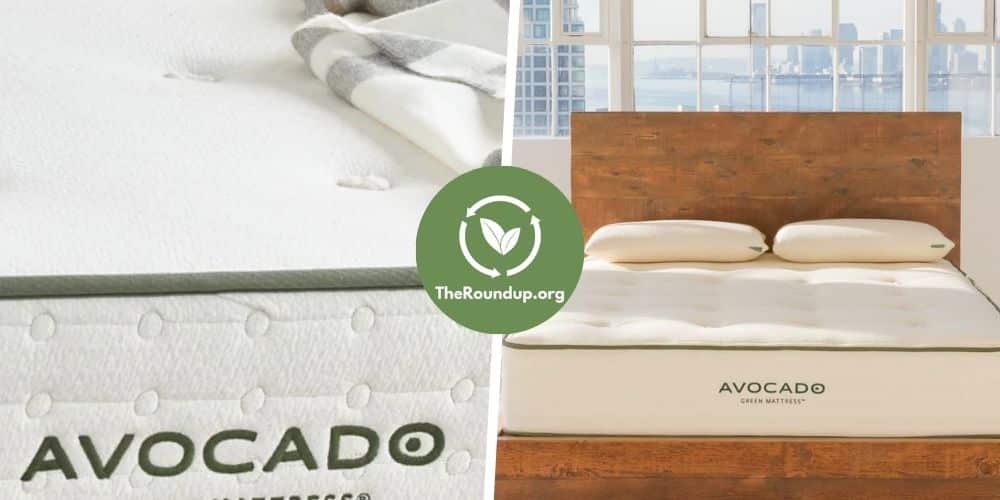
PlushBeds, Avocado, Naturepedic, and Saatva are all GREENGUARD-certified mattress brands.
The GREENGUARD-certified mattresses we recommend are listed in our guide to the best eco-friendly mattresses.
The PlushBeds Botanical Bliss, Avocado Green Mattress, and Eco Terra Beds Hybrid Latex are all examples of mattresses that are OEKO-TEX certified.
Our guide to the best non-toxic bed-in-a-box mattresses names the OEKO-TEX certified mattress brands we trust.
No. CertiPUR-US certifies flexible polyurethane foam, and polyurethane is a petroleum product that no organic standard certifies.
CertiPUR-US certification limits what the foam is made with and what it emits. A mattress with CertiPUR-US certification therefore contains synthetic foam, and an organic label on that mattress can only describe its other materials.
A crib mattress should have GREENGUARD Gold certification, plus the same organic status as an adult mattress (GOTS and GOLS).
GREENGUARD Gold is the critical certification for a crib mattress because its lower emission limits are set for spaces where children's safety comes first, such as nurseries. OEKO-TEX is also valuable because its strictest testing criteria apply to baby and toddler products.
The certified crib mattresses we recommend are in our guide to the best organic crib mattresses.
No. Under USDA policy, a textile product is sold as organic when it is GOTS certified, or when its certified organic fibers are named on the label with their percentages.
The USDA organic seal requires full certification to the USDA organic regulations. An organic claim with no certificate behind it has no recognized basis.