TheRoundup is reader-supported. We may earn a commission when you make a purchase via links on this site, at no cost to you.
All products are reviewed in accordance with our Review Methodology.

This guide is for eco-conscious homeowners, gardeners, and pet owners looking for safe and effective alternatives to chemical weed killers.
Traditional weed killers often contain toxic ingredients that can be harmful to children and pets, such as glyphosate, which is classified as a possible human carcinogen by the World Health Organization.
Natural organic weed killers typically use plant-based or food-grade ingredients and avoid synthetic chemicals. Choosing non-toxic weed killers helps protect your family, pets, and the environment from harmful side effects.
Below, I'll show you 14 ways to control weeds without harsh chemicals, including:
Let's start with the ready-made weedkiller options that promise a green garden in every sense of the word.
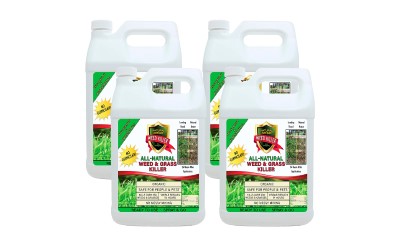
They Say: Natural Armor Weed & Grass Killer is made with No Glyphosate or any Chemicals or Poisons. Simply the best non-toxic weed and grass killer product available. The concentrated formula kills 250+ types of weeds and grasses dead in their tracks. Weeds and grass will look like you took a torch to them. Easy to use. Just spray and go. No Messy Mixing.
We Say: According to the manufacturer, this product is 100% natural and designed for use around children and pets. In my testing, I found the vinegar-based formula to be less harsh than synthetic alternatives but still very effective.
The weedy patch of garden I tested this product on started to change color within a few hours and was brown and dead within 24 hours.
Natural Armor solution comes ready-mixed, and the addition of the spray nozzle is incredibly convenient.
For more generic jobs around the yard and home, I also love Natural Armor 30% Vinegar. It's six times stronger than regular vinegar and works great as a cleaner, sanitizer, and all-around weed killer.
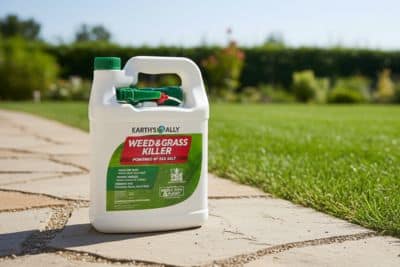
They Say: This grass and weed killer uses the power of sea salt to get the job done. The pet safe weed killer contains natural ingredients that are an effective alternative to harsh synthetic chemicals.
We Say: I tested Earth's Ally Grass and Weed Killer on our neglected back patio after dandelions, clover, and crabgrass had overtaken the cracks between the pavers. The first thing I noticed was that it didn't have the harsh chemical smell you get from traditional weed killers. What a relief!
I applied Earth's Ally on two consecutive dry mornings. I saw visible wilting within 3-4 hours each time, and the weeds were thoroughly browned within 48 hours.
Earth's Ally holds Organic Materials Review Institute (OMRI) listed and uses ingredients I feel comfortable having around our two daughters and our dog, Millie (when following the instructions on the bottle).
I used Earth's Ally Grass and Weed Killer near our vegetable garden (being very careful to keep overspray to a minimum) and did not see any damage to our veggies.
✔ OMRI Listed
✔ Non-Staining
✔ Fast Acting
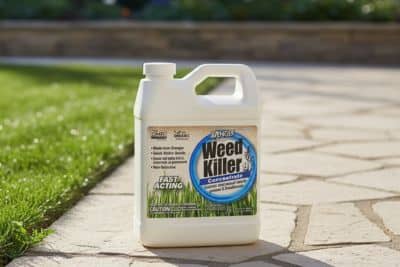
They Say: Avenger Weed Killer is an excellent alternative to synthetic, toxic herbicides. Using a natural citrus oil base, this is a non-selective herbicide that eliminates broadleaf, crab grass and other unwanted weeds naturally and quickly. Its main ingredient is d-Limonene.
We Say: Avenger Weed Killer contains d-Limonene as its active ingredient and strips the waxy cuticle from weed leaves.
I mix the Avenger concentrate at a 1:6 ratio for small weeds and increase it to 1:3 for the stubborn ivy patches near our fence line. The weeds wilted visibly within two to three hours, and most were completely dead by the next morning.
Avenger Weed Killer has an orangey scent that is much more pleasant than some of the harsher options I tested and rejected.
Avenger kills everything it contacts, so I always make sure to shield my ornamental plants with cardboard when spraying nearby weeds. The fine spray from my bottle caused more drift than I expected, so I had to wait for calm weather before spraying.
✔ Safe for Kids, Pets & Wildlife
✔ Natural Ingredients
✔ Residential or Agricultural Use
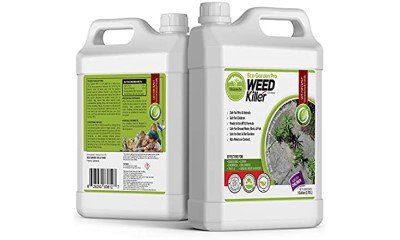
They Say: Formulated to kill weeds and grass fast! Our proprietary formula will deliver results within 24 hours! Perfect for all residential, commercial, industrial, and agricultural use - including: driveways, sidewalks, concrete, mulch beds, pavement, flowers beds, parking lots, and farm lands.
We Say: According to the manufacturer, ECO Garden PRO natural weed killer solution is designed to minimize harm to bees, soil, groundwater, fish, livestock, pets, and people. The formula uses plant-based ingredients that break down more readily than synthetic alternatives.
It's so natural that I even felt safe using it to eliminate weeds around the edge of my garden, flower beds, and vegetable patch.
My neighbor uses ECO Garden PRO and says it's really effective against poison ivy, too.
It's gentle on the planet, but brutal on weeds. I noticed results in less than 24 hours, without needing a second application.
✔ Value for Money
✔ Fast & Effective
✔ Waterproof Once Dry
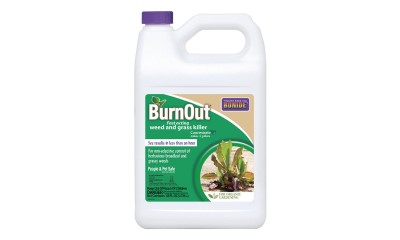
They Say: BurnOut weed control is for use on non-selective herbaceous broadleaf and grassy weeds. Read the label for specific annual broadleaf weeds, perennial broadleaf weeds, annual grasses, and perennial grasses to be treated. Our weed killing formula can provide results in just hours! Additionally, once this product dries after application it becomes waterproof!
We Say: This stuff does exactly what it says on the bottle. Within 24 hours of application, the weeds I tested it on turned brown and looked totally burnt out.
BurnOut is also excellent value for money. The 1 gallon of concentrate makes 4 gallons of usable product. That's enough to last me a good few years.
On the downside, it means you have to mix it yourself and need another bottle.
Not a significant issue, though. I simply mix up a batch in my pump sprayer as and when I need it.
Confused about which weed treatment option is right for you? To help you decide, here's a glossary of the terms used and their meanings.
Pre-emergent weed killers are used before the weed seeds have had a chance to sprout. Once a pre-emergent weed killer is in the ground, it kills everything (weeds, flowers, plants, grass, etc.), so caution is needed.
Post-emergent herbicide is used directly on established weeds.
Selective weed killers only kill specific types of weeds. For example, chemical herbicides developed for lawns target broadleaf weeds, such as chickweed and clover, but leave grasses unharmed.
Nonselective weed killers kill all plants and vegetation that they come into contact with. So your weeds will die, but so will everything else.
Most natural weed killers are non-selective and kill any plant they touch. Avoid using them on flower beds, vegetable gardens, or lawns.
Most organic weed control products are pretty basic when it comes to their ingredients. They're simply a combination of saltwater, vinegar, eugenol (from raw clove oil), and soap.
Natural herbicides break down faster, leaving no long-term chemical impact on the landscape.
Surfactants are found in post-emergent weed killers. Their job is to help break down the waxy coating of weed foliage to allow the herbicides to kill the weeds more quickly.
In chemical herbicides, the surfactant can be a range of different chemicals.
In natural and organic products, soap is often used as a surfactant.
Some of the ingredients found in chemical weed killers are known to harm human health and damage the environment.
The main one you should avoid is Glyphosate. Glyphosate is the most widely used broad-spectrum systemic herbicide in the world. Exposure to high levels of Glyphosate has been linked to certain types of cancer.
Chemical weed killers can contaminate groundwater and harm local wildlife, which is why it's essential to consider their safety when used in areas frequented by children and pets.
Non-toxic weed killers are generally safer for children and pets and provide an eco-friendly approach to gardening.
There are different types of weed killers available for different applications.
The one elephant in the room when it comes to buying ready-made non-toxic weed killer is that it invariably comes in plastic packaging.
Due to the corrosive nature of some of the natural ingredients (vinegar and saltwater, for example) used in natural weed killers, the only viable container option is plastic.
If you buy organic weed killer in plastic bottles, please ensure that you either reuse them or recycle them fully.
If the plastic is a deal-breaker for you, here are some DIY alternatives that don't require packaging.
Concentrated vinegar, sea salt, and plant oils are effective ingredients in non-toxic weed killers. Here's how to use these and other commonly found ingredients to control weeds.
Salt can be used as a natural weed killer by gradually making the soil inhospitable for plant life, but it should be applied carefully to avoid harming desired plants.
Don't use salt on lawns or garden beds. Sprinkle salt on areas where you want nothing to grow, apply it directly to weed foliage, or mix it with water and use it as a spray.
Natural weed killers can contain ingredients like ammoniated soap of fatty acids, which work by dehydrating the leaves of the plants, effectively killing them.
You can replicate this by using organic dish soap mixed with water in a spray bottle, which makes an effective, cheap, and natural herbicide.
Vinegar, due to its acetic acid content, can effectively kill weeds by dehydrating them when sprayed directly on the leaves, especially on sunny days. Most weed killers sold as organic have vinegar as a key ingredient.
A simple homemade weed killer can be made by mixing 1 gallon of white vinegar, 1 cup of salt, and 1 teaspoon of dish soap in a garden sprayer, which works best on a sunny day with no rain forecast.
However, it's worth noting that the standard household vinegar in your kitchen cupboards probably contains around 5% acetic acid. In contrast, off-the-shelf organic weed killers often contain concentrated vinegar with between 20-30% acetic acid.
Your kitchen vinegar will eventually get rid of your weeds, but it might need multiple applications in direct sun to be effective.
Organic corn gluten meal is an effective pre-emergent homemade way to kill weeds.
It's also high in nitrogen and makes an excellent fertilizer.
Burning the foliage of weeds causes them to wither and die. Repeated burning will also eventually destroy the roots.
Treat fire with complete respect and always have a hose close by...just in case!
I found the best result came from using a propane weed torch. It felt safe to use and focused the flame directly on the weed without damaging neighboring plants and shrubs.
Boiling water is a simple and effective non-toxic method for killing weeds, as it can scald and destroy the plant tissue upon contact.
Add a few teaspoons of salt for a cheap and effective organic weed killer.
Most weed control fabric is made from plastic (usually polypropylene) and so can't be considered eco-friendly or sustainable.
A nice hack to try is to cover the area of lawn or weeds you want to kill with newspaper (or any old paper you have around the house) and then hose it down with water.
The damp paper starves the grass/weed of sunlight, and it eventually dies off.
I tried this DIY weed control technique on an area of the front lawn I needed to gravel for car parking. It worked pretty well, but did take a long time.
Adding organic citrus peels to your DIY organic anti-weed solution boosts its killing power significantly.
The essential oils in citrus peels contain d-limonene and citric acid, which act as surfactants and help your organic DIY herbicides to reach the ‘heart' of the weed quicker.
Iron, specifically in the form of FeHEDTA, is an active ingredient in some selective weed killers, such as Sunday Dandelion Doom Broadleaf Herbicide, which targets broadleaf weeds without harming grass.
Iron-based products (often called chelated iron) kill weeds by causing an overload of iron (iron toxicity) in broadleaf plants, leading to cell breakdown (necrosis)
Iron is a naturally occurring mineral. It is generally considered safe for children, pets, and the environment once the spray dries.
Even though organic and homemade weed killers are eco-friendly, they should still only be used when needed. If you buy ready-made organic herbicides, always read the label and use them as sparingly as possible.
Natural herbicides often preserve soil biology and improve overall soil health compared to synthetic alternatives.
Natural methods foster a healthy soil microbiome, helping plants grow stronger to outcompete weeds.
Natural weed control solutions support biodiversity by avoiding contamination of soil and water sources.
Using organic and natural herbicides reduces the likelihood of chemical runoff, supporting healthier, sustainable ecosystems.
Organic weed killers are biodegradable, posing a lower risk of leaching into groundwater or contaminating nearby ponds and streams.
According to Healthline, “Roundup has been linked to many diseases, but is still considered a safe herbicide by many organizations. It contains a lot of other ingredients that may be more toxic than glyphosate alone”.
Despite the similarities in our name, TheRoundup.org has no connection whatsoever to any chemical weedkiller brand! In fact, our opinions regarding the use of toxic chemicals could not be more different.
Personally, I do not recommend this product and would advise you to steer well clear. Just to be on the safe side.
Using non-toxic weed killers can significantly reduce health risks associated with synthetic herbicides linked to serious health issues. However, I recommend you always read the label and use products as directed.
After applying certain weed killers, it is recommended to keep children and pets away from treated areas until the solution has fully dried to minimize exposure to potentially harmful chemicals.
As a keen amateur gardener, I try to keep things as natural/organic as possible, especially around our family vegetable patch.
I know that there is no such thing as one all-powerful best organic weed killer for all my lawn care and garden needs.
However, by using a variety of organic weed prevention and control techniques and products mentioned in this article, I've managed to stem the tide for several years now...100% chemical-free!
Where do you buy your eco-friendly weedkiller? Have I missed your favorite organic brand? Do you have an amazing DIY hack you would like to share? Drop me a line and let me know.
Our core values mean we always prioritize sustainability over profit. We carefully research and evaluate every product to ensure they meet our high standards. All products featured in this article are recommended in accordance with our Review Methodology.
TheRoundup.org - As Seen On