TheRoundup is reader-supported. We may earn a commission when you make a purchase via links on this site, at no cost to you.
All products are reviewed in accordance with our Review Methodology.
If you live an eco-friendly lifestyle, the last thing you want to do is add more waste to landfills and increase your carbon footprint.
Thankfully with the emergence of the zero-waste online grocery store, it's becoming easier than ever to reduce our environmental impact…including when we cook!
But have you ever asked yourself, "is parchment paper compostable?"
This time-honored kitchen standby can be a handy tool and an environmentally friendly product depending on how it's made.
Read on and join me in this deep dive into whether or not parchment paper can be composted.

Regular parchment paper usually contains non-biodegradable materials, making it challenging to compost at home.
However, there are now brands on the market that produce unbleached, natural parchment paper made of 100% plant-based materials and zero chemicals.
This type of parchment paper is much more compostable than regular parchment paper, as it breaks down quickly when exposed to heat and moisture.
In addition, some brands also offer certified compostable parchment paper designed to break down in industrial and home composting bins or piles.
We need to dig a little deeper for the definitive answer.
Parchment paper is created through a process of treating paper with sulfuric acid or zinc chloride.
This method partially breaks down the fibers, giving them an almost jelly-like quality that enhances heat and grease resistance.
These qualities make parchment paper a kitchen essential often used to line baking sheets and cake pans, ensuring that food doesn't stick.
It's also great for rolling dough or preparing delicate pastries.
There are two main types of parchment paper.
Bleached parchment paper is made from wood pulp that has been bleached (usually with chlorine dioxide) to give it a white color.
Silicone is often added to make the paper extra non-stick.
Chlorine bleached parchment paper is not compostable.
Unbleached parchment paper is brown and, as the name suggests, unbleached.
It's usually made from natural materials and coatings.
Unbleached brown paper can often be composted. However, you should always check the packaging for specific instructions on how to dispose of it.
Biodegradable just means something that breaks down when exposed to air, heat, and moisture.
Most parchment paper is made from paper, and paper is biodegradable.
However, the issue arises with the chemicals used to treat many parchment papers. The paper will leave no harmful traces, but the same can't always be said for the chemicals.
So, yes…parchment paper is biodegradable, but that might not always be good for the environment.
Although paper is a recyclable product, the fact that you will have more than likely contaminated your parchment paper with food and oils will prevent it from being recycled.
Also, tossing used parchment paper (even unbleached paper) in with the rest of your recycling might lead to cross-contamination of other recyclable items, rendering them unrecyclable also.
Not all parchment papers are made the same. Below are my two favorite brands. Both are readily available on Amazon.
✔ Certified Compostable
✔ Unbleached
✔ Packed in a Recyclable Cardboard Box

They Say: When using IF YOU CARE Parchment Paper, no greasing of your pans is necessary. This is because our unbleached parchment paper is coated with silicone on both sides. Most other parchment papers are coated with Quilon - which is a chemical containing chrome, a heavy metal – and when incinerated, it becomes toxic and leaves trace elements in your baked goods.
✔ Compostable
✔ Naturally Non-Stick
✔ Unbleached
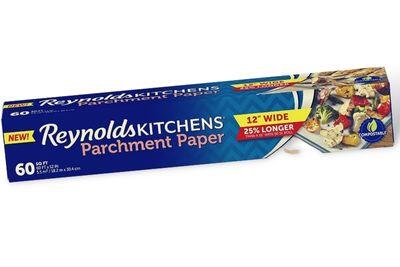
They Say: Oven safe up to 425°F, cooks love how easily the paper fits their cooking pans. It's also non-stick, making clean-up much easier. Our parchment paper is made in France and packaged in the USA, using responsibly sourced wood fibers that go through the parchmentizing process to create a genuine parchment paper for the highest performance.
So, you've found your favorite new compostable parchment paper brand, but it's still taking an age to turn into compost.
What can be done to speed things up?
Just like with eggshells, the answer is a simple one. Rip, cut, or shred it into smaller pieces.
This will allow the microbes in your compost heap to get inside the paper much more quickly.
A healthy compost pile will break down your compostable parchment paper in no time.
Here are some of my favorite tips for healthy compost management.
That depends on the type of parchment paper you're using. Many varieties are treated with chemicals that can harm the environment, so it's best to check the packaging before buying.
However, parchment paper is generally better for the environment than aluminum foil on balance.
No, parchment paper is not edible. It's made from substances that make it safe to come in contact with your food but unsafe to eat.
Saying that though, if you accidentally eat a small piece stuck to a cookie, etc., it's very unlikely to do you any harm.
No, parchment paper and butter paper are not the same. Parchment paper is made from wood pulp and treated with chemicals to make it non-stick.
Butter paper (sometimes called grease-proof) is usually treated with a silicone coating for its non-stick properties. However, saying that, you can get parchment paper also treated with silicone.
No. Wax paper is often treated with paraffin-based wax unsuitable for food use.
No, cooking and baking parchment paper is usually made from wood pulp.
The original parchment paper was made from animal skin (such as sheep or goat hide). Today, this type of parchment paper is used mainly in producing bespoke documents and artwork. It's not suitable for cooking.
So, there you have it. Parchment paper can be compostable, but it just depends on the kind you buy. The general rule of thumb to follow is that white parchment paper is not compostable, but brown is.
Parchment paper is a handy tool for anyone who loves cooking, and with so many options now available, it can also be an excellent choice for eco-friendly consumers.
By choosing sustainable parchment paper, you can make your kitchen life easier and reduce your environmental impact.
Finally, it's worth noting that the terms parchment paper, baking paper, greaseproof paper, etc., have become blurred over the years and are now often used to describe the same thing…a sheet that stops your baking from sticking.
Do you compost parchment paper? Do you buy bleached parchment paper? Or will you only ever let brown baking paper near your oven? Drop me a line and let me know.