TheRoundup is reader-supported. We may earn a commission when you make a purchase via links on this site, at no cost to you.
All products are reviewed in accordance with our Review Methodology.
A latex mattress is a mattress with a core made from latex foam, which is either natural, synthetic, or a blend of both.
Latex mattresses are known for their responsive support, durability, and cooling properties. They are commonly available as all-latex construction or as hybrids that combine latex layers with innerspring coils.
This guide provides a comprehensive overview of latex and its use in mattresses. We cover how latex is made, its safety, pros and cons, and who should (and should not) buy a latex mattress.
The takeaways below cover the key facts to know before buying a latex mattress.
Before buying a latex mattress, you should understand exactly what it is made from.

Latex mattresses are made from latex rubber, which is either natural (tapped from rubber trees), synthetic (made from petroleum chemicals), or a blend of both.
Organic and natural latex comes from the sap of the Hevea Brasiliensis (Brazilian rubber tree).
To collect the sap, workers make diagonal cuts in the tree bark and gather the liquid latex in cups. This process is similar to tapping maple trees for syrup and keeps the tree healthy.
After collecting the sap, producers use either the Dunlop or Talalay method to process the latex foam.
Synthetic latex is made from petroleum-based chemicals (primarily styrene and butadiene) that are combined through a process known as polymerization to create styrene-butadiene rubber (SBR).
SBR can be used on its own or mixed with sap to create blended latex.
This liquid compound is then foamed and cured using Dunlop or Talalay processes, similar to those used in natural latex manufacturing.
Dunlop and Talalay refer to two different production methods that are used to turn either organic/natural latex, blended latex, or synthetic rubber into latex foam.
The Dunlop process is more commonly associated with natural latex, although it can sometimes contain synthetic fillers.
Talalay latex can be either 100% natural, 100% synthetic, or a natural/synthetic blend (typically around 70% natural and 30% synthetic).
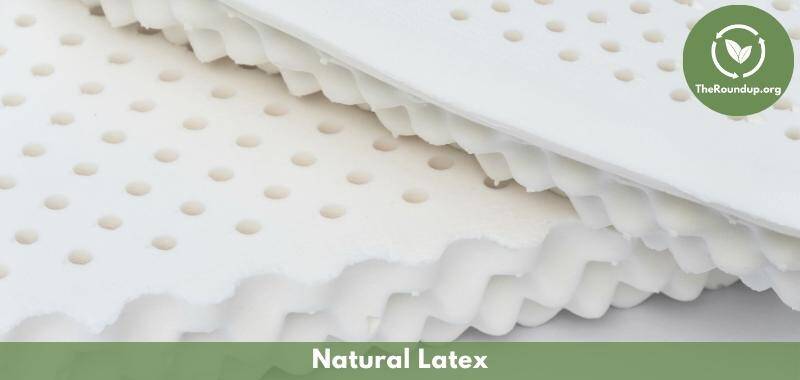
Natural, organic, and synthetic latex differ in terms of their farming practices, certifications, composition, and environmental impact.
The following table summarizes the key differences between organic, natural, and synthetic varieties of latex.
| Aspect | Organic Latex | Natural Latex | Synthetic Latex | Blended Latex |
|---|---|---|---|---|
| Source | Certified organic rubber tree sap | Rubber tree sap | Petroleum-based chemicals (styrene, butadiene) | Mix of natural sap and synthetic chemicals |
| Farming Practices | No pesticides, synthetic fertilizers, or chemical inputs | May use conventional pesticides and fertilizers | No agriculture required | Sap is likely to come from conventionally farmed trees |
| Composition | ≥95% certified organic latex, 0% synthetic | Mostly natural rubber + processing additives | 100% petroleum-derived chemicals | Usually 70% natural / 30% chemical |
| Primary Certifications | GOLS (Global Organic Latex Standard) | OEKO-TEX Standard 100 | CertiPUR-US (if emissions are safe) | OEKO-Tex or CertiPUR-US (if emissions are safe) |
| Chemical Content | Minimal chemical additives | Some conventional processing chemicals | Higher chemical content from synthetic production | At least 30% from chemical blend, plus processing |
| Safety Level | Highest - rigorous testing for harmful substances | Moderate - basic safety testing | Variable - depends on specific formulation | Depends on composition of chemical portion |
| Durability | 20+ years | 10-15 years | 7-10 years | 7-10 years |
| Environmental Impact | Excellent - sustainable farming + carbon sequestration | Good - renewable but may involve chemical inputs | Poor - petroleum-dependent + high carbon emissions. Not biodegradable | Poor - still contains fossil fuels, so not biodegradable |
| Cost | Highest | Moderate | Lowest | Low to Moderate |
All three types of latex are used in mattress manufacturing. Latex mattresses come in two varieties: solid latex or latex hybrid.
Solid latex mattresses are constructed entirely from latex foam layers, while latex hybrid mattresses combine latex comfort layers on top with a pocketed coil support system underneath.
Hybrids are generally cheaper and offer more bounce, breathability, and edge support due to their coil base. All-latex mattresses provide deeper contouring and better motion isolation.
Our guide to the best organic mattresses includes various solid and hybrid options with a range of organic and non-toxic certifications, which are important for mattress safety.
Latex mattresses are safe, provided they have an organic or non-toxic certification. However, a minority of people suffer from latex allergies and may suffer adverse reactions.
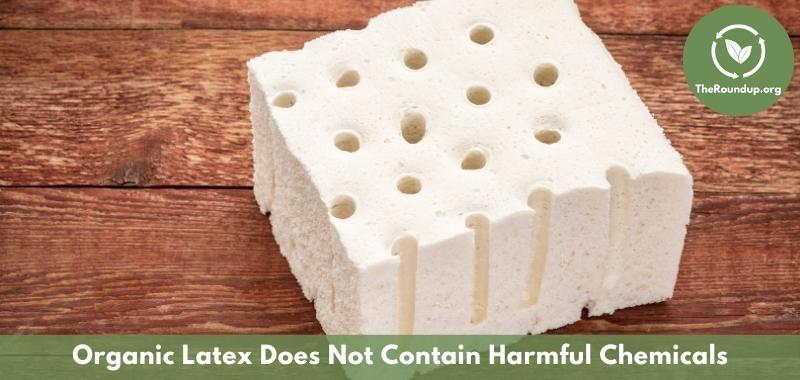
It is widely stated in the mattress industry that synthetic and blended latex are likely to off-gas, whereas organic and natural latex do not (because they contain no VOCs to release).
There are no specific studies on off-gassing from synthetic latex mattresses (most focus on polyurethane foam). However, studies have shown that products made with SBR do release VOCs (Hodgson et al., 1993).
Mattress certifications are the best way to help identify low-emitting products.
The most important certifications for latex mattresses are GOLS (Global Organic Latex Standard) for organic content, eco-INSTITUT for pollutants in the foam, and OEKO-TEX Standard 100 for the cover fabric.
Yes, latex allergy is a rare allergic reaction to the proteins found in Hevea brasiliensis sap. It therefore applies only to natural and organic latex.
Latex allergy affects between 1-6% of people (Allergy & Asthma Network) and is most common in people who work in medical or dental health roles, where repeated exposure is more likely.
Common symptoms of an allergic reaction include itching, redness, and swelling. In extreme cases, prolonged exposure can cause anaphylaxis in highly sensitive individuals (Mayo Clinic).
Certified organic latex mattresses are eco-friendly, but synthetic latex mattresses are not.
As a natural material, organic latex is biodegradable at end-of-life, whereas SBR is not.
Sustainability is just one factor to consider when weighing up the pros and cons of latex mattresses.
Before buying a latex mattress, you should consider the scientifically backed pros and cons to decide whether it is the right sleep surface for you.
| ✅ Advantages | ❌ Disadvantages |
|---|---|
| 20+ year lifespan (certified organic) | Higher upfront cost ($1,900-$3,500) |
| Superior pressure relief | Heavier weight (harder to move) |
| Natural cooling properties | Latex allergy risk (1-6% of people) |
| Excellent motion isolation | Limited in-store availability |
| Responsive bounce | Not suitable for very tight budgets |
| Eco-friendly (if GOLS certified) |
Latex mattresses are usually more durable than other types. Other benefits include enhanced support, pressure relief, and temperature regulation.
Mattress brands, including Latex for Less, Saatva, and Nolah, all agree that high-quality organic latex mattresses last for more than 20 years with proper care.
A peer-reviewed materials study comparing natural rubber latex foam to polyurethane (PU) foam and polyurethane memory (PM) foam concluded that the latex foam was potentially more durable than the PU and memory foam materials (Ramli et al., 2023).
Latex mattresses offer better support and pressure point relief compared to a memory foam mattress. Latex can help reduce pressure on the hips and shoulders (particularly in side sleepers) and promote better spinal alignment.
See our guide to the best organic mattresses for side sleepers for more information.
Studies show that mattresses with a latex core "reduce the peak body pressure on the torso and buttocks, and achieve a higher proportion of low-pressure regions compared with the polyurethane mattress" (Low et al., 2017).
Natural latex helps regulate temperature during sleep by improving airflow.
Natural rubber (NR) latex foam is a porous, open-cell material that lets air pass through, which provides better airflow and ventilation during overnight sleep (Ramli et al., 2022).
The same study found that NR has a lower heat retention than blended latex or PU foam.
Latex does a good job of minimizing motion transfer, which means one partner is not disturbed when the other moves.
In my experience, latex provides much better motion isolation than innerspring mattress types, although not quite as good as memory foam.
A natural latex mattress has a more responsive and bouncy feel than other mattress types.
A peer-reviewed comparison test found that deproteinized natural rubber latex foam had much higher rebound resilience (bounce) than polyurethane foam and memory foam (Ramli et al., 2023).
Despite its advantages, latex is not suitable for everybody, particularly those with allergies or on a tight budget.
As mentioned in the safety section above, a small minority of people may suffer an allergic reaction to natural latex.
If you believe that you may be allergic, but still want an environmentally-friendly mattress, consider investing in a latex-free mattress instead.
Latex mattresses are more expensive than innerspring or PU memory foam mattresses.
Our mattress price guide shows that the average cost of a queen-size mattress is $3498 for solid latex or $1899 for a hybrid, compared to $1513 for memory foam.
Latex mattresses are heavier than other types. This can be an issue for some people if they need to move the mattress for cleaning or rearranging a room.
On average, a queen-size solid latex mattress weighs 156 lbs (70.76 kg), while a hybrid weighs 112 lbs (50.8 kg). The equivalent-sized memory foam mattress weighs an average of 81 lbs (36.74 kg).
Refer to our organic mattress weight guide for a full breakdown of these figures.
Latex mattresses have limited availability compared to PU foam, particularly in stores.
We took a random sample of 80 mattresses on sale at Walmart and found that only 7 were latex, while just 2 were certified organic.
Therefore, if you do decide to get a latex mattress, the best place to shop is online.
Latex mattresses are good for any sleep position (back, side, front, or combination), and particularly suited to the following use cases.
Consider alternatives if any of the following apply.
If you need an alternative, here's how latex compares to other mattress types.
The following table shows the key differences between latex, memory foam, and innerspring varieties.
| Factor | Solid latex | Latex hybrid | Memory foam | Innerspring |
|---|---|---|---|---|
| Primary materials | Latex foam only | Latex foam over steel coils | Polyurethane memory foam | Steel coils with thin comfort layers |
| Feel / responsiveness | Very responsive and bouncy | Responsive with added pushback from coils | Slow-responding, contouring | Bouncy and springy (when new) |
| Pressure relief | Excellent | Good, balanced by coils | Good, contours to the body, but less relief than latex | Average |
| Motion isolation | Very Good | Medium to Good | Excellent | Low |
| Temperature regulation | Good, latex allows air to circulate | Very good due to coils + latex | Poor, retains heat | Good, provided the cover material is not synthetic |
| Edge support | Moderate to good | Good to excellent | Fair | Excellent |
| Durability / lifespan | High, 10-15 years, or over 20 for certified organic | High, 8-12 years, depending on coil quality | Moderate, often 7-10 years | Low, 5-8 years, depending on coil quality |
| Noise | Silent | Usually silent | Silent | Can develop squeaks over time |
| Typical drawbacks | Heavy, higher cost, more motion transfer than foam | Potential for higher motion transfer; coil quality matters | Heat retention; sink-in feel; softening over time, made from fossil fuels, contains chemicals | Motion transfer; pressure relief varies |
| Best suited for | Sleepers wanting longevity and responsiveness | Hot sleepers wanting bounce and support | Consumers on lower budgets who are less concerned about chemical safety and environmental impact | Those on lower budgets |
Latex lasts longer than any other material in the table.
High-quality organic latex mattresses can last over 20 years if properly cared for. Many brands offer warranties of up to 25 years, and in some cases (such as PlushBeds), a limited lifetime warranty.
Dunlop latex is generally considered more durable than Talalay because it's firmer and denser. But both are likely to last longer than sprung or memory foam alternatives.
Any mattress can sag over time, but high-quality latex is generally more resistant to sagging than other mattress materials.
A mattress sag factor is a quantifiable measurement that shows how the foam used in a mattress reacts to pressure under load as per the ISO 2439 standard.
Memory foam mattresses (with sag factors between 2 and 3) may initially feel good, but tend to develop permanent impressions sooner. Natural latex, with a higher sag factor of 4 to 5, is more resilient and lasts longer.
Natural latex's high density of 5.5-6.5 pounds per cubic foot (88-104 kg/m³) makes it strong against sagging because it quickly springs back after you compress it.
Yes, a latex mattress is good to sleep on for most people. Latex supports the body with a responsive, buoyant feel, relieves pressure on the hips and shoulders, and sleeps cooler than memory foam.
The exceptions are people with a latex allergy and sleepers who prefer the slow, deep contouring of memory foam.
Our guide to the best organic mattresses includes tested latex models in both solid and hybrid designs.
The firmness of a latex mattress can range between soft and very firm, depending on its density and construction.
Therefore, as a material, it suits a wide range of body weights and sleep positions.
ILD (Indentation Load Deflection) is the industry-standard measurement for latex mattress firmness. It measures the pounds of force required to compress a 4-inch (10 cm) thick latex sample by 25%.
ILD is measured using the ASTM D2240 or ISO 2439 standards, ensuring consistency across brands. However, perceived firmness (e.g., whether a particular ILD rating is described as soft, medium, or firm) varies between brands. A typical ILD firmness scale is as follows.
Higher ILD ratings indicate denser, firmer latex.
Most quality latex mattresses use 28-38 ILD for comfort layers and 40-50 ILD for support layers. When comparing mattresses, always check the ILD of each layer. Some brands only list an average, which can be misleading.
Latex mattresses usually sleep cool because latex is an open-cell foam that lets air pass through it.
Pure natural latex retains less heat than SBR and synthetic blends.
No, latex is not inherently better or worse than other mattress materials for back pain.
A 2021 systematic review concluded there is no common agreement on the optimal mattress design to alleviate or prevent cervical or low back pain, and it cautioned that such marketing claims are not supported by enough evidence (Caggiari et al., 2021).
Other factors, such as design and mattress firmness, play a greater role in pain relief (Jacobson et al., 2006).
A clinical crossover trial found that a latex mattress specifically designed for back patients reduced pain scores and muscle tension and improved perceived sleep quality versus a commercial latex mattress (Intolo et al., 2022).
See our guide to the best organic mattresses for back pain for more information.
Many brands and websites claim that latex is hypoallergenic, but this is not necessarily true.
There is no official definition of hypoallergenic in US consumer law. It is purely a marketing term that can mean whatever a manufacturer or retailer wants it to.
There is scientific evidence that Hevea brasiliensis (rubber tree) latex has antimicrobial properties (Meethong et al., 2025; Kanokwiroon et al., 2008). However, we have found no evidence that proves that these inherent properties are transferred to the finished product.
Natural rubber latex alone is not strongly antibacterial, but it can become highly antibacterial when modified with additives.
For example, adding silver-doped ZnO nanoparticles in natural rubber foam reduced E. coli by 64.72% and S. aureus by 58.90% (Masa et al., 2023).
Rotate a latex mattress every three to six months by swapping the head and foot ends.
Rotation spreads wear across the whole surface and reduces sagging in any one spot. Regular rotation is one of the simplest ways to extend how long a mattress lasts.
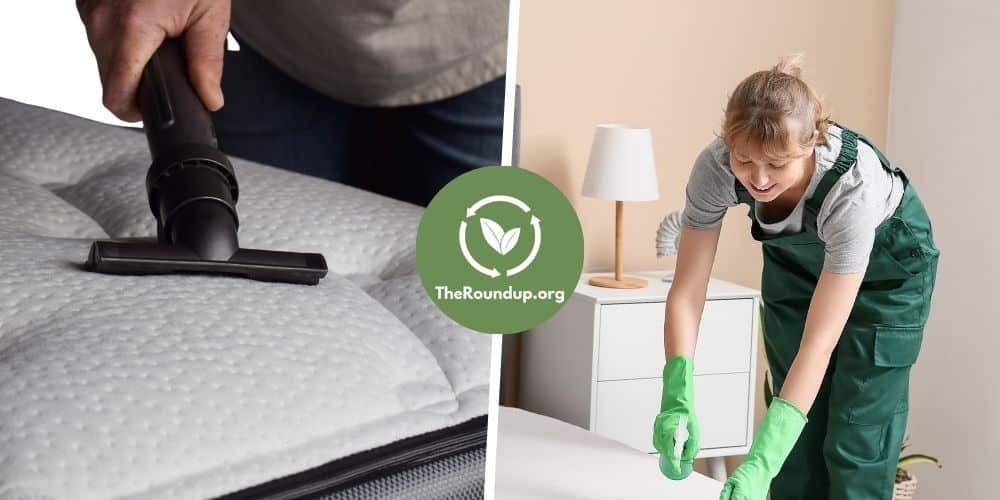
To clean a latex mattress, follow these steps.
Our guide on how to clean a mattress covers stain-by-stain methods in more detail.
To store a latex mattress, clean it, let it dry completely, and seal it in a heavy-duty mattress storage bag.
Keep the mattress flat in a cool, dry space, never on its side or against a wall, and place nothing on top of it.
For long-term storage, inspect and air the mattress out every six months.