TheRoundup is reader-supported. We may earn a commission when you make a purchase via links on this site, at no cost to you.
All products are reviewed in accordance with our Review Methodology.
New mattresses made from synthetic materials (polyurethane memory foam, polyester) off-gas chemicals called VOCs for between 48 hours and a few weeks.
The new mattress smell can put you off using your bed for the first few nights, and can be unsafe for babies and young children.
But there are ways to speed up off-gassing or avoid it altogether.
Mattress off-gassing is the release of volatile organic compounds (VOCs) from a new mattress into the surrounding air.
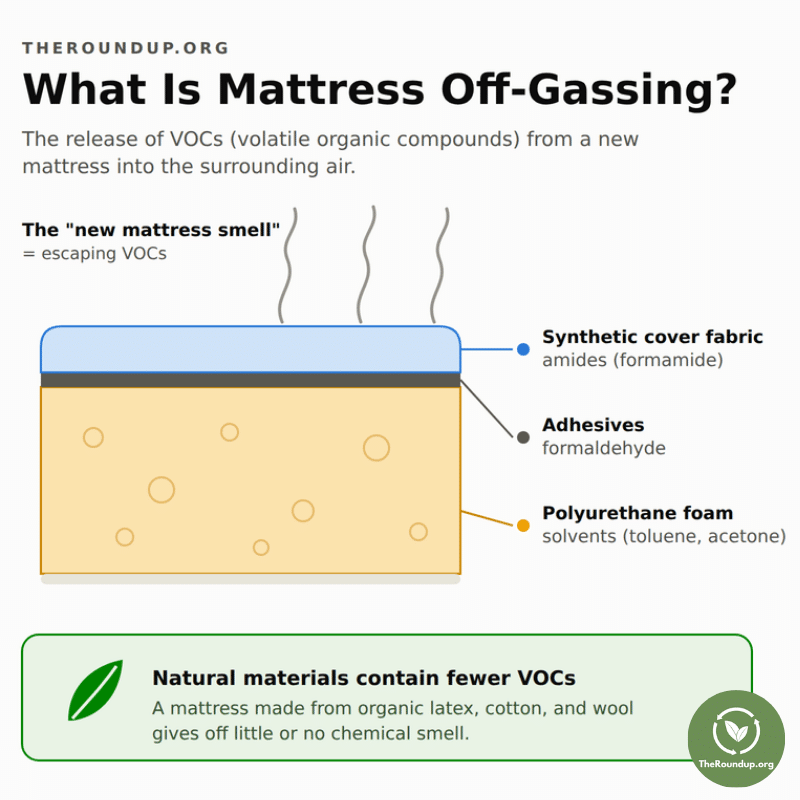
Mattress off-gassing is caused by VOCs escaping from the synthetic materials inside a new mattress (polyurethane foam, adhesives, and synthetic cover fabrics).
A mattress made from natural materials (organic latex, cotton, and wool) contains fewer VOCs, so it gives off little or no chemical smell.
Volatile organic compounds (VOCs) are chemicals that escape as gases from solid or liquid products.
A new mattress is one of many VOC sources in a home, alongside paints, cleaning products, and other new furniture.
Concentrations of many VOCs run up to ten times higher indoors than outdoors (EPA). The health effects of VOC exposure are covered in the toxicity section below.
The new mattress smell fades as the VOCs disperse. Some mattress types take much longer than others to finish off-gassing.
Mattress off-gassing lasts from 48 hours to a few weeks, depending on the mattress materials.
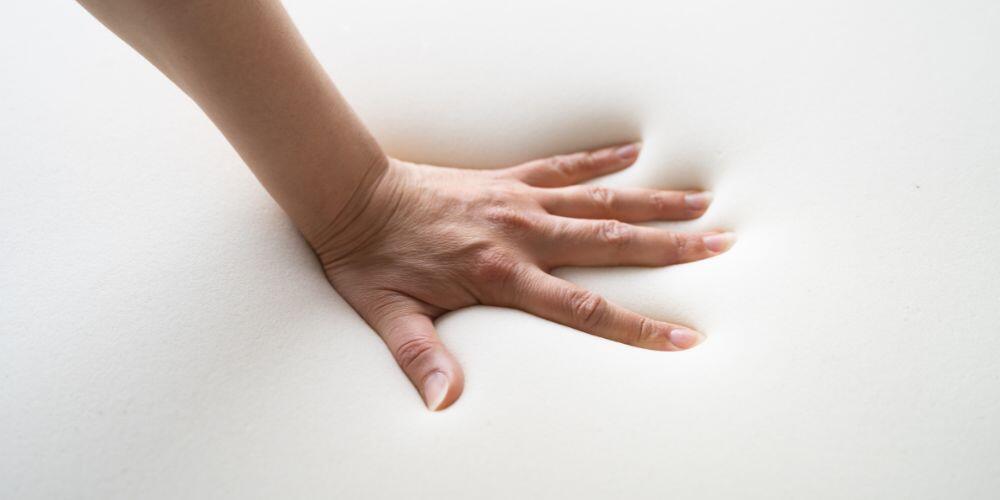
VOC release from new memory foam mattresses peaks on the first day and drops over the next two days. But memory foam still emits small amounts of VOCs a month later (Beckett et al., 2022).
The more synthetic foam a mattress contains, the longer its off-gassing lasts.
The longer the off-gassing lasts, the longer you breathe those VOCs once the mattress is in use. Researchers have measured those exposures to test whether off-gassing is toxic.
Mattress off-gassing is not toxic to adults at the levels measured from new mattresses, although higher VOC exposures do cause health effects.
In lab testing of new memory foam mattresses, total VOCs in the room air averaged 20 to 33 micrograms per cubic meter over the first month, which is inside recommended indoor air limits (Beckett et al., 2022).
Whether a VOC exposure harms you depends on how much you breathe in and for how long. In larger amounts, VOCs can cause headaches, nausea, and irritation of the eyes, nose, and throat (EPA).
Babies and young children are particularly vulnerable to VOC release from polyurethane (PU) mattresses. Researchers estimated that acetaldehyde, formaldehyde, and benzene emissions from PU mattresses could reach levels of concern in the air the child breathes (Oz et al., 2019).
Sleeping on a polyurethane mattress increases how much you breathe in, because body heat speeds up VOC release from the foam.
Manufacturers of synthetic mattresses tell you to air a new mattress out for 24 to 72 hours before sleeping on it, or until the off-gassing smells fade. If you want to use your mattress sooner, you can speed up the off-gassing with the methods below.
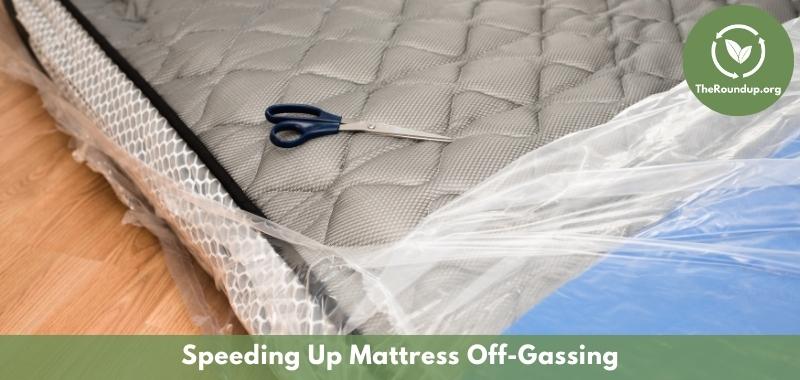
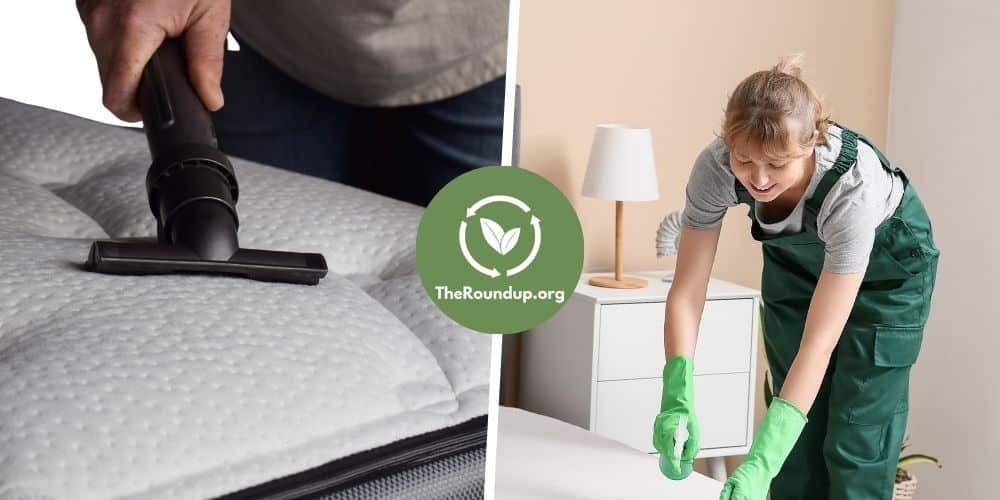
To speed up off-gassing, work through the eleven methods below. The list runs in the order you would use the methods, from unboxing day to fitting the protector.
The eleven methods above are for the mattress you already own. When buying your next mattress, you can choose one that barely off-gasses at all.
To avoid mattress off-gassing when buying your next mattress, choose one made from certified organic materials, or buy one that is no longer new.
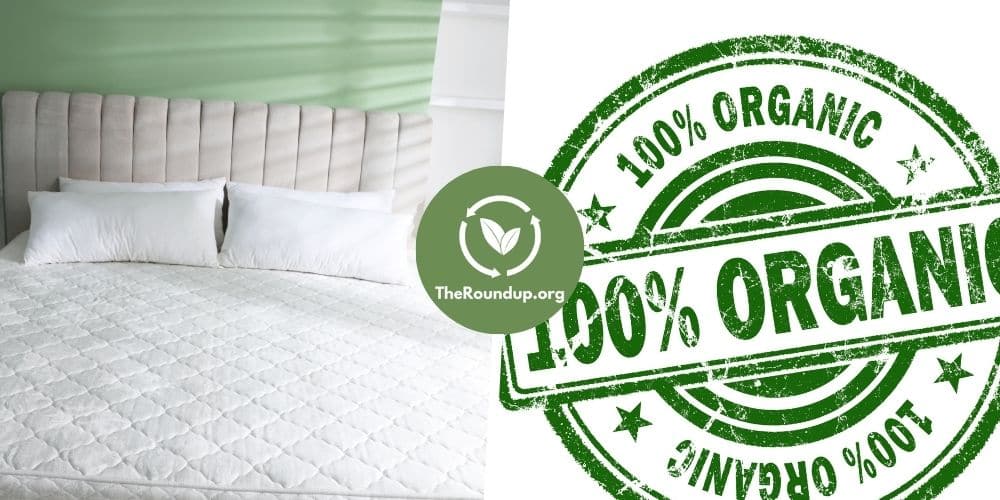
An organic mattress produces the least off-gassing because organic latex, organic cotton, and wool contain few or no chemicals that escape as VOCs.
An organic hybrid with organic cotton batting is also low in VOCs. Our guide to the best organic mattresses lists the certified models we have tested and recommend.
Independent certifications verify a brand's low-VOC claims. GREENGUARD Gold and CertiPUR-US both test products for low VOC emissions.
The two mattress certifications cover chemical safety only, so a fully synthetic mattress can hold either one.
GOTS (Global Organic Textile Standard) and GOLS (Global Organic Latex Standard) are the labels that verify organic content.
A slightly used mattress has already finished its off-gassing in someone else's home. Sites such as Craigslist and Facebook Marketplace list slightly used mattresses. Inspect the mattress in person before you pay.
Owner reviews tell you which models produce a strong chemical smell and which do not. Watch for fake reviews and greenwashing in the product descriptions.
Yes, you can return a mattress that off-gasses excessively if you are within the sleep trial period. A sleep trial lets you return the mattress for any reason within a specified period, usually between 90 and 365 nights.
If your mattress did not come with a sleep trial, the return is at the retailer's discretion, so check the returns policy before you buy.
Yes, air mattresses produce an off-gassing smell. A standard air mattress is made from PVC, a plastic that releases VOCs when new. The airing methods above work on an air mattress too.
Our guide to eco-friendly air mattresses lists low-VOC airbeds that are made from the safest materials.
Yes, you can off-gas a mattress in the cold, but the process takes longer because VOCs escape more slowly from cold foam. Ventilation still helps at any temperature. If you can, move the mattress somewhere warmer to finish the job.
It is safe to sleep on an off-gassing mattress if you are a healthy adult, although you may experience side effects such as a mild headache or irritated eyes while the smell lasts.
It is not safe for babies and young children to sleep on an off-gassing mattress. Infants should only sleep on synthetic mattresses that have already off-gassed. Ideally, buy a baby or toddler mattress that is GREENGUARD Gold certified for low emissions.
An off-gassing mattress smells unpleasant and can cause some side effects, but it is not dangerous to healthy adults. The smell is strongest when the mattress is new, and clears faster in a well-ventilated room.
Babies and young children should not sleep on a mattress that is still off-gassing and ideally should have a mattress that is certified for low emissions.
If you want to avoid off-gassing completely, buy a certified organic mattress.