
TheRoundup is reader-supported. We may earn a commission when you make a purchase via links on this site, at no cost to you.
All products are reviewed in accordance with our Review Methodology.

Bed-in-a-box mattresses are a convenient and increasingly popular way of buying mattresses online. They're compressed, rolled, and vacuum-sealed, so they're easy to ship in a compact box and expand to their full size after unboxing.
But some manufacturers use toxic materials, including synthetic foam, polyester, and chemical adhesives.
These synthetic materials release Volatile Organic Compounds or VOCs. Some VOCs and flame retardants have been associated with health risks such as respiratory problems, hormonal disruption, and increased risk of cancer.
That's why we decided to research and test the best non-toxic bed-in-a-box mattress brands to suit all needs and budgets.
By non-toxic, we mean products independently verified to emit low VOCs and that are free from flame retardants, formaldehyde, or PFAS chemicals.
Our curated picks combine the convenience of a compressed mattress with the safety of certified chemical-free materials like certified organic cotton, natural latex, and ethically sourced wool.
✔ Certified Organic Materials
✔ Unrestricted Airflow
✔ Guaranteed for Life
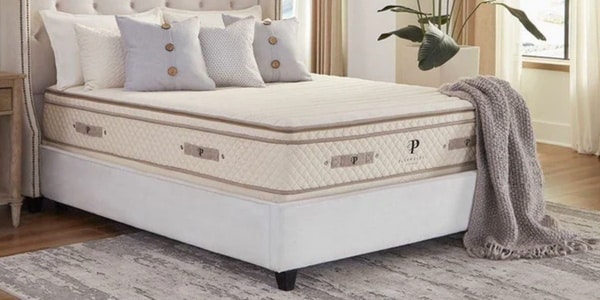
Why It's Best Overall: The PlushBeds Botanical Bliss Organic Latex Mattress is my top pick because it's incredibly comfortable and packed full of high-quality certified organic materials. In fact, this is the mattress I currently use myself.
While the 11" Avocado Green offers firm support for back pain, and the Birch Luxe excels for hot sleepers and couples, PlushBeds provides the most balanced combination of comfort and certifications.
I've personally tested more than 50 mattresses over the years, and the Botanical Bliss is the most comfortable mattress I've ever slept on.
As a hot sleeper, I find the breathability of this mattress is outstanding, thanks to the organic cotton knit cover that effectively pulls moisture away from my body. This allows air to move freely through the surface and keeps me dry and comfortable all night long.
The cotton used is organically and ethically grown, with no synthetic fertilizers or pesticides. The mattress has all the certifications needed to prove it's safe and non-toxic. That matters to me, as I refuse to sleep on something soaked in chemicals.
If you struggle with lifting heavy boxes or want an easier experience, you have the option to request an optional in-home setup service. The delivery team brings the mattress into your home, installs it where you want it, removes all packaging, and even recycles your old mattress.

✔ No Off-Gassing Smell
✔ Built to Last
✔ Temperature Regulating
Why It's a Great Option for Hot Sleepers: The Birch Luxe Natural Mattress is a great option for hot sleepers because it has a top layer of natural wool that is incredibly effective at drawing away body heat.
Why It's Recommended for Couples: It's also recommended for couples because the firm edge support means that the whole of the mattress can be used to sleep on.
The build quality of the Birch Luxe Natural Mattress stood out during testing. After two months of nightly use, the edge support was still firm (I often sit there to tie my shoes), and I didn't notice any body indentations. This is definitely a mattress built to last!
It also outperformed all other mattresses I tested in terms of "new mattress" smell. Most new mattresses (no matter how good their eco-credentials) have a factory smell, but the Birch Luxe had none when I unpacked it.
The Birch Luxe offers similar cooling properties to the Happsy mattress, but it's firmer than the plush Happsy option (rated 4/10) and so more suitable for back sleepers.

✔ Enhanced Sleep Quality
✔ Zoned Support System
✔ Superior Spinal Alignment
Why It's Ideal for Back Pain: The Avocado Green Mattress is ideal for back pain because it features a zoned support system that offers excellent back support.
The Avocado Green felt sturdy and high-quality. I found the cotton cover soft and breathable, with a natural scent from the wool and latex (not the chemical odor you get with toxic foam beds).
I slept very well on this mattress, much better than I ever have on memory foam or innerspring surfaces. Other users agree. I found over 30 individual online reviews praising the sleep quality of the Green Mattress, and only 2 saying they didn't like it.
There's very little sink with this mattress (I tested the firm 11" option). My shoulders and hips stayed level, and my spine felt well-aligned whether I was on my back or stomach.
However, for side sleeping, the 11" option was too firm, and I developed some pressure at my hips and shoulders after a few nights. Side sleepers should consider Avocado's medium (13") or plush (15.5") options, or alternatively, the side sleeper pick, Awara, offers excellent pressure relief.
✔ Adhesive-Free Coils
✔ Dense Latex Foam
✔ Luxuriously Soft
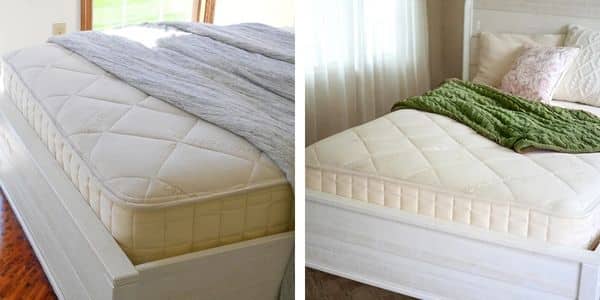
Why It's Effective for Allergy Sufferers: The Naturepedic Serenade Organic Hybrid Mattress is likely to be a good option for allergy-conscious buyers because its dense latex foam makes it less habitable for dust mites compared to memory foam alternatives.
The hybrid design of the Naturepedic Serenade Organic Hybrid Mattress gave an immediately responsive comfort without a break-in period during testing (I was sleeping on it within 6 hours).
Temperature regulation was also a standout feature of this mattress. It performed exceptionally well across different room temperatures thanks to the breathable latex construction combined with organic cotton and wool materials.
Reinforced perimeter coils delivered stronger edge support than I expected, and the glueless wrapped coils delivered consistent bounce and support without excessive sinkage.
Naturepedic and BedInABox could both help people looking to reduce allergy symptoms. Naturepedic is a good option for reducing dust mites. But BedInABox (reviewed next) is the better choice for people with latex allergies.

✔ Rapid Expansion
✔ Latex-Free
✔ Long-lasting
Why It's a Standout Option for Latex Allergy Sufferers: The BedInABox Eco-Lux Mattress is a standout option for latex allergy sufferers because it does not contain any latex. Naturepedic (reviewed above) is our other allergy-friendly pick, but it does contain GOLS-certified organic latex.
This mattress comes with a long list of trusted third-party certifications that confirm all foams used meet strict standards for emissions, durability, and safety. In fact, the BedInABox Eco-Lux Mattress carries the most certifications of all the memory foam mattresses I tested, although fewer than 100% organic options like the PlushBeds Botanical Bliss.
It's quite fun watching this mattress expand. After unboxing, it reached full size in around 2 minutes, which was quicker than most others.
The foam layers provide a balanced medium-firm feel that works well for back, side, and combination sleepers. During testing, I found this mattress to be supportive, comfortable, and cool throughout the night.
Although only the cotton cover carries organic certification (the mattress is not fully organic), BedInABox uses low-emission and non-toxic materials in the rest of the construction.
Avocado and Awara offer a longer sleep trial (365 nights) than BedInABox (120 nights), making them better for cautious buyers who like to thoroughly test a mattress before committing.

✔ Value for Money
✔ Excellent Pressure Relief
✔ 365-Night Trial
Why It's Perfect for Side Sleepers: The Awara Premier Natural Hybrid Mattress is perfect for side sleepers because the adaptive latex foam layer beneath the plush Euro top does an excellent job of aligning the spine and relieving pressure on the shoulders, hips, and legs.
This mattress combines GOLS-certified organic Dunlop latex with individually wrapped coils to create a medium-firm feel that prevents pressure point build-up during sleep.
The organic New Zealand wool used in this mattress serves dual purposes as both a natural fire retardant and moisture-wicking layer, eliminating the need for chemical flame retardants or a fireglass layer.
Awara's 365-night trial and lifetime warranty are the most generous I tested, and show confidence in their product.
✔ Single-Source Latex
✔ Low Price Point
✔ Dynamic Support
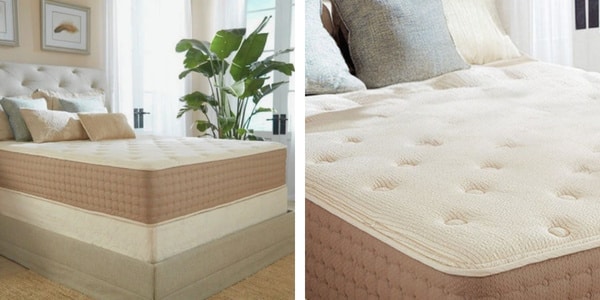
Why It's the Best for Under $1,500: The Eco Terra Hybrid Latex Mattress offers high-quality certified organic materials, hand crafted quality and a good level of comfort, all at an affordable price point.
The Eco Terra Hybrid Latex Mattress impressed me with its consistent comfort, thanks to single-source latex that avoids the flaws of cheaper blends.
Responsive latex and coils offer solid pressure relief and spinal support. Whether I slept on my back, side, or stomach, the support felt well-balanced and adaptable.
The Eco Terra 90-night trial and 15-year warranty are the least generous options of all the brands in this guide. However, for the price, it's still an excellent option to consider.
Eco Terra, Awara, and Happsy all offer queen-sized organic mattresses under $1,500, but Eco Terra has the lowest entry price (when on sale at $999).

✔ Organic Materials
✔ Breathable Coil System
✔ Pressure Point Relief
Why It's a Top Choice for Cooling Properties: The Happsy Organic Mattress is a top choice for cooling properties because its breathable coil system and organic wool work together to wick away moisture and regulate temperature.
This mattress (I tested the medium firm option) provided the perfect level of pressure point relief when I slept on my back and stomach during testing. However, I found that when side sleeping, it did give me a small amount of hip pain.
If you're a side sleeper who prefers a super plush mattress, you can add a topper to your plush Happsy Organic Mattress and take the firmness level down to a 2/10.
We tested a lot of supposedly chemical-free mattresses for this article, and rejected many that didn't make the grade.
To help you decide which option is best for you, I've compared the key criteria of the 5 best mattresses in a box we tested in the table below.
| PlushBeds Botanical Bliss | Birch Luxe | Avocado Green Mattress | Naturepedic Serenade | BedInABox Eco-Lux | |
|---|---|---|---|---|---|
| | | | | |
| Best For | Best Overall | Hot Sleepers & Couples | Back Pain Sufferers | Allergy Sufferers | Latex Allergy Sufferers |
| Certs | GOTS, GOLS, GREENGUARD Gold, Eco-Institut, OEKO-TEX, FSC | GOLS, GOTS, GREENGUARD Gold, Fair Trade | GOTS, GOLS, OEKO-TEX, MADE SAFE, EWG VERIFIED, GREENGUARD Gold | GOTS, GOLS, MADE SAFE, GREENGUARD Gold, EWG VERIFIED | CertiPUR-US, OEKO-TEX, USDA BioPreferred |
| Firmness Options | Medium (5.5/10), Med-Firm (8/10) | Med-Firm (6.5/10) | Plush (4/10), Medium (7/10), Firm (9/10) | Plush (4.5-5/10), Cushion-Firm (6-6.5/10), Firm (7-8/10) | Medium-Firm (6/10) |
| Thickness | 9", 10", or 12" | 11.5" | 11" (Firm), 13" (Medium), 15.5" (Plush) | 11" | 11" |
| Warranty | Lifetime | Lifetime | 25 Years | 25 Years | 25 Years |
| Price Point | $$$$ | $$$ | $$$ | $$-$$$ | $$-$$$ |
We tested each non-toxic bed-in-a-box mattress in real homes for at least 28 nights. Our team included me, my wife, our two daughters, and additional reviewers from The Roundup community. This range of testers helped us compare comfort and performance across different body types and sleep styles.
We set up the mattresses in bedrooms kept between 68-72°F and 45-55% humidity to reflect a typical U.S. home environment. We unpacked and expanded each mattress under normal conditions, then noted any off-gassing odors, setup challenges, or changes in feel over time. We rejected any mattress that didn’t meet our safety or comfort standards.
We evaluated every mattress using the following criteria.
This process ensures that every recommendation in this guide comes from firsthand experience and consistent, real-world testing.
All mattresses were either purchased independently or supplied with no editorial input from brands. We do not allow brands to pay for inclusion or placement in our list.
A non-toxic mattress is made without materials or chemicals known to release harmful substances into your home. These include volatile organic compounds (VOCs), formaldehyde, flame retardants, and per- and polyfluoroalkyl substances (PFAS).
Non-toxic mattresses use safer, naturally derived materials such as organic cotton, organic wool, and natural latex instead of petroleum-based foams and synthetic fabrics. Natural materials do not contribute to indoor air pollution and help limit your exposure to allergens and chemical residues.
(Details about VOC emissions and the difference between natural latex and synthetic memory foam are covered in the next section.)
Look for mattresses that meet all or most of the following criteria.
One of the best indicators of a chemical-free mattress is the presence of trusted third-party certifications. Here's a list of the main ones to look for.
Here's a brief overview of what each certification tells you about the brand or product in question. We've grouped them into essential and "nice to have" in the context of identifying a chemical-free mattress.
Essential certifications
These are the minimum certifications a mattress should have to be considered genuinely non-toxic. Each one addresses a different safety aspect: organic content, low chemical emissions, or ingredient screening.
Look for at least one certification covering material content (GOTS or GOLS) and one covering emissions or chemical safety (GREENGUARD Gold, OEKO-TEX, or MADE SAFE).
Together, they confirm that both the materials used and the finished mattress meet strict safety standards.
Nice-to-have certifications
The following certifications add extra peace of mind by verifying broader sustainability, ethical sourcing, or environmental performance.
A mattress that carries one or more of these in addition to the essentials shows stronger transparency and environmental commitment. However, the absence of these labels does not mean the product is unsafe.
Learn more about how to verify these certifications, and almost 100 more, in our Sustainability Certifications for Eco-Friendly Consumers article.
Volatile organic compounds (VOCs) and chemical flame-retardants in mattresses can lead to short-term irritation and potentially long-term health risks, especially for sensitive people.
The potential dangers include the following.
So how do you avoid exposure to these chemicals? To choose a safe mattress, you need to know the difference between materials such as organic latex and synthetic memory foam in terms of their potential toxicity.
Organic latex and memory foam mattresses differ in terms of the materials they use, how much they off-gas, and whether they rely on chemical flame retardants.
The following table compares the factors that affect their overall toxicity and indoor air quality.
| Feature | Organic Natural Latex Mattress | Synthetic Memory Foam Mattress |
|---|---|---|
| Main material | Made from the sap of the Hevea brasiliensis rubber tree. Certified organic latex under the Global Organic Latex Standard (GOLS) must contain at least 95% organic natural rubber latex. | Made from polyurethane, a plastic foam created using chemicals called diisocyanates, which are known respiratory irritants and sensitizers (CDC/NIOSH). |
| Off-gassing (VOCs) | Emits very low levels of VOCs when certified by GREENGUARD Gold, OEKO-TEX, or MADE SAFE. | Can release volatile organic compounds (VOCs) like formaldehyde and acetaldehyde during and after manufacturing. Indoor VOC levels are often 2–5 times higher than outdoors (EPA). |
| Flame-retardant chemicals | Uses natural wool or other fiber barriers for fire safety. Certified organic standards (GOTS, GOLS) ban halogenated or organophosphate flame retardants. | Often treated with chemical flame retardants such as organophosphates or PBDE substitutes, which are linked to hormone disruption and developmental effects (NIEHS). |
| Chemical residue risk | Low when certified under organic and low-emission programs that test for formaldehyde, nitrosamines, and heavy metals. | Residues from VOCs and flame-retardants can build up in household dust and indoor air, increasing long-term exposure (EPA). |
| Best for sensitive sleepers | A good choice for people with allergies or chemical sensitivities when certified by GOLS, GOTS, or GREENGUARD Gold. | Less suitable for those sensitive to chemicals or odors due to higher VOC and flame-retardant exposure (EPA; NIEHS). |
As Dr. Yael Dubowski, professor of environmental engineering at the Israel Institute of Technology, who studies indoor air pollutants, explains:
“There is no reason to panic, and yet it is important to understand that air quality in our sleeping micro-environment is important with regard to our exposure to various pollutants such as VOCs.”
One of the primary reasons customers prefer organic mattresses is the lack of stringent chemical and VOC regulations in the United States.
In the United States, only fire safety standards are legally required for mattresses, and these are enforced by the U.S. Consumer Product Safety Commission (CPSC) under the Flammable Fabrics Act.
The federal government does not regulate VOC emissions or chemical safety, so those areas rely on voluntary certifications and state-level testing programs.
These federal laws apply to all mattresses sold in the United States.
These are not required by law but are used by manufacturers to limit emissions and improve indoor air quality.
(Sources: CPSC.gov, EPA.gov, UL.com)
Due to the lack of federal regulation, voluntary certifications are the best way to make sure the mattress you buy is non-toxic.
Bed-in-a-box mattresses have gained popularity due to their convenience, but they're not without their problems. Here's a list of the most common pros and cons so you can make an informed purchase.
The main reasons people love bed-in-a-box mattresses include the following.
But there are some drawbacks worth considering.
An organic mattress is a more eco-friendly option, which supports sustainable farming and manufacturing practices. If cared for properly, it also lasts a long time.
Organic latex mattresses last between 15 and 25 years if properly cared for. Some brands, such as PlushBeds, Birch, and Awara, even offer lifetime warranties.
The following tips will help keep your mattress in top shape.
With consistent care, your mattress will stay supportive, clean, and comfortable for many years, and you won't need to return it.
Average prices for an organic latex hybrid mattress range between $1264 (Twin) and $3152 (Split King). However, it is important to note that individual prices vary depending on brand, mattress type, quality, and size.
The products we recommended above are each given a price point rating between $ and $$$$$ to illustrate how they compare to other brands on the market.
Refer to our organic mattress price guide for a full breakdown of prices and sizes across all the leading eco-friendly sleep brands.
Return policies and trial periods let you test a mattress at home and send it back for a refund if it doesn't work for you.
Most of the online mattress brands we researched offer trial periods lasting between 100 and 365 nights. This gives you several months to sleep on the mattress and decide whether it's right for you.
If it falls short of your expectations, return it during the trial period.
Every option listed in this guide has decent return polices and trial periods, so you won't be stuck with something that causes discomfort or doesn't live up to the promise. It's a risk-free way to find the right fit for you without stepping into a showroom.
To choose the right mattress firmness, you need to know your sleeping position. The three most popular options are as follows.
Properly caring for your mattress will help it maintain its correct level of firmness for years.
Yes. Natural materials such as latex and wool are resistant to dust mites and mold, which are among the most common indoor allergens.
The American Academy of Allergy, Asthma & Immunology notes that dust mites thrive in warm, humid bedding environments (AAAAI).
The most common VOCs found in mattresses include toluene, chloromethane (methyl chloride), acetone, and isopropanol, which have been measured in chamber studies of new memory-foam mattresses (Beckett et al., 2022).
The U.S. EPA also lists formaldehyde, benzene, and methylene chloride among common indoor VOCs that can come from building materials and adhesives, including those used in mattresses (EPA).
Synthetic foams, adhesives, flame retardants, and vinyl covers release these chemicals (Dishaw et al., 2014).
To avoid VOCs, you should buy non-toxic mattresses like the ones in this article.
Purple mattresses are non-toxic because they use materials that are CertiPUR-US certified and free from harmful chemicals like phthalates and formaldehyde. However, I wasn't able to recommend the brand due to a lack of organic certification.
To dispose of a non-toxic mattress, consider donating it, recycling it responsibly, or composting its natural materials if possible.
The difference between a mattress and a bed in a box lies in the packaging and delivery. Companies compress and vacuum-seal bed-in-a-box mattresses to reduce shipping costs, whereas delivery teams transport traditional mattresses at full size.
Manufacturers design most mattresses in a box to work with many types of bed frames and foundations, including slatted platforms and adjustable bases, but you should always check the manufacturer's recommendations for optimal support.
Our core values mean we always prioritize sustainability over profit. We carefully research and evaluate every product to ensure they meet our high standards. All products featured in this article are recommended in accordance with our Review Methodology.
TheRoundup.org - As Seen On

