TheRoundup is reader-supported. We may earn a commission when you make a purchase via links on this site, at no cost to you.
All products are reviewed in accordance with our Review Methodology.
Organic cotton is a more eco-friendly alternative to regular cotton. It's popular with people who are worried about chemicals in clothing or textiles, or just trying to make sustainable lifestyle choices.
But what's the difference between organic cotton vs regular, and are the benefits worth the extra cost?
Organic cotton is grown without synthetic chemicals or genetically modified organisms (GMOs). It requires substantially less water, produces fewer greenhouse gas emissions, and promotes a healthier soil ecosystem.
It also offers potential health, ethical, environmental, and quality benefits that we'll explore in greater detail below.
This guide explains how organic cotton is grown, and how to use certifications like GOTS to spot a genuine organic cotton garment or product from a fake.
Let's begin by exploring the differences between organic and conventional cotton in terms of their production methods and characteristics.
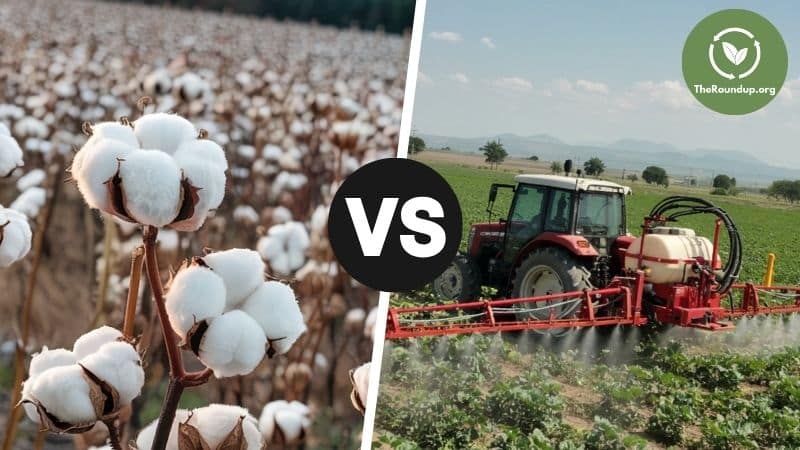
The key differences between organic cotton and conventional are how it is grown, farmed, and manufactured.
The table below demonstrates how the two varieties differ in terms of factors such as water and chemical usage, cost, and environmental impact.
| Attribute | Organic Cotton | Conventional Cotton |
|---|---|---|
| Water Usage | 14% less water utilized, mostly rainfed | Over 52 trillion liters of irrigation water annually |
| Chemical Usage | No synthetic fertilizers or GMOs, natural pest control | 122,481 tons of pesticide and 58,910 tons of insecticide are used annually |
| Soil and Energy | 26% less soil erosion, 62% less energy used | Higher soil erosion, higher energy consumption |
| Pest Control | Natural methods, no chemicals | Chemical pest control is common |
| Certification and Regulation | Strict certification processes like GOTS and OCS | No requirement for organic certification |
| Cost | Higher cost due to certification and sustainable practices | Generally lower cost |
| Genetic Modification | No GMOs allowed | 75% of all cotton planted is genetically modified |
| Market Value | Higher market growth and value | Lower market value for cottonseed |
| Feel and Quality | Soft and durable, often perceived as higher quality | Varies, but can be rougher due to chemicals used |
| Health and Safety | Reduced pesticide exposure for farmers | Risk of pesticide poisoning (500 deaths per day globally) |
| Yield and Production | Lower yield but sustainable methods | Higher yield due to GMOs and chemical inputs |
| Carbon Impact | Higher soil carbon retention | Less carbon retention in soil |
| Ecological Impact | Lower impact, promotes biodiversity | Higher ecological footprint, impacts biodiversity |
| Land Use | 1.9% of global cotton land is organic | Larger share of global cotton land |
| Social and Economic Impact | Empowers local communities, often receives premium pricing | Requires ongoing purchase of genetically modified seeds, pesticides and herbicides |
See more data in our organic cotton statistics.
Organic cotton is a naturally grown agricultural product cultivated using methods that actively regenerate ecosystem health. Organic farmers never use synthetic pesticides, fertilizers, or genetically modified (GMO) seeds.
Choosing organic cotton is better for soil and ecosystems, human health, and fair treatment of workers, although it does come at a higher cost.
For cotton to be labeled "organic," it needs certification from independent organizations like GOTS (Global Organic Textile Standard) and OCS (Organic Content Standard). These groups track cotton from farm to finished product, checking that organic rules are followed at every step.
Conventional cotton is the industry standard fiber grown using modern agricultural methods that prioritize yield and efficiency. This type of cotton is grown using synthetic fertilizers, chemical pesticides, and GMO seeds.
The conventional cotton industry accounts for approximately 98% of global cotton production.
It's cheap and efficient, but causes environmental damage (water consumption, chemical runoff, soil degradation), health concerns, and poor working conditions.
Now that we understand the fundamental differences between organic and conventional cotton production, we need to understand the growing process.
Specific growing practices may vary slightly between different regions or individual farms. As a general guide, farmers use the following process to produce organic cotton.
The growing period from planting to harvest takes between 4 and 6 months (FiBL), depending on whether a secondary wheat crop is grown.
This is a more labor-intensive process than conventional cotton growing. Farmers also face a 20-30% reduction in yield during the three-year transition process (NEELA).
But is it worth the extra effort?
Let's examine the benefits of organic cotton in detail, starting with the reasons why it's better for the environment.
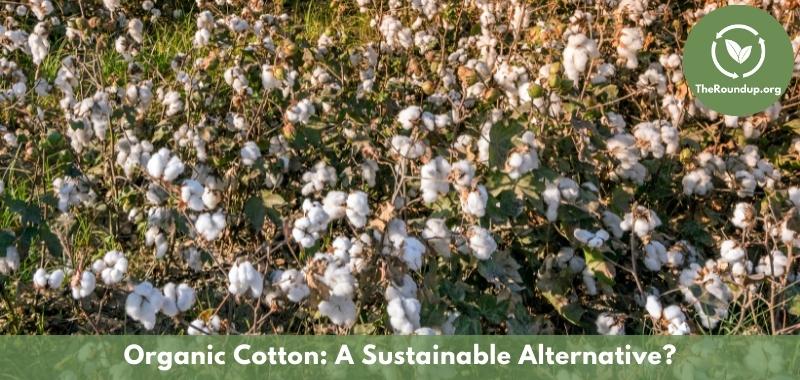
Organic cotton delivers significant environmental benefits by conserving water, eliminating toxic chemicals, maintaining soil health, and supporting biodiversity.
Organic cotton does use less water than conventional cotton, but not as much less as some sources claim.
The frequently quoted figure that organic cotton uses 91% less water has since been debunked. The Textile Association states that the 91% figure was "only intended to be considered within the context of these two specific studies" and that the claim is "not an appropriate use of LCA data".
Nevertheless, more recent data from Faitrade International shows that organic cotton farmers use 14% less water than conventional cotton farmers, and produce 20% more cotton from the water they use.
Conventional cotton is frequently referred to as the world's thirstiest crop. Estimates vary, but it takes between 8,920 liters ("Water Footprint in Cotton 2020–2024: A Global Analysis", ICAC) and 20,000 liters (WWF) of water to produce one kilogram (2.2 pounds) of cotton - enough for a single pair of jeans or a t-shirt.
This variation depends on where the cotton is grown. Pakistani and Indian cotton are towards the top end of these estimates, whereas China, Brazil, and California are towards the lower end.
In total, 24,380,507 tons of cotton are produced each year (Textile Exchange).
Conventional cotton farming requires around 52 trillion liters of irrigation water annually (ICAC).
The consequences of this enormous water consumption can lead to scarcity for other uses (drinking water and other agriculture) and destruction of ecosystems such as the Aral Sea.
Water conservation is just one part of organic cotton's environmental advantage. Equally important is the elimination of harmful chemicals from the production process.
Organic cotton farming does not use any of the chemical pesticides and fertilizers that are prevalent in conventional cotton production.
Conventional cotton uses 6% of the world’s pesticides and 16% of its insecticides (Environmental Justice Foundation).
Chemical pesticides and fertilizers contaminate water systems and cause 35-50% of applied nitrogen to seep into groundwater. Pesticides also erode soil at a rate of 12-18 tons per hectare annually and reduce earthworm populations by 72% (Organic Cotton Market Report, ICAC Cotton Data Book)
These toxic inputs create ecological damage estimated at $21 billion annually, contribute to 500 daily deaths from pesticide poisoning, and force agricultural expansion as degraded soils lose productivity, destroying 2.3 million hectares of habitat each year in key cotton-producing regions (Textile Exchange MCI, Carbon Brief).
By contrast, organic farmers use only natural pest control methods and organic fertilizers. That means their crops don't cause soil and water contamination while protecting farmers from harmful substance exposure.
Beyond avoiding water contamination, organic cotton farming actively improves the foundation of agriculture: the soil.
Organic cotton production improves soil structure through natural farming techniques such as crop rotation, cover cropping, and composting.
Techniques like these increase the amount of organic matter in the soil. This makes it more fertile and helps it retain water better, so it needs less irrigation.
In fertile soil without chemical pesticides, beneficial soil microorganisms, worms, and insects can thrive. This results in a living soil ecosystem that naturally cycles nutrients through the soil to feed plants.
Data shows organic cotton causes 26% less soil erosion (GOTS). This is particularly important, considering that there is three times as much carbon in the top meter of soil globally as in the entire atmosphere (N.H. BATJES, 1996).
Healthy soil supports better crops and also plays a crucial role in fighting climate change.
Regenerative agriculture also reduces greenhouse gas emissions and helps combat climate change.
Soil is a carbon sink - it soaks up carbon from dead plants, which in turn (while alive) have removed it from the atmosphere via photosynthesis.
When topsoil is lost through unsustainable agriculture, that carbon is released back into the atmosphere and contributes to global warming (Söderström et al, 2014).
Organic cotton also benefits from a lower carbon footprint, uses 62% less energy to grow and produce compared to regular cotton, and has 40% lower global warming potential, according to the Textile Exchange (via GOTS).
Then there's the direct impact of the chemicals used. Synthetic nitrogen fertilizers used in conventional farming are particularly problematic as they release nitrous oxide. This greenhouse gas is approximately 300 times more potent than carbon dioxide (ICAC, UNEP).
Overall, organic farming is far less damaging to the environment. Organic cotton also produces a higher-quality finished product that improves the quality and safety of the products we use every day.

Organic cotton offers potential health benefits because it does not expose your skin to harmful chemicals and dyes.
Chemicals that are used to grow traditional cotton (malathion, methomyl) and manufacture it (ammonia and formaldehyde) persist and are still detectable in the finished product (The Organic Center).
But textile products made from 100% certified organic cotton do not contain these potentially harmful substances. That's why the health benefits for both the end user and the workers are related to what organic cotton does not contain, rather than what it does.
High-quality organic fibers are considered more skin-friendly, especially for those with sensitive skin or allergies, due to the absence of herbicides, pesticides, and synthetic fertilizers.
Conventional cotton cultivation uses chemicals including organophosphates (nerve-affecting pesticides), neonicotinoids (bee-killing insecticides), pyrethroids (synthetic insect killers), amongst many others ("The Deadly Chemicals in Cotton", Environmental Justice Foundation).
Most of these can be absorbed through the skin and can cause various allergies and breathing issues.
Non-organic cotton contains chemicals that can exacerbate allergies and skin irritations, and even affect your breathing.
Take benzothiazole, for example. This single pesticide has been linked to allergic reactions, liver and kidney problems, and respiratory issues (Iadaresta et al, 2018).
Then there's Parathion, an insecticide that can cause symptoms including skin rash, vomiting, nausea, and breathing difficulties (EPA).
"The major benefit of organic cotton is that it is more durable than conventional cotton," (Shaharuddin et al, 2020).
The absence of harsh chemicals in the growing and processing stages allows the cotton fibers to remain longer and stronger.
This results in a better quality, softer, and more durable fabric that can withstand wear and tear better than its conventional counterpart.
While consumers enjoy higher quality products, the health benefits of organic cotton extend to the people who grow and process it.
Avoiding the use of pesticides and toxic chemicals is beneficial for the end user, but it's even more significant for the workers involved in growing conventional cotton.
Up to 77 million cotton workers suffer poisoning from pesticides each year (Soil Association). This can contribute to long-term health problems and sometimes death.
The health and quality advantages of organic cotton are complemented by equally important social and economic benefits that create positive change throughout the supply chain.

Organic cotton farmers earn more money, pay their workers fairly, and operate in better and safer working conditions.
In the long term, organic cotton farmers make a higher net profit than farmers who produce conventionally grown cotton (Soil Association).
Cotton that has been grown organically can command higher market prices, and the absence of expensive chemicals can reduce overall production costs in the long run.
These improved conditions for farmers align with broader sustainable business practices that benefit entire communities.
When you buy organic cotton, you are supporting businesses that are committed to sustainable and ethical practices.
When you buy organic products, you support companies that care about the environment and treat workers fairly.
This, in turn, encourages more businesses to adopt sustainable methods, creating a positive cycle of economic benefits.
Brands that use organic materials often align with fair trade practices, ensuring that cotton growers are paid fairly for their labor.
This ethical dimension adds another layer of benefits, as it supports social justice and community development in farming regions.
Understanding these environmental, health, and ethical benefits is valuable, but you might be wondering how organic cotton is actually used in products you can buy today. Let's explore the practical applications of organic cotton across various industries.
Sustainable brands and retailers use organic cotton to make a wide variety of products, including (but not limited to) eco-friendly clothing, home textiles such as mattresses and bedding, baby products, and bags.
Around 60% of organic cotton fiber is used in apparel (Fortune Business Insights).
Some of the leading clothing brands that use organic cotton in their product lines include Patagonia, Tentree, Outerknown, Kuyichi, Madewell, and Stella McCartney.
If you own an organic cotton t-shirt, you'll know it offers a soft texture and breathability, which makes it incredibly cool and comfortable to wear. Plus, you can do so safe in the knowledge that its lower environmental impact makes it a responsible choice.
Organic cotton's benefits make it ideal for all products that come into extended contact with your skin.
Companies like Naturepedic, PlushBeds, and Boll & Branch are prominent in the sustainable bed linen sector.
Its natural softness and durability make it an ideal choice for eco-friendly bed linen and any products that come in direct contact with your skin.
Organic cotton is the most popular material for making organic towels.
Premium organic towel brands such as Avocado, Boll & Branch, and Delilah Home use 100% organic cotton to make their luxury hand and bath towels.
Others blend cotton with bamboo viscose to strengthen the bamboo fiber when wet.
You can find organic cotton used on the encasements, batting, and covers of organic cotton mattresses.
These covers normally contain various layers of organic latex, wool, foam, gel, and/or individually wrapped spring coils.
It's also used in a similar way to make organic cotton toppers and pads.
The natural breathability and absence of toxic chemicals in organic cotton make it one of the best materials for mattresses and sleep products. It helps keep you cool and contributes to a healthier sleep environment.
Organic cotton is especially beneficial for baby products like diapers and wipes because it's chemical-free and kind to sensitive skin.
For the same reasons, it's also a favorite material used by many of the organic baby and toddler clothing companies I've tested.
As a parent, you get extra peace of mind knowing that the products you buy for your child are not harming the world they'll inherit from you.
A significant portion (9.7%) of organic cotton is dedicated to packaging solutions (Fortune Business Insights). This includes the following.
Despite being of better quality, the main downside to organic cotton is that it's more expensive. Let's look at the reasons why.
Here are 6 key reasons why organic cotton costs more than conventional.
Farmers often see smaller harvests after switching to organic.
As mentioned earlier, farmers face a 20-30% reduction in yield during the three-year transition process (NEELA).
A field study in India confirms this. It found yields were 29% lower in the first organic cycle compared with conventional, though the gap narrowed later (Forster et al, 2013).
Organic cotton demands more manual work for soil management and weed control.
A six-year California trial found the cost per bale 37% higher for organic cotton, mainly due to hand-weeding and reduced yield (Swezey et al, 2007).
In a long-term field trial in India, production costs for organic cotton were 25% higher than conventional (Forster et al, 2013).
Certification adds annual administrative and inspection costs.
GOTS states that a single-facility entity can expect annual certification costs of roughly €1,200–€3,000 payable to the certifier, plus an annual GOTS fee of €180 per facility collected via the certifier (GOTS).
Organic standards require farmers to rotate cotton with other crops such as legumes or cereals to maintain soil fertility and control pests.
This practice improves soil health but means a smaller share of the farm is planted with cotton each year. Fewer cotton acres translate to lower total fiber output per farm,
Organic cotton farmers must use non-GMO seed, which can be difficult to source in regions where genetically modified cotton dominates.
While GM seed itself is usually more expensive, organic growers face added costs from limited supply, smaller seed networks, and the need to test or verify seed purity.
Organic cotton must stay separate from conventional fiber during harvesting, ginning, and transport.
Smaller processing volumes raise per-unit costs. Textile Exchange notes that organic cotton makes up only 0.95% of global cotton production (Organic Cotton Market Report 2021). This means any savings from economies of scale are limited.
Given the cost of organic cotton products, consumers need to know they're getting the real thing. Here's your guide to identifying authentic organic cotton products.
The most reliable indicator of genuine organic cotton is third-party certification.
GOTS is the most common label for certified organic cotton, while OCS and USDA are also widely used in the US market.
If you see cotton that's marketed as "organic" but doesn't have at least one of these organic labels, you cannot be sure it is genuine.
Even with proper knowledge of sustainable certification, many consumers still hesitate to choose organic cotton due to persistent misconceptions about its quality, availability, and value. Let's address these common myths with facts.
Organic cotton is often surrounded by myths and misconceptions that can deter people from choosing it over conventional cotton. Here, we'll address some of these common misunderstandings.
Organic cotton does cost more than conventional cotton, but its durability and health benefits make it a better value purchase.
While it's true that sustainable products can be more expensive upfront, the long-term benefits often outweigh the initial cost. The durability and longevity of these items make them a cost-effective choice in the long run.
Organic cotton is often described as softer, and that can be true when the fibers are handled gently from field to fabric. Many organic farms rely on hand-picking, which keeps the fibers long and intact, while conventional machine harvesting can break or compress them.
The chemical-free processing used in organic production also helps preserve natural softness by avoiding the harsh bleaches and resins that can make conventional fabrics feel stiff.
Organic Pima cotton comes from a different species (Gossypium barbadense) with extra-long fibers, typically 1½ to 2 inches (38–50 mm) compared with about 1 inch (25 mm) for standard cotton (CottonWorks; Ana & Zac).
These longer fibers produce finer, smoother yarns that naturally feel softer and more durable than both organic and conventional short-staple cotton.
Organic cotton is widely available in eco-friendly products like the ones listed above.
Demand for organic cotton is projected to increase by 84% by 2030 compared to 2020.
Many brands and stores now offer a wide range of sustainable products, so it really is easier than ever to make a sustainable choice.
The following fibers are sometimes used as alternatives to organic cotton in particular use cases. Here's how each one compares.
See our sustainable fabrics guide for more information on these and many more environmentally friendly textiles.