What Are Mattresses Made Of? All 16 Materials Revealed

TheRoundup is reader-supported. We may earn a commission when you make a purchase via links on this site, at no cost to you.
All products are reviewed in accordance with our Review Methodology.

Updated: September 15, 2026

Mattresses are made of steel coils, polyurethane foam, latex, or natural fibers such as wool and cotton, arranged in layers under a polyester, cotton, bamboo, or TENCEL fabric cover.

The materials inside a mattress affect how well you sleep, whether you breathe in chemicals at night, and what happens to the mattress when you throw it away.

This guide is for people who want to know exactly what is inside a mattress before they buy one.

What Are the Different Mattress Layers?

diagram showing layers inside a mattress

The different mattress layers are the cover, the comfort layer, the transitional layer, and the support core, in that order from the top down.

A basic innerspring mattress does not have a transitional layer because its padding is stitched straight onto the coils.

Here's an overview of what's inside your mattress.

Comfort Layer

The comfort layer is the top layer, usually made from foam or latex. The mattress comfort layer contours to your body, providing cushioning and pressure relief.

This layer also often contains natural fibers like silk or wool to add luxury and improve temperature regulation.

Transitional Layer

The transitional layer is a buffer between the comfort and support core.

It contributes to the overall firmness and deep support of the mattress. Its primary role is to ensure you don't sink too deeply into your mattress.

Materials like responsive polyfoam or denser latex are used in this layer.

Support Core

The mattress support core is crucial for overall mattress support, shape retention, and durability.

Support cores are typically made of high-density foam, innerspring coils, or a combination of both.

Cover

The mattress cover is the outermost layer that protects the inner layers and can add extra comfort, breathability, and aesthetic appeal.

Some covers are designed with zippers for easy removal and cleaning, enhancing the mattress's hygiene and longevity.

Mattress cover materials vary from simple fabrics like polyester to advanced, eco-friendly fabrics like organically sourced cotton and TENCEL.

What Materials Are Inside Your Mattress?

Mattresses can contain various materials, including coils, memory foam, latex, polyfoam, wool, and cotton.

Some materials have health benefits, but others contain chemicals that can be harmful.

The healthiest mattress materials are organic latex, cotton, wool, or certified non-toxic foam. But popular synthetic materials like memory foam and polyfoam contain added chemicals.

Innerspring Coils

spring coils inside a mattress

Innerspring mattresses are known for their traditional coil support system.

The coils are typically made of steel. They provide support and influence firmness and longevity.

There are several types of coil systems:

  • Bonnell Coils: The oldest and most common type. Often found in budget-friendly mattresses.
  • Offset Coils: Designed to conform more to your body. Helps reduce motion transfer.
  • Continuous Coils: Formed from a single piece of wire. Offers durable and stable support.
  • Pocketed Coils: Individually wrapped. Reduces motion transfer and provides targeted support.

Pros

  • Firmness Variety: Suitable for various sleep preferences
  • Breathability: The space between coils allows for airflow
  • Cost-Effective: Often more affordable than other mattress types

Cons

  • Noise Potential: Can be noisy with movement
  • Limited Motion Isolation: Not always ideal for those sharing a bed

Memory Foam

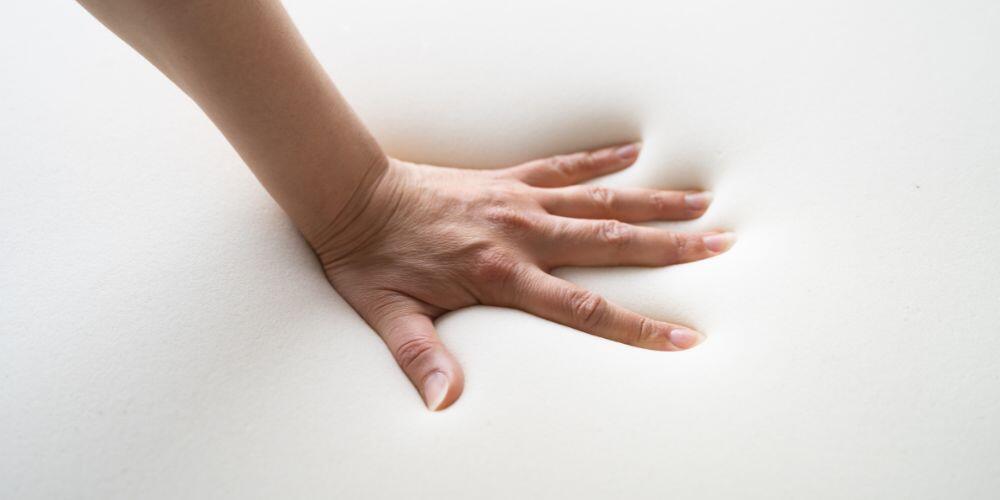
memory foam

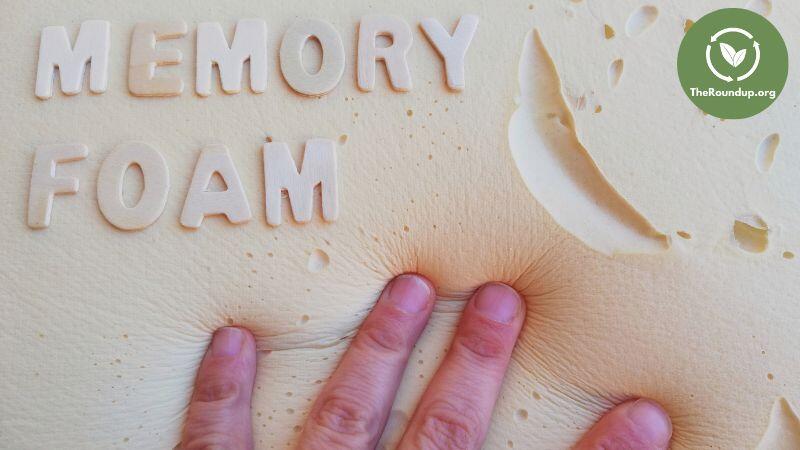
Memory foam is a viscoelastic material known for its pressure-relieving properties and ability to contour your body.

It is based on polyurethane (which is made from fossil fuels) with added chemicals to make it denser.

Initially developed by NASA, memory foam adapts to body heat and weight, resulting in a personalized sleep experience.

Pros

  • Pressure Relief: Contours your body and helps distribute weight evenly
  • Motion Isolation: Absorbs movement, ideal if you share a bed
  • Spinal Support: Maintains good alignment, which can be beneficial for back health
  • Quiet: No noise during movement.

Cons

  • Heat Retention: Tends to trap body heat
  • Fossil Fuel-Based: Made from polyurethane, not biodegradable or eco-friendly
  • Feeling of Sinking: You may find the contouring too restrictive
  • Smell: Initial chemical smell due to off-gassing VOCs (Volatile Organic Compounds)
  • Temperature Sensitivity: Gets softer with body heat

If you are concerned about the chemical content of memory foam, read our guide to memory foam safety and toxicity.

Latex

LATEX

Latex comes from the sap of rubber trees and is highly valued for its robustness.

There are three main types:

  • Natural: Extracted from rubber trees. Offers excellent levels of eco-friendly resilience.
  • Synthetic: Man-made and costs less. It mimics some of the properties of natural latex.
  • Blended: Made from a combination of natural and synthetic latex.

There are also two main styles:

  • Dunlop: Known for its denser and firmer feel. The liquid latex is poured into a mold and then baked. This method results in a more cost-effective product.
  • Talalay: Involves a more complex manufacturing process. The mold is partially filled, and air is added to expand the latex evenly. This results in a lighter, more consistent, and softer material.

Find out more in our complete guide: What is a latex mattress?

Pros

  • Durability: Excellent longevity and resilience
  • Supportive: Provides body support and responsiveness
  • Eco-Friendly: Natural latex is sustainable and biodegradable
  • Cooling Properties: Natural breathability helps prevent overheating
  • Hypoallergenic: Natural latex is resistant to dust mites and mold

Cons

  • Cost: Natural latex is generally more expensive than synthetic materials
  • Weight: Can be heavy and challenging to move
  • Potential Allergies: Not the right choice if you have a latex allergy (if so a latex-free mattress is a better option for you).

Polyfoam

polyurethane foam layer

Polyfoam, or polyurethane foam, is a versatile material often used in mattress layers (usually in base layers for support and top layers for comfort).

It's less dense and less expensive than memory foam, making it a popular choice in budget mattresses.

It's not as contouring as a memory foam mattress but still offers decent support and comfort levels.

Pros

  • Lightweight: Easier to handle and move compared to denser options
  • Affordability: More budget-friendly
  • Balanced Support: Offers a reasonable level of comfort and support
  • Versatility: Used in various layers for different purposes
  • Less Heat Retention: Generally retains less heat than memory foam

Cons

  • Less Durable: Prone to quicker degradation compared to higher-density foams
  • Sagging: Can lose shape and support with heavy use over time
  • Environmental Impact: Made from petrochemicals
  • Off-Gassing: May release volatile organic compounds (VOCs) initially
  • Variability in Quality: Wide range in quality and lifespan among products

Wool

organic wool balls

Wool is a natural material often used in the top layers of mattresses.

It's a popular choice due to its comfort, ability to regulate temperature, and natural flame-retardant properties.

Pros

  • Thermal Regulation: Keeps you warm in winter and cool in summer
  • Natural Flame Resistance: Reduces the need for chemical flame retardants
  • Sustainable: A renewable resource
  • Comfort: Adds a plush, comfortable layer to mattresses
  • Hypoallergenic: Resistant to mold, dust mites, and mildew

Cons

  • Cost: Tends to be pricier than synthetic alternatives
  • Allergy Concerns: Not suitable if you're allergic to wool
  • Vegan Considerations: Not an option if you're living a fully vegan lifestyle. If this is the case, a vegan mattress is a better option for you.
  • Care Requirements: Requires more care than synthetic materials
  • Variability in Quality: The quality of wool can vary, affecting the comfort and robustness of some mattresses

Cotton

organic cotton used to make a crib mattress

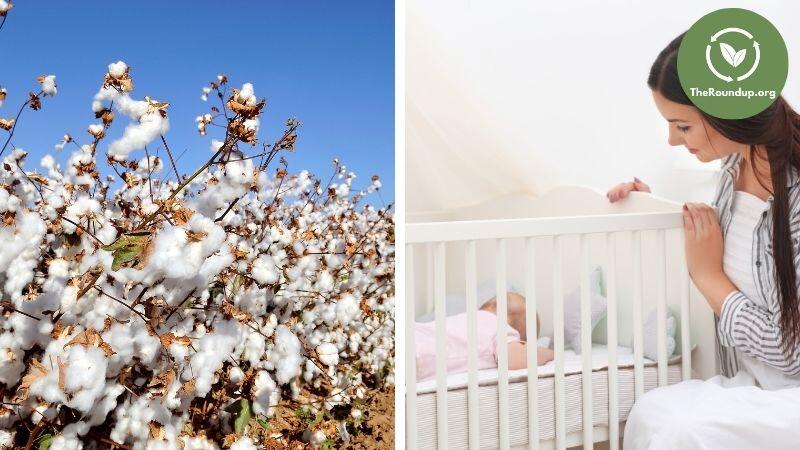
Cotton is a breathable and soft material. It's commonly used in mattress covers and batting.

Conventional cotton is notoriously bad for the environment, due to pesticide usage and high water consumption.

But organic cotton is much more sustainable than traditional cotton. It's a popular material in eco-friendly organic mattresses.

Pros

  • Breathability: Promotes good air circulation
  • Comfort: Soft and comfortable against the skin
  • Sustainability: Organically-grown cotton is an eco-friendly choice
  • Hypoallergenic: Suitable for sensitive skin (especially organic)
  • Natural: Organic cotton is free from synthetic materials and chemicals

Cons

  • Moisture Absorption: Can lead to mildew if not properly stored and maintained
  • Robustness: Traditional, non-organic cotton may be less durable
  • Pesticide Use: Non-organic cotton involves high pesticide use
  • Shrinkage: Cotton can shrink if not properly cared for
  • Cost: Organic cotton can be more expensive

Bamboo

close up of bamboo plants

Bamboo fabric is gaining popularity for its sustainability and softness.

It's often used in the covers of bamboo mattresses.

Pros

  • Sustainable Growth: Bamboo grows rapidly with minimal water use
  • Antibacterial and Hypoallergenic: Naturally resists bacteria and allergens
  • Softness: Offers a smooth, comfortable feel
  • Breathability: Promotes air circulation and temperature regulation
  • Eco-Friendly: A greener alternative to synthetic materials

Cons

  • Chemical Processing: Some bamboo fabrics are produced using harsh chemicals
  • Blended Fabrics: Often mixed with synthetics to enhance longevity
  • Transparency in Production: Not all bamboo products are created equally sustainable
  • Care and Maintenance: Bamboo fabric may require specific care instructions to maintain its beneficial qualities

Flame Retardants

Flame retardants are chemicals added to materials to meet fire safety standards.

Pros

  • Enhanced Safety: Crucial for slowing fire spread
  • Regulatory Compliance: Meets legal fire safety standards.

Cons

  • Health Risks: Concerns over potential links to health issues.
  • Environmental Impact: The chemicals used can negatively affect the environment
  • Transparency Issues: There is often a lack of clarity from manufacturers about which chemicals are used

In organic and non-toxic mattresses, an organic wool layer is used instead of chemical flame retardants.

Greener Foams

Greener foams, such as plant-based memory foam, are more eco-friendly than traditional foams.

However, caution is needed when shopping for greener foams as the industry is rife with greenwashing. For example, 1% plant-based materials do not instantly make memory foam non-toxic and sustainable.

Pros

  • Eco-Friendliness: Lower reliance on petroleum-based products
  • Breathability: Tend to be more breathable than traditional foams
  • Innovation: Represents advancement in sustainable materials

Cons

  • Cost: Typically more expensive than conventional foam
  • Partial Synthetic Content: May still include some non-eco-friendly materials
  • Variability in Green Claims: Some products might not be as green as advertised
  • Limited Availability: Fewer options compared to traditional foams

Polyester

Polyester is a synthetic material commonly used in mattress fabrics for its long-lasting nature and affordability.

It's created through a process that starts with refining petroleum. This is combined with chemicals and water to form a polymer resin. This resin then undergoes further processing to be transformed into polyester fibers.

Find out more in our guide: Is polyester toxic?

Pros

  • Durable: Resistant to wrinkles and shrinking
  • Affordable: Generally more cost-effective than natural fabrics
  • Easy Maintenance: Simple to wash and care for
  • Color Retention: Holds dyes well and maintains color over time

Cons

  • Breathability: Less breathable compared to natural materials
  • Static Electricity: Can generate static, which may be uncomfortable when sleeping
  • Environmental Concerns: Made from petroleum, a non-renewable resource
  • Comfort: May not feel as soft or luxurious as natural fabrics

Gel-Infused Foam

Gel-infused foam is a blend of traditional memory foam and cooling gel particles.

This hybrid material aims to address the common heat retention issue.

Pros

  • Temperature Regulation: The gel works to dissipate body heat, providing a cooler sleeping surface
  • Pressure Relief: Like traditional memory foam, it contours to the body, offering excellent pressure relief
  • Motion Isolation: Minimizes motion transfer

Cons

  • Variable Gel Quality: The effectiveness of cooling can vary depending on the quality and amount of gel used
  • Environmental & Health Considerations: While better than some traditional foams, gel options still contain chemicals or processes that are not eco-friendly or great for your health

Silk & Cashmere

Silk and cashmere are renowned for their luxury and comfort and are often used in some of the world's most expensive mattresses.

Silk is a natural protein fiber known for its softness and sheen.

Cashmere, derived from cashmere goats, is prized for its softness and warmth.

Pros

  • Luxurious Feel: Both materials add a touch of luxury and increased comfort
  • Temperature Regulation: Silk and cashmere are excellent at regulating temperature
  • Durability: When properly cared for, both are surprisingly durable

Cons

  • Cost: Both materials are expensive to buy
  • Care: Careful maintenance is needed to preserve their quality

Horsehair

Horsehair, specifically horses' mane and tail hair, has been used in mattress-making for centuries.

Pros

  • Natural Support: Horsehair provides a unique springiness, enhancing mattress support
  • Breathability & Moisture Wicking: Excellent for regulating temperature and keeping your sleeping surface dry
  • Longevity: Horsehair mattresses last a long time

Cons

  • Cost: An expensive luxury material
  • Maintenance: Requires regular airing and proper care for longevity
  • Sourcing Issues: You should always consider how the horsehair is sourced to ensure it's fully ethical

Coconut Coir

Coconut coir is a natural fiber extracted from coconut husk.

It's a sturdy and natural material that provides a firm and supportive mattress layer.

Pros

  • Sustainability: A natural byproduct of coconut harvesting
  • Firm Support: Produces a firm and supportive sleep surface
  • Longevity: Known for its long-lasting properties
  • Breathability: The open structure of coconut coir increases air circulation and generates a cooler sleep environment

Cons

  • Firmness: Might be too firm for some sleepers
  • Weight: Mattresses with coir can be heavier and more difficult to move
  • Availability: Not as widely available as other materials

TENCEL

TENCEL is a brand name for Lyocell. It's becoming increasingly popular in the mattress industry for its eco-friendly and comfortable properties.

TENCEL is made from wood cellulose, primarily from eucalyptus trees.

Pros

  • Eco-Friendly Production: The manufacturing process is more sustainable than that of many synthetic materials
  • Moisture Wicking: Excellent for managing moisture and keeping your sleep surface dry and comfortable
  • Comfort: Offers a luxurious feel

Cons

  • Cost: Can be more expensive than more traditional mattress fabrics
  • Care: Requires specific care to maintain its quality and longevity

Recycled Materials

Recycled materials, such as steel coils or recycled plastics and fabrics, can be repurposed to create new mattresses.

Pros

  • Environmental Impact: Reduces waste and conserves resources
  • Innovations in Sustainability: Showcases creative ways to reuse materials
  • Quality: Often matches the strength and comfort of new materials

Cons

  • Variability: The quality of recycled materials can vary
  • Availability: Not all mattress brands offer recycled options
  • Cost: Recycled options can sometimes cost more

Recycled steel is used to make the coils of some innerspring and hybrid mattresses, two of the four main types of mattresses sold today.

What Are the Different Types of Mattresses?

The four different types of mattresses are innerspring, memory foam, latex, and hybrid, each defined by the materials in its support core and comfort layers.

The following table compares the four types by their construction, feel, the sleeper each suits best, and their main drawback.

Innerspring Memory foam Latex Hybrid
Support core Steel coil unit High-density polyfoam Firm Dunlop latex Pocketed steel coils
Comfort layers Thin fiber or foam padding, sometimes a pillow top Memory foam over a polyfoam transition layer Softer Dunlop or Talalay latex Foam or latex over the coils
Feel Springy. The coils push back, and you lie on top of the padding Slow sink, the foam molds around your body Bouncy. The latex gives a little and then lifts you back up Coil bounce under a cushioned top
Best for Shoppers on the lowest budget Side sleepers who want the mattress to cradle the shoulder and hip People who want an organic mattress with no polyurethane foam Couples, when the coils are individually wrapped
Main drawback The comfort layer is the thinnest of the four types, so you feel the coils once the padding compresses Most memory foam is petroleum-based polyurethane, which is not eco-friendly and contains chemicals. Blended and synthetic latex are also sold as "latex", so only the label shows how much natural latex is inside "Hybrid" can mean coils under budget polyfoam as well as coils under organic latex, so check which material sits on the coils before buying

Certified latex, hybrid, and non-toxic memory foam mattresses are ranked in our guide to the best eco-friendly mattresses.

Whichever of the four types you choose, independent certifications are the only way to confirm that the materials inside have been tested for harmful chemicals.

How Mattress Materials Certifications Can Keep You Safe

Mattress materials certifications keep you safe by having an independent certifier test a mattress material against a published limit for a harmful chemical.

Mattress certifications set limits on the VOCs that memory foam and polyfoam give off, on chemical flame retardants, on pesticide residues in conventional cotton, and on the processing chemicals in bamboo fabric.

Our guide to organic mattress certifications explains what the certifications mean and which chemicals they test for.

Frequently Asked Questions

What materials are in a hybrid mattress?

Hybrid mattresses typically combine innerspring coils with foam layers.

What materials are in a flippable mattress?

Flippable mattresses often have a symmetrical construction with comfort layers on both sides and a supportive core in the middle. These layers can include foam, latex, or mini coils designed to offer balanced support and comfort from either side.

What's the environmental impact of disposing of old mattresses?

The environmental impact of disposing of an old mattress depends on how the mattress is disposed of.

In a landfill, the polyurethane foam in a mattress leaches chemical additives into the ground as the foam breaks down. Incinerating a mattress releases carbon dioxide. A mattress dumped illegally harms the area it is left in and costs public money to clear.

The most eco-friendly disposal method is recycling your old mattress because in a recycling center, the mattress is taken apart and its steel, foam, and fabric are reused.

You May Also Like

James Miller
James Miller
James is an environmentalist, sustainability expert and senior editor at TheRoundup, specializing in testing non-toxic, organic, and eco-friendly products. He has personally tested and reviewed over 300 eco-friendly home products since 2018. James, his wife and two daughters believe in chemical-free and zero-waste living. They aim to leave the planet in a better state than they found it, for future generations to enjoy.
TheRoundup.org - As Seen On
As Seen On Logos

TheRoundup

We specialize in testing and reviewing eco-friendly products for a non-toxic home. Our simple, practical advice helps you live a more sustainable, chemical-free lifestyle.
SUBSCRIBE FOR UPDATES

All Content ©2026 TheRoundup - All Rights Reserved.

539 W. Commerce St #2943, Dallas, TX 75208 | +1-830-904-0838 | [email protected]
Win a $1,500 White Lotus Home Gift Certificate